


Most Americans knew JonBenet Ramsey only in death -- as the blonde-haired little girl in the ruffled pink cowgirl outfit, bouncing across the stage with a million-dollar smile.
"I want to be a cowboy sweetheart," she sang, with a white hat atop her moussed, golden curls.
The performance captured on video was played around the world after the 6-year-old beauty pageant competitor was found strangled and beaten on Dec. 26, 1996. The images persisted on TV talk shows for years afterward, helping feed theories about her killer.

PHOTO: AP
JonBenet was born in Atlanta on Aug. 6, 1990, to John Bennett Ramsey, a business executive, and his second wife, Patsy, a onetime Miss West Virginia beauty queen. The family lived in the Atlanta suburb of Dunwoody for several years before moving to Colorado in 1991. The couple moved back to Atlanta after their daughter's slaying.
JonBenet was named after her father, with the name pronounced in a French-inspired manner as "zhawn-ben-AY," and spent most of her life in Boulder, Colorado.
JonBenet made the honor roll at her elementary school the month before she died, and attended a local Episcopal church. Family and friends described her as an inquisitive, giving child who loved Shirley Temple movies.
In the last year of her life, JonBenet followed her mother's footsteps into beauty pageants. After her death, the world took a closer look at the children's beauty pageant circuit, where youngsters parade in makeup and elaborate hairstyles, sometimes when they are barely out of diapers.
She learned how to walk, gesture and perform, and collected a wardrobe of elaborate costumes, including that of a Las Vegas showgirl and a cowgirl. Although JonBenet loved to perform, family and friends said the competitions did not rule her life.
In her last months, JonBenet charmed judges into awarding her numerous beauty pageant titles, including Little Miss Colorado, America's Royale Miss and National Tiny Miss Beauty.
JonBenet was buried in Marietta, Georgia, next to the grave of her half sister, Elizabeth Ramsey, 22, who died in a car crash in Ohio in 1992.
Ramsey family attorney Lin Wood said the arrest of a suspect in Bangkok vindicated JonBenet's parents. Patsy Ramsey died of ovarian cancer June 24 and was buried next to her daughter.
"John and Patsy lived their lives knowing they were innocent, trying to raise a son despite the furor around them," Wood said. "The story of this family is a story of courage, and story of an American injustice and tragedy that ultimately people will have to look back on and hopefully learn from."
The attorney said the Ramseys learned about the suspect at least a month before Patsy's death.
"It's been a very long 10 years, and I'm just sorry Patsy isn't here for me to hug her neck," Wood said.
Suspect John Mark Karr, was a teacher who once lived in Conyers, Georgia, according to Wood. The attorney said the Ramseys gave police information about Karr before he was identified as a suspect.
A law enforcement source, speaking on condition of anonymity, said that Karr had been communicating periodically with somebody in Boulder who had been following the case and cooperating with law enforcement officials.
A University of Colorado spokes-man, Barrie Hartman, said journalism professor Michael Tracey had communicated with Karr over several months and contacted police. The spokesman said he didn't know what prompted Tracey to become suspicious of Karr. Tracey produced a documentary in 2004 called Who Killed JonBenet?
Over the years, some experts suggested that Boulder investigators had botched the case so thoroughly that it might never be solved.
In a statement Wednesday, John Ramsey said: "Patsy was aware that authorities were close to making an arrest in the case, and had she lived to see this day, would no doubt have been as pleased as I am with today's development almost 10 years after our daughter's murder."
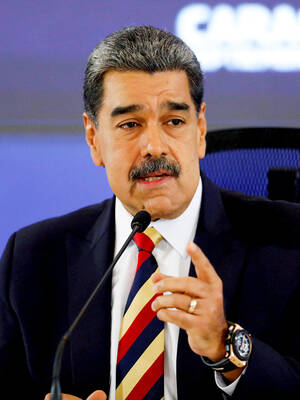
VENEZUELAN ACTION: Marco Rubio said that previous US interdiction efforts have not stemmed the flow of illicit drugs into the US and that ‘blowing them up’ would US President Donald Trump on Wednesday justified a lethal military strike that his administration said was carried out a day earlier against a Venezuelan gang as a necessary effort by the US to send a message to Latin American cartels. Asked why the military did not instead interdict the vessel and capture those on board, Trump said that the operation would cause drug smugglers to think twice about trying to move drugs into the US. “There was massive amounts of drugs coming into our country to kill a lot of people and everybody fully understands that,” Trump said while hosting Polish President

Japan yesterday heralded the coming-of-age of Japanese Prince Hisahito with an elaborate ceremony at the Imperial Palace, where a succession crisis is brewing. The nephew of Japanese Emperor Naruhito, Hisahito received a black silk-and-lacquer crown at the ceremony, which marks the beginning of his royal adult life. “Thank you very much for bestowing the crown today at the coming-of-age ceremony,” Hisahito said. “I will fulfill my duties, being aware of my responsibilities as an adult member of the imperial family.” Although the emperor has a daughter — Princess Aiko — the 23-year-old has been sidelined by the royal family’s male-only
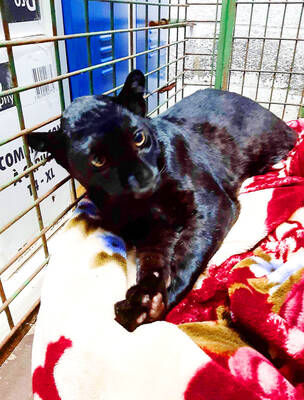
A French couple kept Louise, a playful black panther, in an apartment in northern France, triggering panic when she was spotted roaming nearby rooftops. The pair were were handed suspended jail sentences on Thursday for illegally keeping a wild animal, despite protesting that they saw Louise as their baby. The ruling follows a September 2019 incident when the months-old feline was seen roaming a rooftop in Armentieres after slipping out of the couple’s window. Authorities captured the panther by sedating her with anesthetic darts after she entered a home. No injuries were reported during the animal’s time on the loose. The court in the
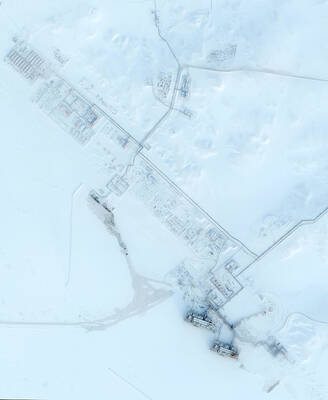
Another tanker carrying liquefied natural gas from Russia’s sanctioned Arctic LNG (liquefied natural gas) 2 project has docked in a Chinese port, ship-tracking data showed, days after Russian President Vladimir Putin met Chinese President Xi Jinping (習近平) in Beijing. The London Stock Exchange Group (LSEG) tracking data indicated the Russian Voskhod LNG tanker was anchored at an LNG terminal in the port of Tieshan in Guangxi, China. The Russian flagged tanker, with a cargo of 150,000 cubic meters of LNG, was loaded up at the Arctic LNG 2 facility in Gydan in northern Siberia on July 19, LSEG data showed.


 RSS
RSS