


South Korea's leading university said yesterday that scientist Hwang Woo-suk did not produce any stem cells individually tailored to patients as claimed, likely delivering the fatal blow to the disgraced researcher's once vaunted reputation as a cloning pioneer who held the key to creating breakthrough medical treatments.
Seoul National University's announcement comes almost a week after it said at least nine of the 11 patient-specific stem cell lines Hwang said he established in a paper published in the prestigious journal Science were fabricated.
The finding is important because scientists see the development of stem cells that are designed to match a specific patient's genes as a huge leap toward possibly curing diseases such as Alzheimer's and diabetes. Those hopes are now in doubt.
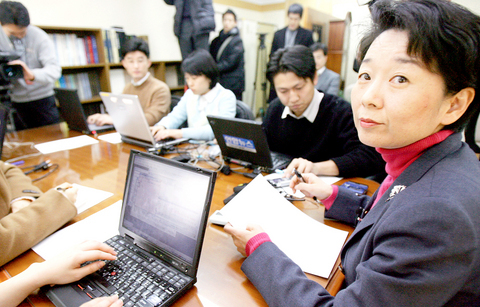
PHOTO: AP
Roh Jung-hye, the university's dean of research affairs, said yesterday that an investigative panel found that the remaining two stem cell lines documented in the article actually came from fertilized eggs and were not designed specifically for patients.
"The panel couldn't find stem cells that match patients' DNA regarding the 2005 paper and it believes that Hwang's team didn't secure scientific data to prove that [stem cells] were made," Roe said in remarks to South Korean reporters carried on YTN television.
Hwang bolted to international fame last year when he created the world's first cloned human embryo and extracted stem cells from it. This year, besides the tailor-made stem cell claim, he and his research team also said they produced the world's first cloned dog.
Those breakthroughs -- now all thrown into question -- catapulted the handsome veterinarian, dubbed "The Pride of Korea," into the role of national hero in this achievement-oriented East Asian country, where the government responded with pledges of massive financial support.
Stem cells are master cells that can grow into any body tissue. Creating patient-specific ones would be a breakthrough because they would not be rejected by patients' individual immune systems. Stem cells taken from a fertilized egg would not be an identical match to a patient's DNA.
Last week, Hwang, 53, apologized for the fabrication and stepped down as professor at the university. He insisted, however, that his team has developed the technology to create patient-matched stem cells.
The university panel's interim results suggested, however, that even the stem cell lines that Hwang claimed to have developed though not reported in the paper were also not patient specific -- casting doubt on whether the veterinarian ever developed the technology.
Seoul National University's Roe said the panel remains in consultation with outside experts to determine if Hwang possesses the technology to produce such stem cells.
The final results of the probe will be released next month and will also include results of the panel's investigation into Hwang's earlier purported breakthroughs, including Snuppy the cloned Afghan hound published in the journal Nature, and the stem cells from the cloned human embryo reported in Science.
The South Korean government reacted cautiously.
"We don't have an official position over today's report as Seoul National University's investigation is still underway," said Nam Sang-mun, director of the public information division at the Science and Technology Ministry.
Hwang filed a complaint with prosecutors last Friday that some of the stem cell lines his team created were replaced by those created at Mizmedi Hospital, which had collaborated with his research team.
Roe said that while the university's investigation found that the fertilized eggs came from Mizmedi, probing into any possible switch is beyond the scope of the panel.
Prosecutors said last week they are waiting for the university investigation to be completed before launching their own investigation.
Hwang's whereabouts were not known and he could not immediately be reached for comment. His mobile phone number has been changed.
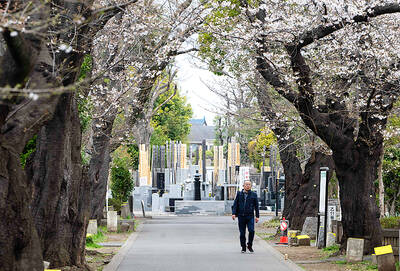
ROCKY RELATIONS: The figures on residents come as Chinese tourist numbers drop following Beijing’s warnings to avoid traveling to Japan The number of Chinese residents in Japan has continued to rise, even as ties between the two countries have become increasingly fractious, data released on Friday showed. As of the end of December last year, the number of Chinese residents had increased by 6.5 percent from the previous year to 930,428. Chinese people accounted for 22.6 percent of all foreign residents in Japan, making them by far the largest group, Japanese Ministry of Justice data showed. Beijing has criticized Tokyo in increasingly strident terms since Japanese Prime Minister Sanae Takaichi last year suggested that a military conflict around Taiwan could
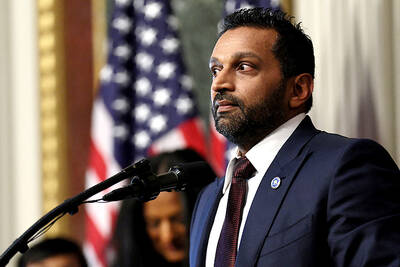
A pro-Iran hacking group claimed to breach FBI Director Kash Patel’s personal e-mail inbox and posted some of the contents online. The e-mails provided by the hacking group include travel details, correspondence with leasing agents in Washington and global entry, and loyalty account numbers. The e-mail address the hackers claim to have compromised has been previously tied to Patel’s personal details, and the leaked e-mails contain photos of Patel and others, in addition to correspondence with family members and colleagues. “The FBI is aware of malicious actors targeting Director Patel’s personal email information,” the agency said in a statement on
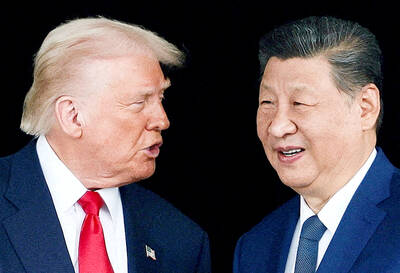
RIVALRY: ‘We know that these are merely symbolic investigations initiated by China, which is in fact the world’s most profligate disrupter of supply chains,’ a US official said China has started a pair of investigations into US trade practices, retaliating against similar probes by US President Donald Trump’s administration as the superpowers stake out positions before an expected presidential summit in May. The move, announced by the Chinese Ministry of Commerce on Friday, is a direct mirror of steps Trump took to revive his tariff agenda after the US Supreme Court last month struck down some of his duties. “China expresses its strong dissatisfaction and firm opposition to these actions,” a ministry spokesperson said in a statement, referring to the so-called Section 301 investigations initiated on March 11.
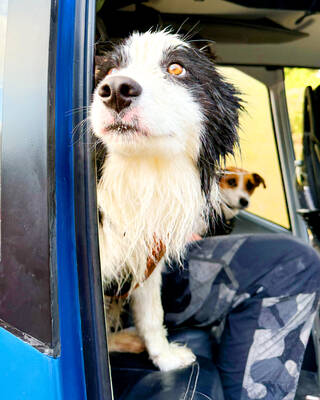
When a hiker fell from a 55m waterfall in wild New Zealand bush, rescuers were forced to evacuate the badly hurt woman without her dog, which could not be found. After strangers raised thousands of dollars for a search, border collie Molly was flown to safety by a helicopter pilot who was determined to reunite the pet and the owner. A week earlier, an emergency rescue helicopter found the woman with bruises and lacerations after a fall at a rocky spot at the waterfall on the South Island’s West Coast. She was airlifted on March 24, but they were forced to


 RSS
RSS