


Japan's bureaucratic rank-and-file march in dark jackets and ties to their offices every day, sweating their way through the country's sticky, sweltering summers.
Starting today, they'll be sweating a little less. In a nationwide campaign to save energy by cutting down on air conditioning, the government has urged public workers to leave their ties and jackets home for the summer.
That might be an easy order in most countries, but in Japan -- where conformity and tradition are prized -- the effort, dubbed "Cool Biz," has enlisted help from the highest authorities. Prime Minister Junichiro Koizumi recently showed up in a newspaper advertisement wearing a half-sleeve shirt with no tie, urging his Cabinet to follow suit.
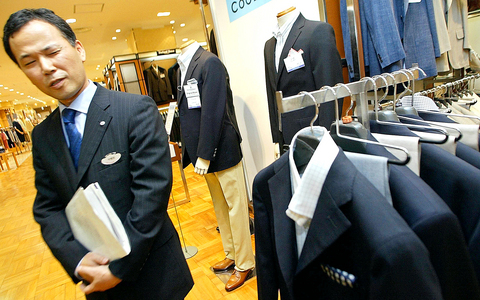
PHOTO: AP
"If the ministers are wearing a tie, their subordinates would feel uneasy about not wearing it," he said a few weeks ago. "So the ministers should not wear a tie."
The Environment Ministry campaign has nothing to do with loosening up stodgy government ministries -- and everything to do with meeting targets under the Kyoto global warming protocol. Tokyo needs to cut so-called greenhouse gas emissions to 6 percent below 1990 levels by 2012.
To help make the goal, government buildings' air conditioners will be set at a toasty 28?C, the maximum allowed by law. Offices usually keep the temperature at around 25?C. Some private companies are already allowing employees to dress casually for summer. But the government endorsement is expected to help make casual styles widely acceptable.
The Energy Conservation Center estimates if all offices in Japan increase summer temperatures to 28?C, it could save 310,000kl of oil in one summer.
To rally support, and to reassure bureaucrats unfamiliar with being laid-back, the ministry has released a manual dressing down -- with hints such as matching the colors of your belt and shoes.
"We try to explain why just untying your necktie won't do. We show how to achieve an acceptable business look without wearing a tie," said Kentaro Doi, the ministry official in charge of the campaign.
The ministry is even planning a "Cool Biz Collection" fashion show on Sunday at the 2005 World Expo in Aichi, with top executives -- including Toyota chairman Hiroshi Okuda -- as models.
The new policy is expected to boost the economy, as the country's 250,000 national bureaucrats retool their monochromatic wardrobes. Economy Minister Heizo Takenaka said the effort could raise consumer spending by at least ?10 billion (US$92.6 million). That rises to ?600 billion if local government and private industry workers are included.
The effort seems to be having some effect. At a major department store, Nihonbashi Mitsukoshi, men's shirt sales were up 17 percent last month from the same month last year, according to men's section salesman Eiji Utsunomiya.
The store features shirts with hidden snaps or extra buttons so the collar stays upright without a tie.
"It was unacceptable 10 years ago. But I think people are ready for new fashion, and society is changing so we are less resistant to change," Utsunomiya said.
However, judging from the past, success is not guaranteed. In 1979, after the second "oil shock," prime minister Masayoshi Ohira introduced a "save energy look," wearing a half-sleeve suit and tie. It was a failure. A 1994 attempt by prime minister Tsutomu Hata also flopped.
A salesman, Katsuyuki Ishii, predicted yet another failure.
"My company has no such plans. I know it is even unpleasant to look at us," he said, gesturing at his jacket and tie. "But it's like a uniform."
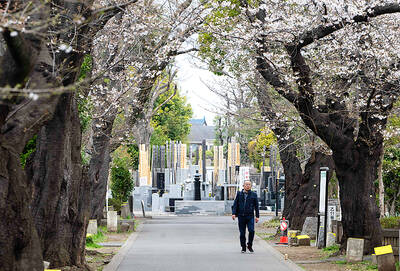
ROCKY RELATIONS: The figures on residents come as Chinese tourist numbers drop following Beijing’s warnings to avoid traveling to Japan The number of Chinese residents in Japan has continued to rise, even as ties between the two countries have become increasingly fractious, data released on Friday showed. As of the end of December last year, the number of Chinese residents had increased by 6.5 percent from the previous year to 930,428. Chinese people accounted for 22.6 percent of all foreign residents in Japan, making them by far the largest group, Japanese Ministry of Justice data showed. Beijing has criticized Tokyo in increasingly strident terms since Japanese Prime Minister Sanae Takaichi last year suggested that a military conflict around Taiwan could
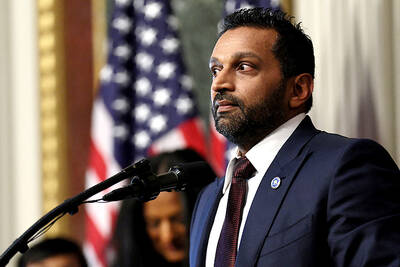
A pro-Iran hacking group claimed to breach FBI Director Kash Patel’s personal e-mail inbox and posted some of the contents online. The e-mails provided by the hacking group include travel details, correspondence with leasing agents in Washington and global entry, and loyalty account numbers. The e-mail address the hackers claim to have compromised has been previously tied to Patel’s personal details, and the leaked e-mails contain photos of Patel and others, in addition to correspondence with family members and colleagues. “The FBI is aware of malicious actors targeting Director Patel’s personal email information,” the agency said in a statement on
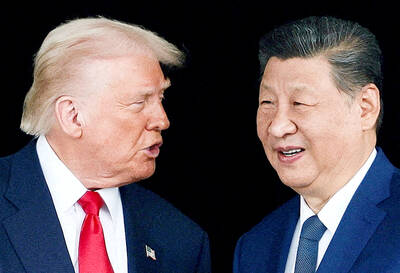
RIVALRY: ‘We know that these are merely symbolic investigations initiated by China, which is in fact the world’s most profligate disrupter of supply chains,’ a US official said China has started a pair of investigations into US trade practices, retaliating against similar probes by US President Donald Trump’s administration as the superpowers stake out positions before an expected presidential summit in May. The move, announced by the Chinese Ministry of Commerce on Friday, is a direct mirror of steps Trump took to revive his tariff agenda after the US Supreme Court last month struck down some of his duties. “China expresses its strong dissatisfaction and firm opposition to these actions,” a ministry spokesperson said in a statement, referring to the so-called Section 301 investigations initiated on March 11.

When a hiker fell from a 55m waterfall in wild New Zealand bush, rescuers were forced to evacuate the badly hurt woman without her dog, which could not be found. After strangers raised thousands of dollars for a search, border collie Molly was flown to safety by a helicopter pilot who was determined to reunite the pet and the owner. A week earlier, an emergency rescue helicopter found the woman with bruises and lacerations after a fall at a rocky spot at the waterfall on the South Island’s West Coast. She was airlifted on March 24, but they were forced to


 RSS
RSS