


Unpopular Hong Kong leader Tung Chee-hwa (
Tung was named one of 24 vice chairmen of the Chinese People's Political Consultative Conference, a post usually given to officials near retirement. The body represents China's noncommunist groups and advises the ceremonial parliament.
The move appeared to confirm that Chinese leaders accepted Tung's resignation, which he submitted Thursday. He cited ill health and said it was his own decision to quit with two years left in his term, but he was widely believed to have been pushed by Beijing to leave.
Tung had been criticized for his handling of the 2003 outbreak of severe acute respiratory syndrome, a faltering economy and other problems. Many complained that he was indecisive and the Chinese government's puppet.
Tung's appointment was approved by a vote of 2,065 to 21 from CPPCC delegates holding the closing session of the body's annual meeting at the cavernous Great Hall of the People in central Beijing. There were 20 abstentions.
Tung, 67, was seated on stage with President Hu Jintao (
Delegates broke into loud, sustained applause when results were announced. Tung stood and gave a slight bow, then turned and shook hands with all the officials around him.
Also named as new vice chairmen of the CPPCC were Zhang Meiying and Zhang Rongming, both women.
Zhang Meiying, 61, is vice president of the All-China Women's Federation, the top state-supervised body charged with promoting women's rights. Zhang Rongming, also 61, is vice chairwoman of the All-China Federation of Trade Unions, the official umbrella body for government-controlled unions.
Tung was Hong Kong's first leader following its 1997 return to Chinese sovereignty after 150 years of British colonial rule.
His Hong Kong job is to be filled temporarily by the territory's No. 2-ranking official, Donald Tsang (
Tung, a former shipping tycoon, was picked by an 800-member election committee dominated by Beijing loyalists.
He came under heavy criticism for pushing for an unpopular anti-subversion law that many feared threatened civil liberties, and for siding with Beijing to oppose a quicker transition to full democracy.
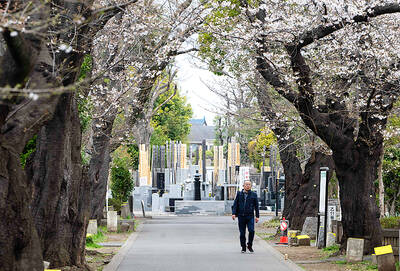
ROCKY RELATIONS: The figures on residents come as Chinese tourist numbers drop following Beijing’s warnings to avoid traveling to Japan The number of Chinese residents in Japan has continued to rise, even as ties between the two countries have become increasingly fractious, data released on Friday showed. As of the end of December last year, the number of Chinese residents had increased by 6.5 percent from the previous year to 930,428. Chinese people accounted for 22.6 percent of all foreign residents in Japan, making them by far the largest group, Japanese Ministry of Justice data showed. Beijing has criticized Tokyo in increasingly strident terms since Japanese Prime Minister Sanae Takaichi last year suggested that a military conflict around Taiwan could
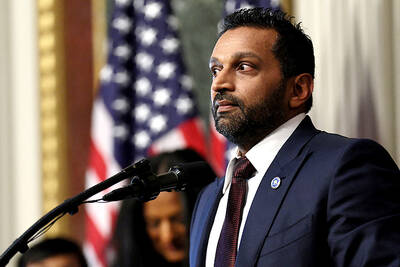
A pro-Iran hacking group claimed to breach FBI Director Kash Patel’s personal e-mail inbox and posted some of the contents online. The e-mails provided by the hacking group include travel details, correspondence with leasing agents in Washington and global entry, and loyalty account numbers. The e-mail address the hackers claim to have compromised has been previously tied to Patel’s personal details, and the leaked e-mails contain photos of Patel and others, in addition to correspondence with family members and colleagues. “The FBI is aware of malicious actors targeting Director Patel’s personal email information,” the agency said in a statement on
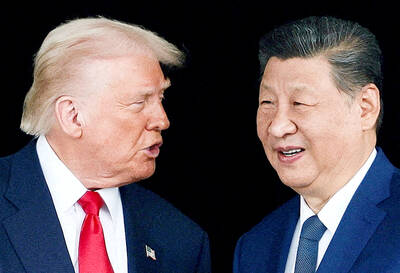
RIVALRY: ‘We know that these are merely symbolic investigations initiated by China, which is in fact the world’s most profligate disrupter of supply chains,’ a US official said China has started a pair of investigations into US trade practices, retaliating against similar probes by US President Donald Trump’s administration as the superpowers stake out positions before an expected presidential summit in May. The move, announced by the Chinese Ministry of Commerce on Friday, is a direct mirror of steps Trump took to revive his tariff agenda after the US Supreme Court last month struck down some of his duties. “China expresses its strong dissatisfaction and firm opposition to these actions,” a ministry spokesperson said in a statement, referring to the so-called Section 301 investigations initiated on March 11.

When a hiker fell from a 55m waterfall in wild New Zealand bush, rescuers were forced to evacuate the badly hurt woman without her dog, which could not be found. After strangers raised thousands of dollars for a search, border collie Molly was flown to safety by a helicopter pilot who was determined to reunite the pet and the owner. A week earlier, an emergency rescue helicopter found the woman with bruises and lacerations after a fall at a rocky spot at the waterfall on the South Island’s West Coast. She was airlifted on March 24, but they were forced to


 RSS
RSS