


They have survived for thousands of years in one of the world's most isolated areas. But at least two of the Stone Age aboriginal tribes that live on the remote Andaman and Nicobar Islands have been gravely affected by Sunday's giant tsunami, which ripped through the sprawling archipelago in the Bay of Bengal, killing at least 3,000 people.
Wednesday the Indian authorities here admitted they were dealing with a disaster -- and said they had been unable to make contact with the Shompens, a reclusive tribe who live on the island of Great Nicobar.
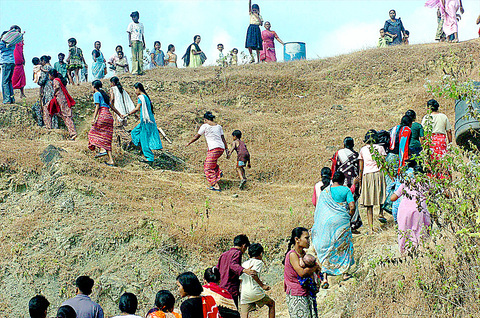
PHOTO: AFP
Officials said they were sending messengers to some of the most remote islands, more than 16 hours away by boat, to ascertain who was left alive.
The relief operation has been made more complicated by the fact that many of the worse affected areas are also home to reclusive communities, whose ancestors migrated to the islands more than 30,000 years ago.
Yesterday the islands' governor, Ram Kapse, said he was sending a boat to Sentinel Island, home to the world's last truly Stone Age tribe. The 100-strong Sentinalese, who originated from Africa, have resisted all contact with the outside world. They have opened fire on friendly visiting anthropologists with poison arrows.
The boat being sent there would not land on the island but would have a look at their situation from a safe "outer circle," Professor Kapse said.
The fate of the Shompens, meanwhile, a Mongoloid tribe who live on the southern tip of Great Nicobar Island, was not known, he added.
The Indian authorities have so far failed to reach them. They have also not managed to land on two tiny but inhabited nearby islands, Konsul and Pilomilo.
"We are doing our best. But many villagers are simply not yet reachable," said the administration's chief secretary, VV Bhat. He added: "There has been a massive dislocation. Whole villages have disappeared. Jetties in many of the islands have gone, too, making it impossible to land by boat. Coconut and forest trees have been ripped down flat."
So far, it is thought the worst affected island in the group is Car Nicobar, a small, low-lying island where entire villages inhabited by tribal Nicobarese were washed away.
Yesterday one tribal survivor, Casper James, described how he was about to go to church when the first tremors struck early on Sunday.
He dragged his wife and daughter out of their house and started racing up into the jungle. Three minutes later a giant wave tore into his village, Malacca, demolishing it.
"There was a tremendous sound. We shouted to all our neighbors to run. We ran 200m up the hill. Behind us, trees and cylinders floated past. The village disappeared. There was nothing left," James said. He added: "When I went back, I saw many hands sticking out of the sand."
James is one of the survivors from the small, flat and lush island of Car Nicobar, part of the remote and sprawling Andaman and Nicobar archipelago that bore the full brunt of Sunday's tsunami.
Five days after the disaster there was still confusion as to how many people have died here. Indian officials said that 3,000 had gone missing and were presumed dead, although only 306 bodies have actually been recovered.
The final death toll will only be known when terrified villagers finally emerge from the dense forests of coconut palms and casuarina trees where they have been hiding.
The Indian government's rescue operation in the Bay of Bengal has been hampered by the archipelago's size -- it constitutes 572 islands, 36 of them inhabited, spread across nearly 800km.
Yesterday Ezra Alora, another islander from Car Nicobar, who lives in the neighboring village of Berka, described how the earthquake woke him at 6.30am.
"We ran out of our hut. My wife took the baby. A second later a 3m wave engulfed us," he said. Alora's two sons Melchior, five, and Antino, three, got lost.
"They found Melchior's body 24 hours later. It was washed up in the middle of the forest, two miles away from our village. Our younger son is still missing."
Alora, a 27-year-old forest worker, was yesterday recovering in Port Blair, the Andaman Islands' battered main port. He and several hundred other islanders were rescued on Monday by the Indian air force and were camping in a school courtyard. Every few minutes an Indian air force plane delivering relief whined into view.
Although the main Andaman Islands escaped the worst of Sunday's devastation, the giant waves left a trail of destruction there, too, in the shape of flattened walls, upturned cars,and a sunken cruise ship, the MB Teal. The vessel's life-raft pod was blown into the local fire station.
Further along the marine jetty, oystercatchers picked over a cornucopia of tsunami junk -- old tires, coconut shells, and mashed trees.
One "longish" island, Teressa, had been flooded in the middle and was now two islands, Bhat said.
In other areas, satellite phones had now arrived and senior civil servants had been sent to camp among the homeless.
Meanwhile, in Car Nicobar (population 20,000), the waves appeared to have spared nobody. The dead include 68 Indian air force personnel who were stationed at the island's hilltop air force base; 25 of their bodies have been washed up. Another victim was the island's magistrate.
The main tribal group, the Nicobarese, who are devout Christians, were also among the dead.
Yesterday Ravish Shankar, a vegetable seller from Car Nicobar, said his village, Lapatty, had been wiped out. The villages on the east side of the island had suffered worst, he said.
"I was just getting up and washing my face when the earthquake started," he said. "I saw three dead people wash past me."
James, a 34-year-old administrator, said the only thing that had saved him was his knowledge of geography.
"I was a geography student," he said. "I ran because I knew earthquakes could cause tidal waves."
Then he added: "But nobody else did."
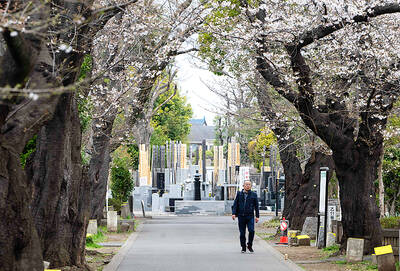
ROCKY RELATIONS: The figures on residents come as Chinese tourist numbers drop following Beijing’s warnings to avoid traveling to Japan The number of Chinese residents in Japan has continued to rise, even as ties between the two countries have become increasingly fractious, data released on Friday showed. As of the end of December last year, the number of Chinese residents had increased by 6.5 percent from the previous year to 930,428. Chinese people accounted for 22.6 percent of all foreign residents in Japan, making them by far the largest group, Japanese Ministry of Justice data showed. Beijing has criticized Tokyo in increasingly strident terms since Japanese Prime Minister Sanae Takaichi last year suggested that a military conflict around Taiwan could

A pro-Iran hacking group claimed to breach FBI Director Kash Patel’s personal e-mail inbox and posted some of the contents online. The e-mails provided by the hacking group include travel details, correspondence with leasing agents in Washington and global entry, and loyalty account numbers. The e-mail address the hackers claim to have compromised has been previously tied to Patel’s personal details, and the leaked e-mails contain photos of Patel and others, in addition to correspondence with family members and colleagues. “The FBI is aware of malicious actors targeting Director Patel’s personal email information,” the agency said in a statement on

RIVALRY: ‘We know that these are merely symbolic investigations initiated by China, which is in fact the world’s most profligate disrupter of supply chains,’ a US official said China has started a pair of investigations into US trade practices, retaliating against similar probes by US President Donald Trump’s administration as the superpowers stake out positions before an expected presidential summit in May. The move, announced by the Chinese Ministry of Commerce on Friday, is a direct mirror of steps Trump took to revive his tariff agenda after the US Supreme Court last month struck down some of his duties. “China expresses its strong dissatisfaction and firm opposition to these actions,” a ministry spokesperson said in a statement, referring to the so-called Section 301 investigations initiated on March 11.
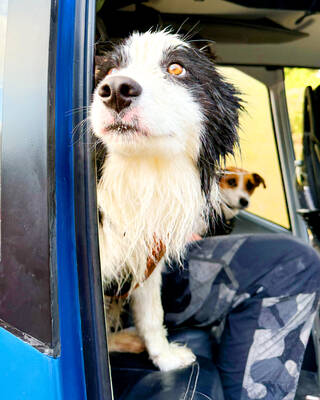
When a hiker fell from a 55m waterfall in wild New Zealand bush, rescuers were forced to evacuate the badly hurt woman without her dog, which could not be found. After strangers raised thousands of dollars for a search, border collie Molly was flown to safety by a helicopter pilot who was determined to reunite the pet and the owner. A week earlier, an emergency rescue helicopter found the woman with bruises and lacerations after a fall at a rocky spot at the waterfall on the South Island’s West Coast. She was airlifted on March 24, but they were forced to


 RSS
RSS