


For years, Japan saw kidnapping victim Megumi Yokota only as an innocent child, a fresh-faced junior high badminton player in school uniform, black hair framing her cheeks.
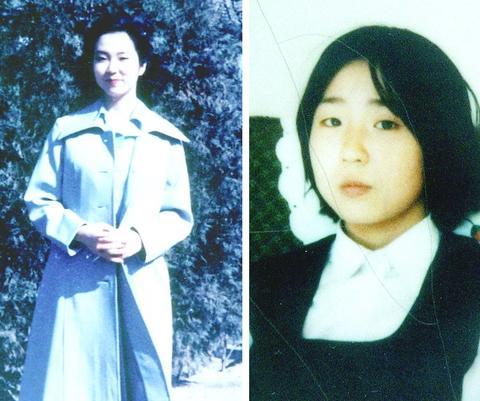
Now for the first time, photographs are on display of Yokota's life after her 1977 abduction by North Korean spies, as she grew from a teenager into an adult imprisoned behind the reclusive regime's wall of secrecy.
PHOTOS: AP PHOTO/NATIONAL ASSOCIATION FOR THE RESCUE OF JAPANESE
Three images of Yokota provided by North Korea -- one as a sad-eyed teenager and two as a young woman -- dominated front pages and talk shows this week, intensifying Japanese anguish and outrage over her abduction.
"We couldn't help crying when we saw the picture showing her worrying face looking directly at the camera," Megumi's mother, Sakie Yokota, tearfully told reporters. "I don't know whom she wanted to appeal to ... after being kidnapped in suffering and tears."
Megumi Yokota is among 13 Japanese citizens North Korea has admitted kidnapping in the 1970s and 1980s. Five were allowed to return to Japan in 2002, but North Korea has claimed -- so far unconvincingly -- that the others, including Yokota, are dead.
Her age at the time of her kidnapping -- 13 -- and the tireless efforts of her parents have turned Megumi Yokota into a symbol of Japanese indignation over the kidnappings and a poster child for the campaign by abductees' families to win a full investigation into the fates of the victims.
The families have called for sanctions against North Korea. But Prime Minister Junichiro Koizumi, under questioning in a parliament hearing, said he wants to keep the North Koreans engaged in hopes of making progress.
"There is still room for negotiations," he insisted on Wednesday. "We should make the effort, even if we can take only one or two steps ahead at a time."
While the latest negotiations in Pyongyang have not yielded what the Japanese hoped for, they did promise to shed faint light on Yokota's case.
The Japanese negotiators who returned from North Korea on Monday met with Kim Chol-jun and Kim Hea-kyong, identified by Pyongyang as Yokota's husband and daughter. The negotiators also visited a hospital that supposedly treated Yokota and were given lengthy health records.
In a heartbreaking turn, Kim Chol-jun handed over an urn containing what the North says are Yokota's remains.
Pyongyang claims she committed suicide in 1994; DNA identification is expected next week.
But with North Korea's history of deception -- bones it claimed in 2002 belonged to another abductee, for example, turned out to be someone else's -- speculation has gone into overdrive about whether Yokota was being kept in the country ruled by Kim Jong-il.
After years of mystery, the new photos are tantalizing.
In the earlier picture, Yokota looks forlornly into the camera, wearing what experts say is a typical North Korean school uniform. In another, she poses, smiling slightly, well-dressed and apparently well-fed. The third photograph shows her standing next to a black car, with snowdrifts behind her.
"Looking at these calmly, the pictures show her in neat clothing and wearing makeup," observed her father, Shigeru Yokota. "I feel she possibly lived a relatively happy life."
Talk-show panelists examined the photos in excruciating detail on Wednesday, bringing out a drama professor who scrutinized Yokota's expressions for clues to her emotional state and an auto expert who identified the car as a Mercedes.
Media accounts have focused on inconsistencies in North Korean accounts of Yokota's death: changing dates, alleged contradictions in hos-pital records and suspicions that, as an attractive young woman, she was associated too closely with North Korea's elite to be allowed to leave.
"I imagine she had been very close to Kim Jong-il. I hear people say she had been his teacher and so on," said Kaneko Tomiyama, a 51-year-old Tokyo woman. "I think she was not allowed to return to Japan because she knew too much about the North."
The man identified as her husband also reportedly refused to provide hair and blood samples that would prove he fathered the girl identified as their daughter.
Her family is still clinging to hope she is alive.
"I know that everything in that country is a lie," Yokota's mother said. "I'm praying that the DNA tests on the remains will show they are not Megumi's."
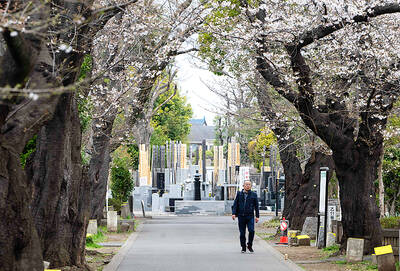
ROCKY RELATIONS: The figures on residents come as Chinese tourist numbers drop following Beijing’s warnings to avoid traveling to Japan The number of Chinese residents in Japan has continued to rise, even as ties between the two countries have become increasingly fractious, data released on Friday showed. As of the end of December last year, the number of Chinese residents had increased by 6.5 percent from the previous year to 930,428. Chinese people accounted for 22.6 percent of all foreign residents in Japan, making them by far the largest group, Japanese Ministry of Justice data showed. Beijing has criticized Tokyo in increasingly strident terms since Japanese Prime Minister Sanae Takaichi last year suggested that a military conflict around Taiwan could
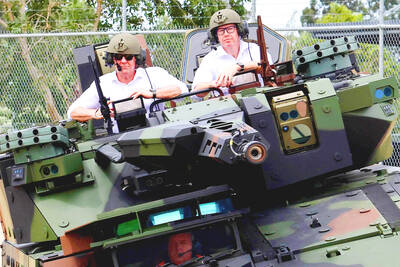
Germany is considering Australia’s Ghost Bat robot fighter as it looks to select a combat drone to modernize its air force, German Minister of Defense Boris Pistorius said yesterday. Germany has said it wants to field hundreds of uncrewed fighter jets by 2029, and would make a decision soon as it considers a range of German, European and US projects developing so-called “collaborative combat aircraft.” Australia has said it will integrate the Ghost Bat, jointly developed by Boeing Australia and the Royal Australian Air Force, into its military after a successful weapons test last year. After inspecting the Ghost Bat in Queensland yesterday,
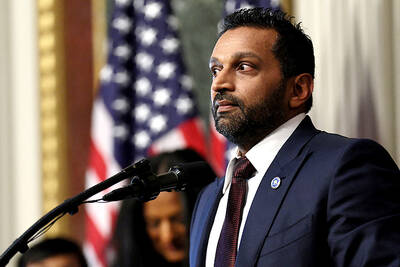
A pro-Iran hacking group claimed to breach FBI Director Kash Patel’s personal e-mail inbox and posted some of the contents online. The e-mails provided by the hacking group include travel details, correspondence with leasing agents in Washington and global entry, and loyalty account numbers. The e-mail address the hackers claim to have compromised has been previously tied to Patel’s personal details, and the leaked e-mails contain photos of Patel and others, in addition to correspondence with family members and colleagues. “The FBI is aware of malicious actors targeting Director Patel’s personal email information,” the agency said in a statement on
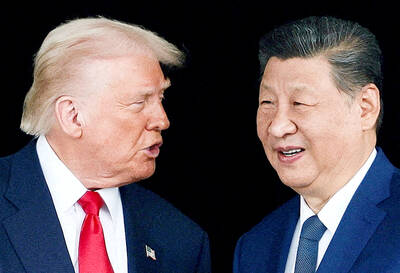
RIVALRY: ‘We know that these are merely symbolic investigations initiated by China, which is in fact the world’s most profligate disrupter of supply chains,’ a US official said China has started a pair of investigations into US trade practices, retaliating against similar probes by US President Donald Trump’s administration as the superpowers stake out positions before an expected presidential summit in May. The move, announced by the Chinese Ministry of Commerce on Friday, is a direct mirror of steps Trump took to revive his tariff agenda after the US Supreme Court last month struck down some of his duties. “China expresses its strong dissatisfaction and firm opposition to these actions,” a ministry spokesperson said in a statement, referring to the so-called Section 301 investigations initiated on March 11.


 RSS
RSS