


A year ago, Letizia Ortiz stood on a beach, ankle-deep in black muck, reporting to the nation on an oil spill.
Next summer, the TV anchorwoman will trade her microphone for the hand of Crown Prince Felipe, putting her in line to be Spain's queen.
Commoners marrying into royal families are old hat in Europe, and Ortiz is as much a commoner as they come -- a 31-year-old working woman and divorcee whose mother, also divorced, is a nurse and union shop steward.
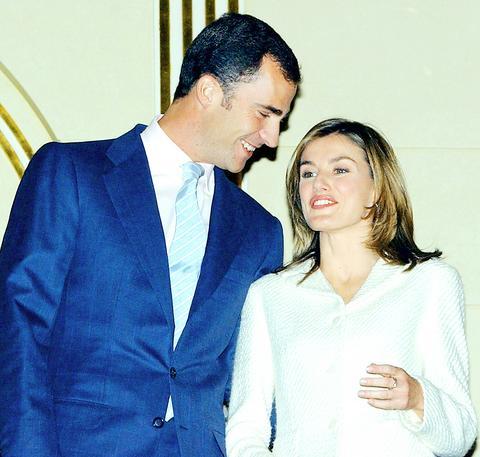
PHOTO: AP
The difference is that this is the first time a non-noble is in line to ascend to the throne once occupied by Queen Isabella, patroness of Christopher Columbus.
Spaniards are delighted, polls suggest, not just because their 35-year-old prince is marrying a Spaniard, but because the romance has so far escaped the scandals large and small that bedevil so many European royal families.
In Britain, the family of Queen Elizabeth II stumbles from one unhappy episode to another. Holland's crown prince weathered controversy by marrying an Argentine whose father served in his country's former military regime. And in Norway, another crown prince's fiancee had to make a public apology for what she termed a wild youth, rumored to include illegal drug use.
Felipe's choice of bride reflects how much Spain has changed. Divorce wasn't legal here until 1981.
"Now, it's hard to bring together five or six adults who don't have a divorce behind them or their children," said Carmen Iglesias, director of a government-funded think-tank on Spain's Constitution and legal system.
Twenty years ago women made up just 28 percent of the work force. Now the figure is estimated at nearly 40 percent.
The royal nuptials, Iglesias said, "are historic, but very much in accordance with the society we live in at the start of the 21st century."
Spain's royal family is widely respected, not least because of the critical role Felipe's father, King Juan Carlos, played in leading Spain back to democracy after nearly four decades of dictatorship that ended with General Francisco Franco's death in 1975.
The prince's choice of bride after years of failed relationships -- some reportedly nixed by his parents -- was keenly awaited.
He met Ortiz at a dinner party in Madrid just over a year ago, and they began dating in earnest in the spring. The Royal Palace announced their engagement on Nov. 1.
Spaniards revel in the scandals of other European royals, but the only fault any of them can find in the new bride is her feisty attitude to her fiance.
A public appearance of the new couple last week became the talk of Spain after Ortiz playfully but firmly told Felipe not to interrupt while she was speaking. She was telling reporters how she would handle the transition from journalist to princess when the prince tried to interject.
"Let me finish," Ortiz said, grabbing his forearm.
The prince laughed heartily, but the remark echoed through the Spanish media like a cannon blast. Here was Spain's future head of state and armed forces commander being told to hush.
A cartoon in the El Mundo daily imagined Felipe warning his father to expect the same cheek from his new daughter-in-law if his televised Christmas address to the nation of 40 million dragged on too long.
Ortiz may lack the demure, discreet manner of her future mother-in-law, Queen Sofia, who was born a Greek princess, but an opinion poll gives her a 60 percent approval rating, and most see her independent lifestyle as an example to today's Spanish women.
Her mother, Paloma Rocasolano, is a union representative of staff at a state-run hospital in Madrid where wages average US$1,300 a month. That should make for interesting dinner-table banter when the in-laws finally get together.
Another thing in Ortiz's favor is that older Spaniards prefer her to the foreigners the prince has courted, such as Norwegian beauty Eva Sannum, who modeled lingerie and was photographed topless at a beach.
Although the vast majority of Spaniards polled don't care that Ortiz is divorced, it has added spice to the gossip columns.
An interview with her ex-husband, a little-known writer named Alonso Guerrero Perez, was splashed across El Mundo's front page. Perez wished his ex and the prince all the best.

An American scientist convicted of lying to US authorities about payments from China while he was at Harvard University has rebuilt his research lab in Shenzhen, China, to pursue technology the Chinese government has identified as a national priority: embedding electronics into the human brain. Charles Lieber, 67, is among the world’s leading researchers in brain-computer interfaces. The technology has shown promise in treating conditions such as amyotrophic lateral sclerosis and restoring movement in paralyzed people. It also has potential military applications: Scientists at the Chinese People’s Liberation Army have investigated brain interfaces as a way to engineer super soldiers by boosting
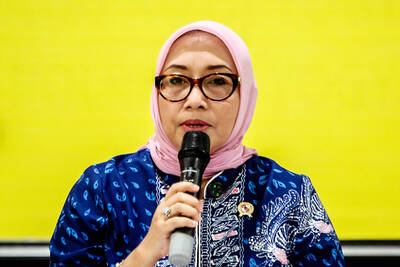
Indonesian police have arrested 13 people after shocking images of alleged abuse against small children at a daycare center went viral, sparking outrage across the nation, officials said on Monday. Police on Friday last week raided Little Aresha, a daycare center in Yogyakarta on Java island, following a report from a former employee. CCTV footage circulating on social media showed children, most younger than two, lying on the floor wearing only diapers, their hands and feet bound with rags. The police have confirmed that the footage is authentic. Police said they also found 20 children crammed into a room just 3m by 3m. “So

A grieving mother has ended her life at a clinic in Switzerland four years after the death of her only child. Wendy Duffy, 56, a physically healthy woman, died at the Pegasos clinic in Basel after struggling to cope with the death of her 23-year-old son, Marcus. The former care worker, from the West Midlands, England, had previously attempted to take her own life. The case comes as assisted dying would not become law in England and Wales after proposed legislation, branded “hopelessly flawed” by opponents, ran out of time. Ruedi Habegger, the founder of Pegasos, described Duffy’s death as

From post offices and parks to stations and even the summit of Mount Fuji, Japan’s vending machines are ubiquitous, but with the rapid pace of inflation cooling demand for their drinks, operators are being forced to rethink the business. Last month beverage giant DyDo Group Holdings announced it would remove about 20,000 vending machines — about 7 percent of their stock nationwide — by January next year, to “reconstruct a profitable network.” Pokka Sapporo Food & Beverage, based in Nagoya, also said last month it would sell its 40,000-machine operation to Osaka-based Lifedrink Co. “The strength of the vending machine


 RSS
RSS