


Fierce fighting between separatist rebels and the military in Indo-nesia's Aceh province killed 13 people yesterday on the third day of a major army offensive, a rebel spokesman said.
Tengku Agam, spokesman for the Free Aceh Movement, known by its Indonesian acronym GAM, said the 13, including 10 civilians, were killed during an attack about 2km east of the northern Acehnese town of Bireun.
A military spokesman, Lieutenant Colonel Firdaus Komarno, confirmed an operation was under way in the region but would not give details on casualties.
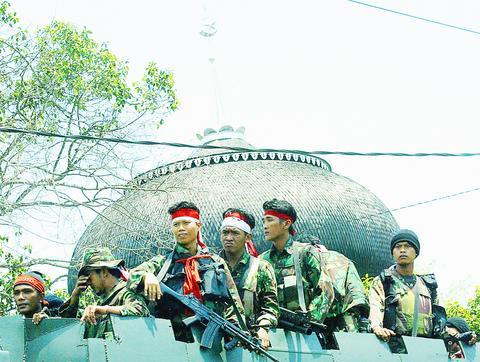
PHOTO: REUTERS
"The military are coming out in big numbers on land on sea. Ten civilians along with two unarmed rebels and one government soldier were killed," Agam said.
Azhari, a local Red Cross volunteer who like many Indonesians uses a single name, said he heard that at least 10 people were killed.
"But we cannot yet reach the area because heavy fighting is still underway," Azhari said.
The reported fighting is the bloodiest yet since Indonesian President Megawati Sukarnoputri declared martial law and an all-out military offensive in Aceh after weekend peace talks in Tokyo broke down.
Before yesterday's clash, troops had killed at least 12 rebels since the offensive began.
Unidentified men have also torched more than 150 schools since the beginning of the campaign, Indonesia's largest offensive since it invaded East Timor in 1975. Both sides have accused each other of carrying out the burnings.
Earlier yesterday, Aceh military commander Major General Endang Suwarya said an unspecified number of troops were moving into the northern rebel strongholds of Bireun and Pidie, which have seen the worst fighting and arson.
"We need to take urgent steps," he said.
Northern Aceh is home to several natural gas fields tapped by US oil giant ExxonMobil, though production has so far been unaffected by the fighting.
Suwarya said authorities were considering imposing a night curfew in the two districts.
At least 12,000 people -- many of them civilians caught in the crossfire -- have been killed in the province, 900km northwest of Jakarta, since 1976.
Human rights groups urged the government to protect civilians and warned the offensive could lead to new abuses by Indonesia's military, which already has a long record of abuse in the province of 4.3 million people.
The resumption of hostilities has alarmed world leaders, who have urged Indonesia to restart talks with the rebels, though none have criticized Jakarta's hardline stance.
In a joint statement, British Foreign Secretary Jack Straw and visiting Australian Foreign Minister Alexander Downer said they regretted the breakdown of a Dec. 9 peace accord.
"We urge both the Indonesian government and the Free Aceh Movement to return quickly to the negotiating table," they said. "We call on the Indonesian Armed Forces to ensure full respect for human rights and to show maximum restraint while they carry out operations in Aceh."
The talks in Tokyo collapsed Sunday when rebels rejected Jakarta's demands to lay down their weapons and accept autonomy instead of independence.
Pictures of razed schools in the province dominated the front pages of newspapers across Indonesia yesterday. Most repeated military claims the rebels were behind the arson attacks, the motives for which remain unclear.
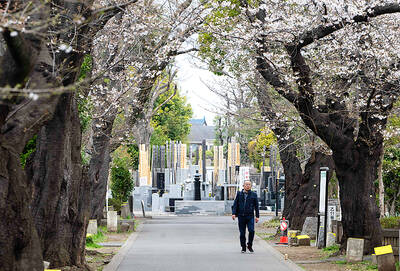
ROCKY RELATIONS: The figures on residents come as Chinese tourist numbers drop following Beijing’s warnings to avoid traveling to Japan The number of Chinese residents in Japan has continued to rise, even as ties between the two countries have become increasingly fractious, data released on Friday showed. As of the end of December last year, the number of Chinese residents had increased by 6.5 percent from the previous year to 930,428. Chinese people accounted for 22.6 percent of all foreign residents in Japan, making them by far the largest group, Japanese Ministry of Justice data showed. Beijing has criticized Tokyo in increasingly strident terms since Japanese Prime Minister Sanae Takaichi last year suggested that a military conflict around Taiwan could

Germany is considering Australia’s Ghost Bat robot fighter as it looks to select a combat drone to modernize its air force, German Minister of Defense Boris Pistorius said yesterday. Germany has said it wants to field hundreds of uncrewed fighter jets by 2029, and would make a decision soon as it considers a range of German, European and US projects developing so-called “collaborative combat aircraft.” Australia has said it will integrate the Ghost Bat, jointly developed by Boeing Australia and the Royal Australian Air Force, into its military after a successful weapons test last year. After inspecting the Ghost Bat in Queensland yesterday,
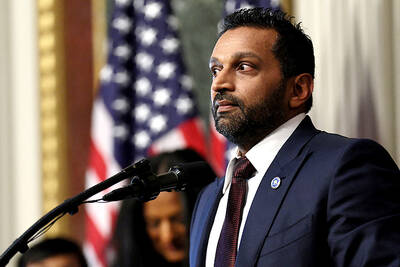
A pro-Iran hacking group claimed to breach FBI Director Kash Patel’s personal e-mail inbox and posted some of the contents online. The e-mails provided by the hacking group include travel details, correspondence with leasing agents in Washington and global entry, and loyalty account numbers. The e-mail address the hackers claim to have compromised has been previously tied to Patel’s personal details, and the leaked e-mails contain photos of Patel and others, in addition to correspondence with family members and colleagues. “The FBI is aware of malicious actors targeting Director Patel’s personal email information,” the agency said in a statement on
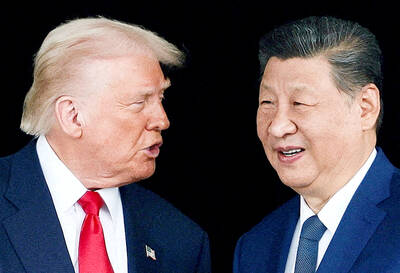
RIVALRY: ‘We know that these are merely symbolic investigations initiated by China, which is in fact the world’s most profligate disrupter of supply chains,’ a US official said China has started a pair of investigations into US trade practices, retaliating against similar probes by US President Donald Trump’s administration as the superpowers stake out positions before an expected presidential summit in May. The move, announced by the Chinese Ministry of Commerce on Friday, is a direct mirror of steps Trump took to revive his tariff agenda after the US Supreme Court last month struck down some of his duties. “China expresses its strong dissatisfaction and firm opposition to these actions,” a ministry spokesperson said in a statement, referring to the so-called Section 301 investigations initiated on March 11.


 RSS
RSS