


A plan to use suicide pilots against US targets was uncovered as early as six years ago during the investigation that led to the arrest of the alleged mastermind of the 1993 World Trade Center bombing, a Philippine police official said yesterday.
Chief Superintendent Avelino Razon also said it was "too much coincidence" that Tuesday's attacks using commercial jets as flying bombs was close to the anniversary of the Sept. 5, 1996, conviction of Ramzi Yousef, Abdul Hakim Murad and Wali Khan Amin Shah for a plot to bomb US airliners in 1995.
Murad was arrested in Manila in January 1995 after fire broke out in an apartment he shared with fellow Pakistani Yousef, the alleged mastermind of the 1993 bombing that killed six people and injured 1,000 others. Shah says he is Saudi Arabian with links to Afghanistan.
Razon, then commander for special operations of the Presidential Security Group providing security for the visit of Pope John Paul II that began days after Murad's arrest, said he was captured after he returned to his apartment to dispose of bomb-making materials. Yousef was captured in Pakistan.
"When we interrogated Murad, he mentioned that he was a skilled pilot, trained in the US, in Afghanistan and also here in the Philippines, who was recruited to undertake a suicide mission," Razon said.
"He was committed to ... fly a plane and ram it into some targets," Razon said, adding that information from a laptop computer seized from Murad indicated one target was CIA headquarters. "There was mention of about a dozen" trained pilots to be recruited for such attacks.
"I didn't imagine that they would ram a 757 aircraft into the World Trade Center. I thought the suicide mission [would involve] a Cessna light aircraft loaded with several kilos of explosives, like a Japanese Kamikaze World War II pilot diving into a target," he said.
He said the investigation started with reports on threats to the pope that led to Murad and the discovery of an international terrorist cell in the Philippines that also "had plans to bomb US aircraft and the US CIA headquarters in Langley, Virginia.''
Yousef and his group allegedly planned to bomb 11 US commercial aircraft under "Project Bojinka." But Murad's arrest foiled the plan, Razon said.
Prosecutors in the US trial of Yousef, Murad and Shah said the bombings would have killed 4,000 people in planes flying to Los Angeles, San Francisco, Honolulu and New York, and were aimed at forcing the US to pull out of the Middle East and stop supporting Israel.
The three men were convicted of all charges. Yousef also was found guilty of killing a man with a bomb on a Philippines Airlines jet in 1994 that prosecutors said was a test run for the plot.
Prosecutors said the plot was hatched in the Philippines, where Yousef had turned his Manila apartment into a bomb factory.
"I believe there are still remnants [of the terrorist cell] and we should be vigilant," Razon said.
"My concern is we should as a nation draw lessons from this ... we cannot say that this can only happen to the US ... "
In other developments, a for-mer pilot with Afghanistan's national carrier was quoted as saying yesterday that he had helped train 14 Islamic militants to fly civilian aircraft.
The London-based Asharq al-Awsat newspaper quoted the pilot as saying from an undisclosed location in Afghanistan that the trainees had left the country nearly one year ago to undisclosed locations after completing their training.
The paper did not say if the trainees were among the hijackers who slammed commercial aircraft into the Pentagon in Washington and the World Trade Center in New York on Tuesday.
It said the young trainees were Pakistanis, Afghans and Arab nationals. Some carried European passports and spoke fluent English.
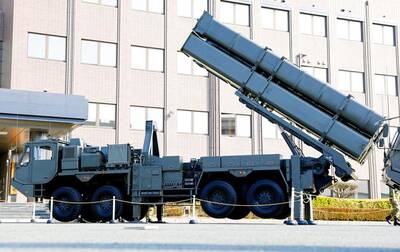
Japan has deployed long-range missiles in a southwestern region near China, the Japanese defense minister said yesterday, at a time when ties with Beijing are at their lowest in recent years. The missiles were installed in Kumamoto in the southern region of Kyushu, as Japan is attempting to shore up its military capacity as China steps up naval activity in the East China Sea. “Standoff defense capabilities enable us to counter the threat of enemy forces attempting to invade our country ... while ensuring the safety of our personnel,” Japanese Minister of Defense Shinjiro Koizumi said. “This is an extremely important initiative for
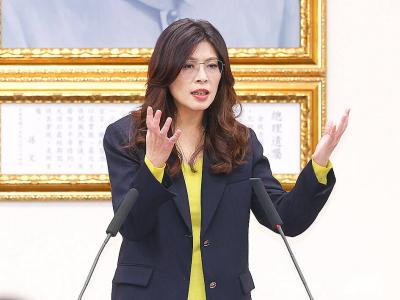
Chinese Nationalist Party (KMT) Chairwoman Cheng Li-wun (鄭麗文) today accepted an invitation from Chinese President Xi Jinping (習近平) to lead a delegation to China next month, saying she hopes to promote the peaceful development of cross-strait relations and bring stability to the Taiwan Strait. “I am grateful and happy to accept this invitation,” Cheng said in a statement from the KMT chairperson’s office. Cheng said she hopes both sides can work together to promote the peaceful development of cross-strait relations, enhance exchange and cooperation, bring stability to the Taiwan Strait and improve people’s livelihoods. At today's news conference, Cheng said any efforts to

MORE POPULAR: Taiwan Pass sales increased by 59 percent during the first quarter compared with the same period last year, the Tourism Administration said The Tourism Administration yesterday said that it has streamlined the Taiwan Pass, with two versions available for purchase beginning today. The tourism agency has made the pass available to international tourists since 2024, allowing them to access the high-speed rail, Taiwan Railway Corp services, four MRT systems and four Taiwan Tourist Shuttles. Previously, five types of Taiwan Pass were available, but some tourists have said that the offerings were too complicated. The agency said only two types of Taiwan Pass would be available, starting from a three-day pass with the high-speed rail and a three-day pass with Taiwan Railway Corp. The former costs NT$2,800

The nation’s fastest supercomputer, Nano 4 (晶創26), is scheduled to be launched in the third quarter, and would be used to train large language models in finance and national defense sectors, the National Center for High-Performance Computing (NCHC) said. The supercomputer, which would operate at about 86.05 petaflops, is being tested at a new cloud computing center in the Southern Taiwan Science Park in Tainan. The exterior of the server cabinet features chip circuitry patterns overlaid with a map of Taiwan, highlighting the nation’s central position in the semiconductor industry. The center also houses Taiwania 2, Taiwania 3, Forerunner 1 and


 RSS
RSS