


The head of Taiwan's state-run Chinese Petroleum Corp (CPC,
"Chinese Petroleum president Pan Wen-yen (
"CPC and CNOOC have finished seismic testing in the Taiwan Strait, our first-phase cooperation. Now we will start second-phase cooperation," he said.
A CPC spokesman stopped short of confirming the deal but said: "Both sides feel the need for exploration."
Both the CPC and the CNOOC began negotiating in 1994 on the drilling agreement in an area covering 15,400km2 in the Tainan Basin between south Taiwan and China's Guangdong Province.
CPC and CNOOC will share the cost of drilling and the reserves discovered in the oil and gas fields.
CPC and CNOOC conducted initial geophysical studies under a two-year contract signed in July 1996 and the study showed possible rich oil and natural gas reserves, the CPC official said.
But the cooperation was halted in late 1996 after the Taipei government introduced new controls on investment and trade links with China as tensions rose between the two rivals.
CPC had to hold talks with CNOOC in foreign countries like Singapore, and sign agreements with CPC in the name of its overseas-based affiliated company -- Overseas Petroleum Investment Corp.
According to a Chinese language newspaper, Pan will visit China Oct. 8 to Oct. 14 to sign the memorandum for the exploration.
In August, CNOOC chairman Wei Liucheng (
"We are much stronger in terms of exploration and development capability and they are much better at refining. It's an excellent union," Wei said.
But he declined to disclose financial terms of the deal.
Back in late August, the CPC formalized plans to make inroads into China by relocating part of its distribution and sales operations across the Taiwan Strait.
CPC management is now working first to open gas stations and oil storage tanks in port cities along the Yangtze River, the longest river in the China, according to CPC officials.
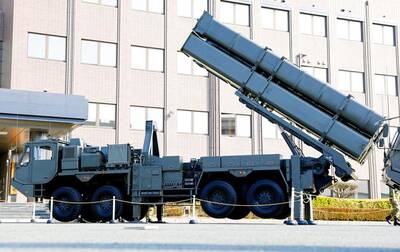
Japan has deployed long-range missiles in a southwestern region near China, the Japanese defense minister said yesterday, at a time when ties with Beijing are at their lowest in recent years. The missiles were installed in Kumamoto in the southern region of Kyushu, as Japan is attempting to shore up its military capacity as China steps up naval activity in the East China Sea. “Standoff defense capabilities enable us to counter the threat of enemy forces attempting to invade our country ... while ensuring the safety of our personnel,” Japanese Minister of Defense Shinjiro Koizumi said. “This is an extremely important initiative for
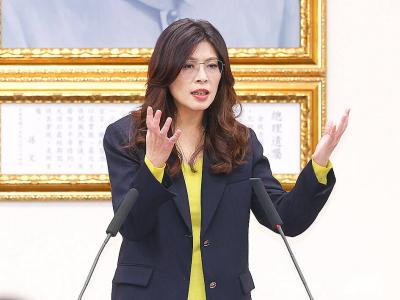
Chinese Nationalist Party (KMT) Chairwoman Cheng Li-wun (鄭麗文) today accepted an invitation from Chinese President Xi Jinping (習近平) to lead a delegation to China next month, saying she hopes to promote the peaceful development of cross-strait relations and bring stability to the Taiwan Strait. “I am grateful and happy to accept this invitation,” Cheng said in a statement from the KMT chairperson’s office. Cheng said she hopes both sides can work together to promote the peaceful development of cross-strait relations, enhance exchange and cooperation, bring stability to the Taiwan Strait and improve people’s livelihoods. At today's news conference, Cheng said any efforts to
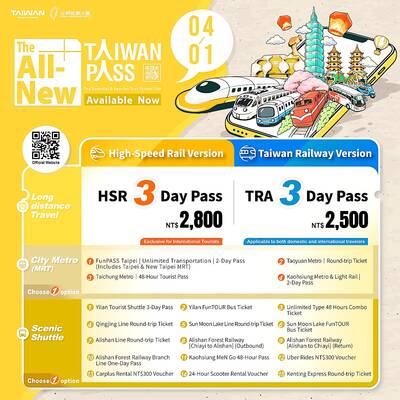
MORE POPULAR: Taiwan Pass sales increased by 59 percent during the first quarter compared with the same period last year, the Tourism Administration said The Tourism Administration yesterday said that it has streamlined the Taiwan Pass, with two versions available for purchase beginning today. The tourism agency has made the pass available to international tourists since 2024, allowing them to access the high-speed rail, Taiwan Railway Corp services, four MRT systems and four Taiwan Tourist Shuttles. Previously, five types of Taiwan Pass were available, but some tourists have said that the offerings were too complicated. The agency said only two types of Taiwan Pass would be available, starting from a three-day pass with the high-speed rail and a three-day pass with Taiwan Railway Corp. The former costs NT$2,800

The nation’s fastest supercomputer, Nano 4 (晶創26), is scheduled to be launched in the third quarter, and would be used to train large language models in finance and national defense sectors, the National Center for High-Performance Computing (NCHC) said. The supercomputer, which would operate at about 86.05 petaflops, is being tested at a new cloud computing center in the Southern Taiwan Science Park in Tainan. The exterior of the server cabinet features chip circuitry patterns overlaid with a map of Taiwan, highlighting the nation’s central position in the semiconductor industry. The center also houses Taiwania 2, Taiwania 3, Forerunner 1 and


 RSS
RSS