


Taipei Times: What does the opening of the Shihlin store on March 16 mean for B&Q?
Tuson: The Shihlin store is a key location in Taipei because it is relatively easy to get to from anywhere in the city by MRT, bus or by car. It is a big development first for the company, but I think "here we are" is the most important message. ... I hope people can come and see what B&Q is and what we have to offer.
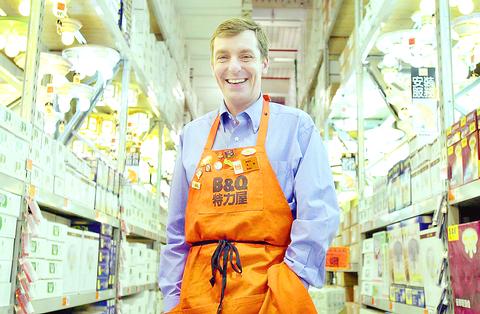
PHOTO: CHIANG YING-YING, TAIPEI TIMES
TT: How much does B&Q have invested in its Shihlin store and what is your sales target for this year?
Tuson: It is an NT$750 million investment and by far the most expensive investment we have in Taiwan. We opened our first store in 1996 and moved into a position of profit in 1999 financially. We've been able to continue growth at that level of profit over the last three years, with our annual growth of sales being around 70 to 80 percent on average. The sales target for this year is about NT$8.5 billion, an increase of 66 percent from last year's NT$5.1 billion.
TT: Aren't you worried about the economic slump, which may impact Taiwan's retail market?
Tuson: Not at all. Retailing is changing as Taiwan's economy is shifting into being a much more high-tech, service-industry related economy. Therefore the development of retailing has moved forward and is becoming more sophisticated as customers are demanding a better retailing standard.
Also there is a change in lifestyle. Young families are much more independent and want to have their own family space. In addition, leisure time is changing, too, recently with two days off every week. As people have more spare time, the development of leisure at home will continue to grow and so does the retailing business.
TT: So you also don't think it is risky to open new stores in Shihlin and Changhwa this month when people's spending is starting to slow?
Tuson: I don't think it is risky because the Taipei market is so large anyway. The lesser spending ... we know it exists during this tough economic time. But the fact is that every country's economy is very cyclical. If I were always worried about how the economy might affect business ... we wouldn't have such a level of business development now. The important thing, I think, is to understand the retail format of the market and to meet your customer demand.
TT: You've stressed the importance of understanding the market you're in. With B&Q expecting to add 25 new stores in Taiwan in the next three years, what is the biggest difference between Taiwan and other markets where B&Q operates?
Tuson: The biggest difference between here and the other markets is really the style of housing and how much space people can have. In Europe, people have houses and gardens with much more living space. In Taiwan, particularly in Taipei which is the biggest market, space is very limited. The average living space for a customer in Taiwan is even less than the average in Japan. Therefore, in terms of business, the style of housing and living environment in Taiwan has very much set the type of products and product mix we have in B&Q stores.
A lot of that knowledge comes partly by research -- from experience and trying. A very good example is painting products. Four years ago, I was told that it's not worth importing colored paints to Taiwan because no one would be interested and people just wanted white paint. Now, colored paint is a highly successful product line in which we have achieved a volume necessary to switch production to a Taiwanese factory making paint to B&Q specifications, being especially tailor-made to Taiwan's climate.
TT: There's already strong presence of other foreign retailers like Carrefour, IKEA, Makro and Cosco in Taiwan and people know quite well what these hypermarkets offer. Will you be able to get B&Q's Do-in-yourself (DIY) concept through to Taiwan customers?
Tuson: As a manner of fact, many of our customers have no idea about B&Q in the UK. But that's OK, because what is important to them is the product, the information they want and the price which they believe is right for the products. Indeed, a lot of people asked me, `Does the DIY market really exist in Taiwan?' Really the answer is `no' -- not in the UK or Western sense. I think that is partly due to people's experience and also, to a large part, a product's availability for users.
The objective of the DIY market or DIY store is to get people to invest their time and their money in their apartments, making them "home." As people have to work even harder as the economy gets tougher in Taiwan, that investment in making home feel more comfortable has moved from being an innovation business, a contract business, to being a DIY or home improvement business. Therefore I feel the concept of DIY will prevail and the potential of this DIY market will be enormous, partly because the cost of labor is rising here and partly because people have more time available on the weekends.
TT: What facts can support you in saying that the DIY market is here to stay?
Tuson: Turning an apartment into a family home through DIY method is very easy to do. You can keep changing and developing it all the time. I see people in Taiwan wanting to do just that. I agree that making DIY a habit for Taiwan people may take time but we have also seen big developments in wooden flooring as thousands of thousands of people are doing DIY wooden flooring now. In addition, paint sales which have expanded from traditional white paint to color paints, has become a major selling area in B&Q, not to mention that a lot of people bought ceiling fans. As I mentioned before, the Taiwan market is becoming more sophisticated with many more publications about home decoration and improvement are being publicly circulated.
TT: For a foreign retailer like B&Q to run as successfully as possible in Taiwan, it needs quality and stable suppliers. What measures have you taken to ensure local suppliers will meet B&Q's demand?
Tuson: Retailing is about re-attention to detail. In Taiwan, the suppliers we have had really been the sector for the export market. In fact, about five years ago when we started here, a lot of them were not interested in supplying us because they said the domestic market was too small. While they have picked up opportunities to supply the domestic market, these suppliers don't really consider the customer. As a business, we have to work with our suppliers, making our suppliers better. Part of that effort is packaging. Four years ago, packaging was just boxes with no information about what product was inside. Today we have achieved consistency in packaging, which gives customers a clear picture of what product they're buy. The improvement in packaging has made shopping much easier for people.
TT: B&Q has plans to enter the Singapore market next year. Why Singapore? What developments would you like to see for B&Q in Asia?
Tuson: The reason for choosing Singapore is because the market's population -- a lot of people living in a small area -- and its economy, which is well developed with a higher GDP. Unlike Taiwan, where entertaining in the home is not something people really do, People in Singapore are entertaining in their home and are willing to spend money on making sure they get the best investment. That's really why Singapore is being identified.
Talking about B&Q's expansion plan, Taiwan will be the base for B&Q to move into Singapore, Malaysia, the Philippines, Hong Kong, and possibly Indonesia later. As for China, the B&Q of UK has got two stores operating in China and is expected to open up to 50 stores in the mainland in the next five years, 20 at a minimum. In general, Asia as a market bodes well for B&Q as it has strong future potential.
TT: You had personally anticipated staying in Taiwan for only two years but have now been here for four years. What is the most important lesson you would like to share?
Tuson: First of all, the opportunity to move away from the UK is a good experience. Had I said 'no,' I would spend the rest of my life wondering what would have happened.
As Taiwan's market is very dynamic and fast moving, the number one lesson for me is not to assume you can just come into a new market and do the same in other places. It's very dangerous.
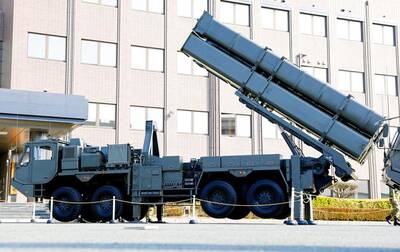
Japan has deployed long-range missiles in a southwestern region near China, the Japanese defense minister said yesterday, at a time when ties with Beijing are at their lowest in recent years. The missiles were installed in Kumamoto in the southern region of Kyushu, as Japan is attempting to shore up its military capacity as China steps up naval activity in the East China Sea. “Standoff defense capabilities enable us to counter the threat of enemy forces attempting to invade our country ... while ensuring the safety of our personnel,” Japanese Minister of Defense Shinjiro Koizumi said. “This is an extremely important initiative for
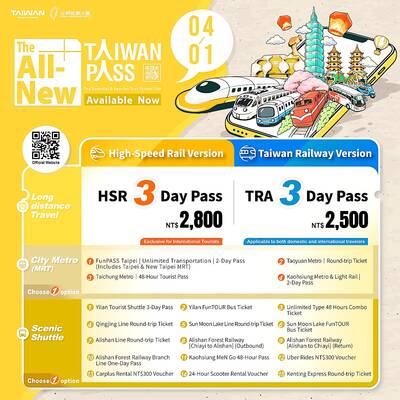
MORE POPULAR: Taiwan Pass sales increased by 59 percent during the first quarter compared with the same period last year, the Tourism Administration said The Tourism Administration yesterday said that it has streamlined the Taiwan Pass, with two versions available for purchase beginning today. The tourism agency has made the pass available to international tourists since 2024, allowing them to access the high-speed rail, Taiwan Railway Corp services, four MRT systems and four Taiwan Tourist Shuttles. Previously, five types of Taiwan Pass were available, but some tourists have said that the offerings were too complicated. The agency said only two types of Taiwan Pass would be available, starting from a three-day pass with the high-speed rail and a three-day pass with Taiwan Railway Corp. The former costs NT$2,800

POLLS CONCERNS: There are concerns within the KMT that a Cheng Li-wun-Xi Jinping meeting could trigger a voter backlash in elections in November Chinese Nationalist Party (KMT) Chairwoman Cheng Li-wun (鄭麗文) accepted an invitation from Chinese President Xi Jinping (習近平) to visit next month, her party and Chinese state media reported yesterday. Cheng, who took up her role in November last year, “gladly accepted” the invitation to lead a delegation to China, the KMT said in a statement, confirming a Xinhua news agency report. Cheng “looks forward to joint efforts by both parties to advance the peaceful development of cross-strait relations, promote cross-strait exchanges and cooperation, and work for peace in the Taiwan Strait and greater well-being for people on both sides,” the statement said. Chinese
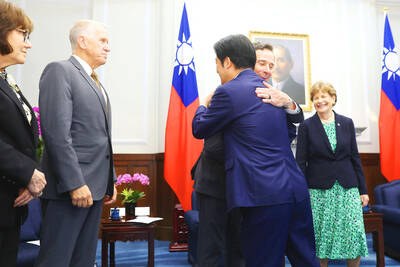
SIGNIFICANT TO THE WORLD: The delegation’s visit aims to send a clear message that bipartisan support for Taiwan is consistent, US Senator Jeanne Shaheen said The US Senate’s bipartisan support for Taiwan remains strong and Taiwan-US ties would continue for decades to come, a US Senate delegation said in Taipei yesterday, while calling on the legislature to swiftly pass a special defense budget bill. A US delegation led by Democratic US Senator Jeanne Shaheen and Republican US Senator John Curtis — both members of the US Senate Committee on Foreign Relations — arrived in Taiwan yesterday for a two-day visit. The other senators of the delegation included Senate Taiwan Caucus cochair Thom Tillis and Senate Committee on Armed Services senior member Jacky Rosen. Shaheen told a news


 RSS
RSS