

Leopard cat-friendly farming methods helped boost honey production by 10 percent over the past four years, a Miaoli County-based beekeeper said at an A-Hu Go (阿虎加油) brand event in Taipei yesterday.
The Forestry and Nature Conservation Agency’s Hsinchu branch yesterday launched the brand with a sales exhibition at the city’s Hope Plaza, which runs through today.
The brand was developed using the leopard cat-friendly farming label, which aims to raise the market visibility of products that support leopard cat conservation, it said.
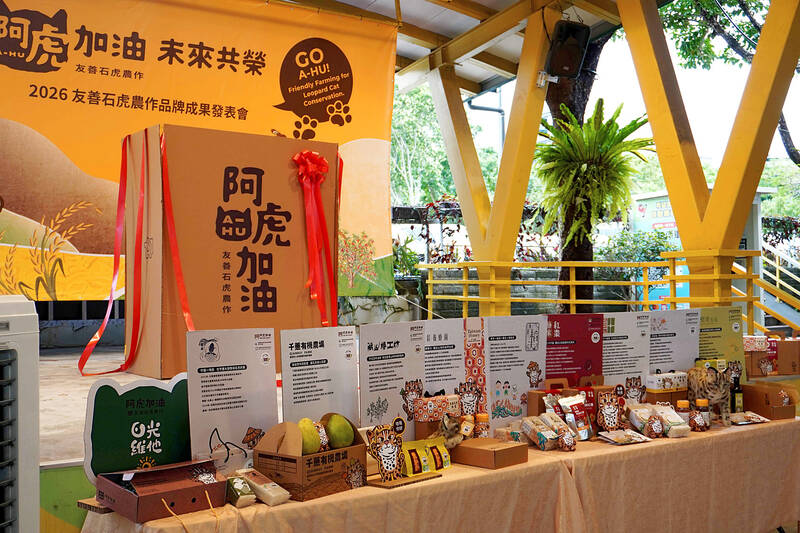
Photo: Screen grab from the Forestry and Nature Conservation Agency’s Web site
A-Hu Go products are packaged in paper boxes bearing a drawing of a leopard cat, it said, adding that the packaging can be tailored to the needs of products.
Chiang Kun-hsien (江坤憲), who runs the Chun Tsai Apiary in Miaoli’s Yuanli Township (苑裡) along with his sisters, said their bee yard’s annual honey production has risen at least 10 percent since they began applying leopard cat-friendly farming methods more than three years ago.
His sister, Chiang Chia-ching (江佳靜), said they struggled with mysterious bee deaths at the apiary until they attended a leopard cat-friendly farming workshop organized by the branch, at which they learned that pesticides can kill the insects.
“One of our customers was a leopard cat-friendly farming advocate and invited us to the workshop,” she said. “We used to mow to near ground level and use herbicides if the grass was too high, but the course taught us to keep it at 30cm or less for leopard cat conservation, and to conserve soil and water.”
Chiang Kun-hsien said maintaining the grass also helps nurture the bees.
“Our bees feed on the grass and wild flowers growing in the bee yard. They are rarely attracted to nearby pesticide-treated farmlands,” he said.
All agricultural products with a leopard cat-friendly farming label can apply to use the A-Hu Go brand, the branch said, adding that 16 agricultural products from Miaoli have been approved.
Guidelines for leopard cat-friendly farming requires adoption of grass cover cultivation, and not using herbicides, synthetic pesticides or fertilizers, and any supplies that might harm leopard cats or the environment, it said.
The guidelines also require operations to refrain from letting cats and dogs roam, or the feeding of strays near their fields, it added.
Miaoli County Agriculture Department Deputy Director Tsai Cheng-hsin (蔡政新) said that the county boasts the largest leopard cat population, as up to 88 percent of the region is slopeland.
Slopeland — defined by the Slopeland Conservation and Utilization Act (山坡地保育條例) as land with an elevation of more than 100m or a slope of at least 5 percent — provides lowland-hill habitats that leopard cats prefer, Tsai said.
The department aims to increase the county’s total leopard cat-friendly farming area to more than 2,400 hectares, he said.
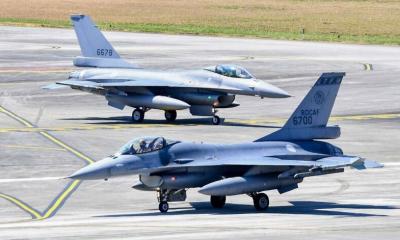
The first two F-16V Block 70 jets Taiwan purchased from the US were spotted unexpectedly turning back after departing from Hawaii yesterday, potentially further delaying delivery of the aircraft. Taiwan has purchased 66 of the F-16 C/D Block 70 jets to be deployed at Chihhang Air Base (志航基地) in Taitung County and operated by the air force's 7th Tactical Fighter Wing to defend Taiwan’s eastern region. Two single-seat jets, bearing serial No. 6727 and 6728, were spotted taking off from Hickam Field in Hawaii yesterday, observers said. Based on the precedent set during the delivery of Taiwan's older F-16 Block 20s, the new

Taiwan’s growing defense preparations might be sending a stronger signal to the US than to Beijing, highlighting the need for Taipei to tailor its deterrence efforts to different audiences, a US security academic said yesterday. Stanford University Freeman Spogli Institute for International Studies fellow Oriana Skylar Mastro made the comment during a Taipei Security Dialogue panel examining lessons Taiwan could draw from the wars in Ukraine and the Middle East. Mastro said she was impressed by Taiwan’s increased defense spending, emphasis on asymmetric capabilities and efforts to prepare society for conflict, but questioned whom those initiatives were influencing. She said when she asked
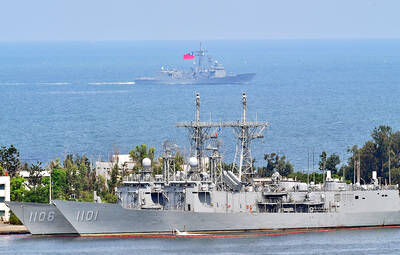
SIZE MATTERS: Large ships are politically attractive as visible symbols of national defense, but small surface combatants are more likely to survive an initial strike Taiwan needs to restructure its naval fleet from focusing on large warships, which are “sitting ducks” for China’s advanced tracking technology, to smaller, stealthy corvettes that are harder to detect but retain sufficient firepower to deter a Chinese invasion, a Taiwanese academic and a former US military commander said in an article published on Friday in the journal Foreign Affairs. Taiwan does not need a fleet capable of competing with the Chinese navy for traditional control of the Taiwan Strait, but rather “sea denial” capabilities that would prevent China from freely using the waterway, Taiwanese aerospace and security expert Holmes Liao

EVA Airways Corp is to raise excess baggage fees and revise other international baggage charges beginning on Sept. 29, citing higher fuel prices and rising global operating costs amid economic and geopolitical pressures. The changes would apply to international flights with travel dates on or after Sept. 29, the Taiwanese carrier said in a statement on its Web site. The revised baggage policy covers excess baggage, prepaid excess baggage, overweight and oversized baggage fees. It also covers updated pricing rules, and fees for transporting pets and sports equipment. Under the new rates, excess baggage fees would increase by between US$20 and US$90 per


 RSS
RSS