

Taiwan is next week expected to announce that it plans to invest an additional US$20 billion to US$30 billion in the US as part of a bilateral trade agreement centered on semiconductors, artificial intelligence (AI) and energy, US Secretary of Commerce Howard Lutnick said yesterday.
Lutnick was speaking during an interview with CNBC’s Squawk Box, following the conclusion yesterday of the two-day G20 Innovation Ministerial in Chapel Hill, North Carolina. During the ministerial, Lutnick held discussions with AI leaders, including Nvidia Corp CEO Jensen Huang (黃仁勳).
Taiwanese companies are planning an additional US$20 billion in investments, Minister of Economic Affairs Kung Ming-hsin (龔明鑫) said at the Semicon Network Summit in Taipei yesterday.
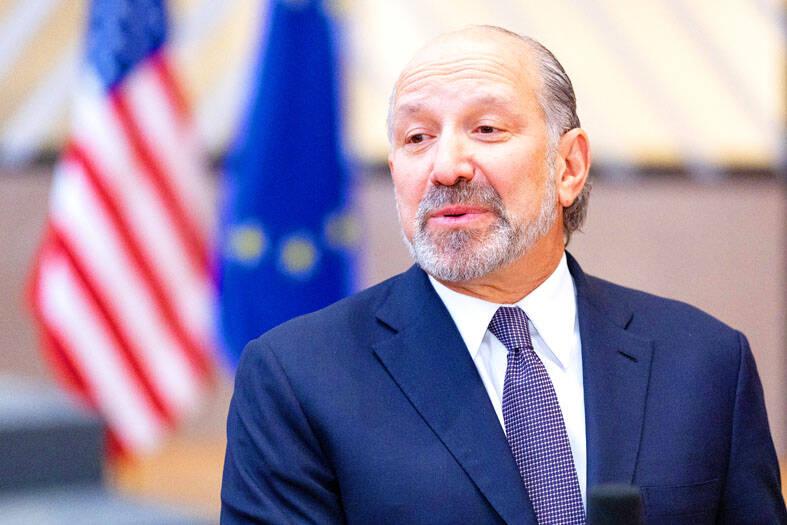
Photo: AP
The figure was the result of a new assessment after the SelectUSA Investment Summit in May to determine which companies, aside from Taiwan Semiconductor Manufacturing Co (TSMC), might want to further their investments in the US, Kung said.
Meanwhile, Lutnick said that US President Donald Trump’s administration is drawing up plans to impose new tariffs on semiconductors, with companies that manufacture chips in the US possibly eligible for tariff relief.
When Trump first took office, the US accounted for less than 2 percent of global semiconductor production and is now heading toward 40 percent, Lutnick said, adding that it could hit 50 percent production by the end of Trump’s second term.
The US has now secured US$1.2 trillion in investment in domestic semiconductor production, while TSMC has expanded investment in its semiconductor factory in Arizona to US$265 billion, he said.
“We will be successful in semiconductors; they’re going to be built in America,” he said.
Semiconductor tariff policy is likely to mirror the administration’s efforts to boost domestic pharmaceutical production through tariff relief for companies that manufacture innovative pharmaceuticals in the US and most-favored nation treatment, Lutnick said.
Earlier this year, the US agreed to lower tariffs on Taiwanese goods from 20 percent to 15 percent. Under the deal, Taiwanese semiconductor, electronics manufacturing service, AI and energy companies would invest US$250 billion in the US, while the government pledged an additional NT$250 billion in credit guarantees to facilitate investment in the US by Taiwan’s semiconductor and information and communication technology sectors.
Lutnick said the Taiwan trade deal that he led earlier this year called for Taiwan to move 40 percent of its chip production to the US.
In February, Vice Premier Cheng Li-chiun (鄭麗君) said that the 40 percent goal was “impossible,” something she said she had “told the US side very clearly.”
Trump’s chip tariff policy would effectively mean, “If you build here, you don’t pay, but if you don’t build here, expect to pay to enter the greatest market in the world,” Lutnick said.
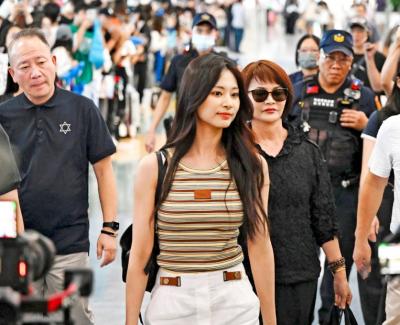
A Straits Exchange Foundation official today warned that yielding to political pressure in exchange for access to China’s entertainment industry rarely ends well, amid rumors that China is seeking to lure Taiwanese K-pop star Chou Tzu-yu (周子瑜). Chou, more commonly known as Tzuyu, is the only Taiwanese member of the girl group Twice. Her contract with JYP Entertainment is set to expire at the end of this year, and there have been widespread reports that she would not renew it. She is reportedly planning to pursue solo activities under her parents’ agency, Yu Hai Entertainment (瑜海娛樂), although China has also reportedly offered
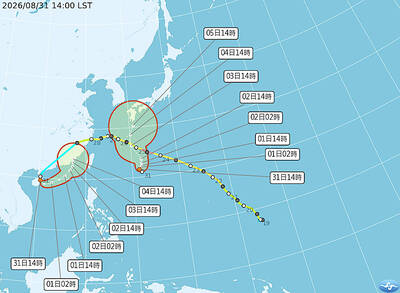
A tropical depression near Hainan that was once Typhoon Saudel may once again strengthen into a tropical storm, the Central Weather Administration (CWA) said yesterday, but a sea warning for waters around Taiwan is unlikely. CWA forecaster Huang En-hung (黃恩鴻) said that Saudel would return to being a weak tropical storm by late yesterday or early this morning. However, as the storm is to gradually weaken again and would head toward China’s Guangdong Province away from Taiwan, the chances that it would affect Taiwan enough for the CWA to issue a sea warning are relatively low,

Yielding to political pressure in exchange for access to China’s entertainment industry rarely ends well, a Straits Exchange Foundation official said yesterday amid rumors that China is seeking to lure Taiwanese K-pop star Chou Tzu-yu (周子瑜). Chou, who goes by Tzuyu, is the only Taiwanese member of the girl group Twice. Her contract with JYP Entertainment is set to expire at the end of this year, and there have been widespread rumors that she would not renew it. She is reportedly planning to pursue a solo career under her parents’ agency, Yu Hai Entertainment, although China has also reportedly offered to help Tzuyu
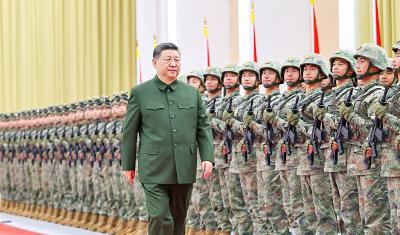
China has revised its National Defense Mobilization Law to prepare for a rapid transition to wartime, with an official today saying the measures are aimed at helping Chinese President Xi Jinping (習近平) fulfill his “historic mission of national unification.” The revised version of the mobilization law is to take effect on Oct. 1, marking the first major revision since the law was enacted in 2010. The amendments define national defense mobilization as measures taken in response to threats to national sovereignty, unification, territorial integrity, security and development interests, including efforts to ensure rapid transition between peacetime and wartime and convert economic and


 RSS
RSS