


The proposed NT$5,000 (US$159) growth subsidies are planned for implementation next year, and eligibility requires Republic of China citizenship and residency in Taiwan, Minister of Health and Welfare Shih Chung-liang (石崇良) said yesterday.
The subsidies would be distributed in two phases, with those for children aged younger than six receiving cash payments and for those aged six to 18 receiving payments half in cash and half via a special account deposit that would not be accessible until the child becomes 18.
The Ministry of Health and Welfare would work closely with household registration offices to ensure that children are citizens and have residency in Taiwan, Shih said, adding that only those who meet both criteria would be eligible.
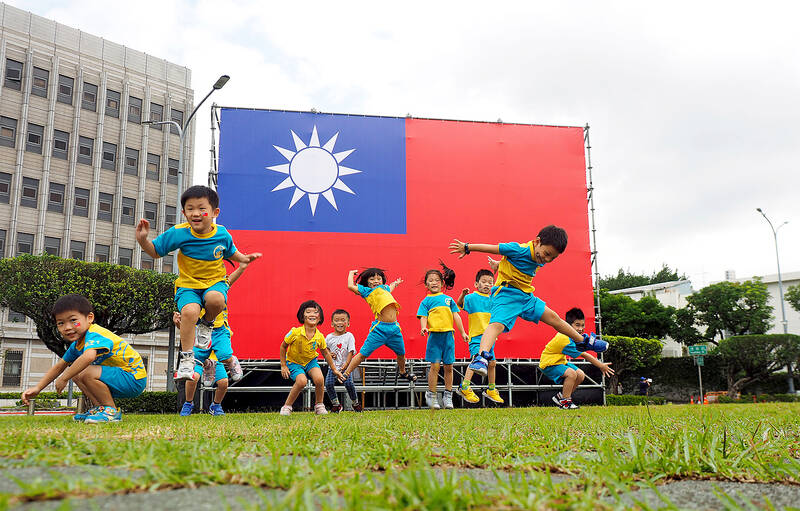
Photo: David Chang, EPA
The government is mulling the possibility of parents applying for a portion of the subsidies if their child passes away before they turn 18, Shih said, adding that details regarding the issue are yet to be finalized.
The ministry would be the competent authority for distributing subsidies, and the funding would be included in next year’s fiscal budget, with availability contingent on legislative approval, Shih said.
Of the NT$205 billion in funds for family policies, NT$185 billion would be allocated to the growth allowance, Social and Family Affairs Administration Director-General Chou Tao-chun (周道君) said.
The remaining funds would cover other added measures, such as expanded subsidies for prenatal checkups, childcare and infant healthcare, Chou said.
Addressing concerns over how to fund the initiatives, National Development Council Minister Yeh Chun-hsien (葉俊顯) said that the government has already factored economic growth into its tax revenue projections.
Based on forecasts, GDP is expected to maintain an annual growth rate of at least 3 percent through 2028, meaning the nation’s overall financial condition remains “quite robust,” Yeh said.
Meanwhile, the Cabinet yesterday approved amendments to the Gender Equality in Employment Act (性別平等工作法) that would extend maternity leave from the existing eight weeks to 12 weeks, while paternity leave would be extended from seven to 14 days.
Parents would have up to 60 days of paid leave and subsidy calculations, up from 30, to take care of their children, according to the amendment.
The Ministry of Labor said it is considering the possibility of having companies set up childcare facilities or foot childcare expenses, adding that it would provide tax reductions of up to 200 percent of expenditures from the company’s total income.
Amendments to the Employment Insurance Act (就業保險法) would establish new categories and a Table of Grades of Labor Insurance Salary to ensure that the calculation of laborers’ actual income replacement ratio during paid leave is correct, the government said.
The changes would separate paid leave for mothers caring for infants, now defined as babies aged up to six years, and paid leave for children, defined as those aged seven and above.
Parents applying for paid leave may each apply for a three-month extension after they have both taken six months of paid leave, meaning each parent could take up to nine months of paid leave under a proposed scheme.
Additional reporting by CNA

FUKUOKA SITUATION: Japanese media reported that the pathogen is expected to be identified by the summer, while the CDC downplayed the idea that it was hMPV A “mysterious cold-like illness” reported in Japan’s Fukuoka Prefecture does not seem to be a new disease, but Japanese authorities have been asked about the situation, the Centers for Disease Control (CDC) said yesterday. The Fukuoka Prefectural Medical Association on Wednesday told a news conference that a “mystery cold” that has become a hot topic on social media is “highly likely to be caused by some kind of viral infection,” Japan’s KBC News reported. “Many people are experiencing symptoms starting with a sore throat, followed by a runny nose, phlegm and a severe cough,” KBC News reported, citing association officials. Health authorities are

Nvidia Corp CEO Jensen Huang (黃仁勳) arrived in Taiwan yesterday ahead of upcoming AI and technology events, saying he plans to meet with clients and Taiwan Semiconductor Manufacturing Co Chairman C.C. Wei (魏哲家) during his visit. After landing at Taipei Songshan Airport, Huang posed for photos with fans and handed out Yakult drinks to reporters and supporters waiting at the scene, saying he has “a lot to do” during the trip. Asked about reports that Nvidia’s planned headquarters site in Taipei’s Beitou Shilin Technology Park could break ground on May 27, Huang said that if the company holds an event, he would

The Ministry of Finance this afternoon announced the winning numbers for the March-April uniform invoice lottery. The winning number for the NT$10 million (US$318,060) special prize is 19531471, and the winning number for the NT$2 million grand prize is 85941329. Three numbers were drawn for the NT$200,000 first prize: 07225810, 20231230 and 83518781. Those with receipts matching the last seven digits of any of the first-prize numbers will win the NT$40,000 second prize, while those matching the last six digits will win the NT$10,000 third prize. Those whose receipts match the last five digits of the first-prize numbers can claim the NT$4,000 fourth prize,
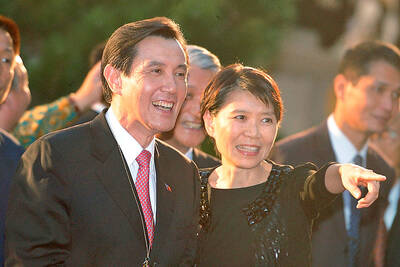
Former president Ma Ying-jeou (馬英九) yesterday expressed “shock and regret” over a statement issued by his wife without his consent, and rejected her assertion that his eldest sister, Ma Yi-nan (馬以南), would manage his medical care or act as his spokesperson amid an ongoing embezzlement probe into his foundation. Ma Ying-jeou in a statement said he was shocked by a statement by his wife, Chou Mei-ching (周美青), regarding his affairs. Ma Yi-nan “must not” be in charge of his healthcare and other personal affairs, nor can she be allowed to represent the Ma family, the former president said. He said he was also


 RSS
RSS