


A conflict between the US and China over Taiwan would risk a nuclear escalation with both militaries likely to stage sweeping operations targeting rival command and communications hubs, a leading defense research center said today.
In a strategic assessment ahead of Asia's biggest annual defense meeting in Singapore this weekend, the London-based International Institute for Strategic Studies (IISS) said the world was on the cusp of a new nuclear arms race "with the Asia-Pacific at its core."
"Regional states and those with strategic interests are expanding their nuclear arsenals, while non-nuclear weapons states pursue long-range conventional-strike capabilities: both challenging strategic stability," the IISS assessment said.
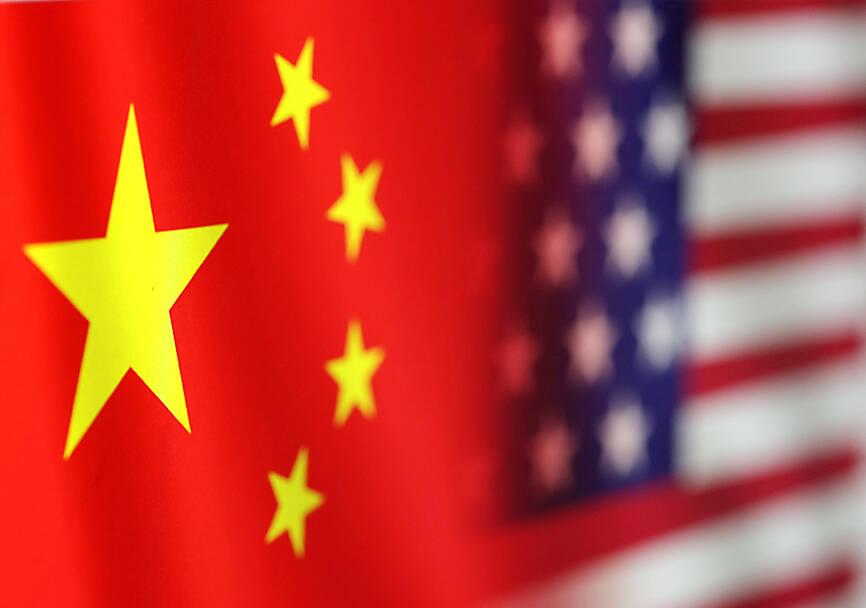
Photo: Reuters
Taiwan, along with the conflict in Iran and uncertainties about US commitments to the region, is expected to surface prominently at the IISS' Shangri-La Dialogue.
The informal conference runs from tomorrow through Sunday, drawing an eclectic mix of ministers, generals, intelligence chiefs, diplomats, analysts and weapons makers.
The event follows a summit between Chinese President Xi Jinping (習近平) and US President Donald Trump in Beijing earlier this month, which led to some concern in Taipei about the US’ commitment to helping Taiwan defend itself.
Beijing has never ruled out the use of force to take control of Taiwan, and has ramped up pressure by increasing its military presence around the nation, keeping Taipei on high alert for further Chinese moves following the summit.
US Secretary of Defense Pete Hegseth is scheduled to speak at the Singapore conference on Saturday. Beijing has yet to confirm whether Chinese Minister of National Defense Dong Jun (董軍) is to attend.
The 156-page IISS assessment examines evolving military doctrines across the region, as well as how a conflict over Taiwan might play out.
While US and Chinese forces have different aims in a Taiwan scenario — the Chinese to keep the US and its allies at bay while the US bolsters Taiwan's resilience — the two sides could be expected to launch vast operations across military domains.
"Conflict with China would risk escalation, potentially to a nuclear level, given the strategic importance of Taiwan to Beijing," the document says.
"There is currently little public evidence to suggest that both militaries understand the necessary guard rails to prevent, or rules of engagement that would restrict, both sides potentially targeting each other's key command, control, communications, computers, intelligence, surveillance and reconnaissance nodes," the assessment says. "The prospect of nuclear escalation will thus continue to loom large in an major [sic] US-China conflict."
While the US and Russian nuclear arsenals still dwarf China's stockpiles, US officials and arms control analysts say that China is expanding and improving its atomic weapons capabilities faster than any other nuclear power.
A Pentagon report released in December last year said that China was on track to field 1,000 warheads by 2030.
The Federation of American Scientists estimates that Russia and the US field 4,400 and 3,700 active warheads respectively, while China has 620.

FUKUOKA SITUATION: Japanese media reported that the pathogen is expected to be identified by the summer, while the CDC downplayed the idea that it was hMPV A “mysterious cold-like illness” reported in Japan’s Fukuoka Prefecture does not seem to be a new disease, but Japanese authorities have been asked about the situation, the Centers for Disease Control (CDC) said yesterday. The Fukuoka Prefectural Medical Association on Wednesday told a news conference that a “mystery cold” that has become a hot topic on social media is “highly likely to be caused by some kind of viral infection,” Japan’s KBC News reported. “Many people are experiencing symptoms starting with a sore throat, followed by a runny nose, phlegm and a severe cough,” KBC News reported, citing association officials. Health authorities are

Nvidia Corp CEO Jensen Huang (黃仁勳) arrived in Taiwan yesterday ahead of upcoming AI and technology events, saying he plans to meet with clients and Taiwan Semiconductor Manufacturing Co Chairman C.C. Wei (魏哲家) during his visit. After landing at Taipei Songshan Airport, Huang posed for photos with fans and handed out Yakult drinks to reporters and supporters waiting at the scene, saying he has “a lot to do” during the trip. Asked about reports that Nvidia’s planned headquarters site in Taipei’s Beitou Shilin Technology Park could break ground on May 27, Huang said that if the company holds an event, he would

The Ministry of Finance this afternoon announced the winning numbers for the March-April uniform invoice lottery. The winning number for the NT$10 million (US$318,060) special prize is 19531471, and the winning number for the NT$2 million grand prize is 85941329. Three numbers were drawn for the NT$200,000 first prize: 07225810, 20231230 and 83518781. Those with receipts matching the last seven digits of any of the first-prize numbers will win the NT$40,000 second prize, while those matching the last six digits will win the NT$10,000 third prize. Those whose receipts match the last five digits of the first-prize numbers can claim the NT$4,000 fourth prize,
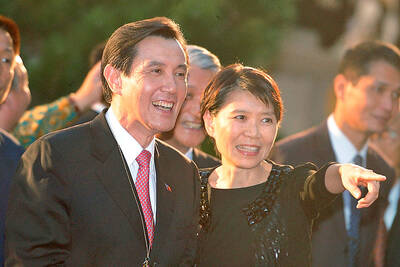
Former president Ma Ying-jeou (馬英九) yesterday expressed “shock and regret” over a statement issued by his wife without his consent, and rejected her assertion that his eldest sister, Ma Yi-nan (馬以南), would manage his medical care or act as his spokesperson amid an ongoing embezzlement probe into his foundation. Ma Ying-jeou in a statement said he was shocked by a statement by his wife, Chou Mei-ching (周美青), regarding his affairs. Ma Yi-nan “must not” be in charge of his healthcare and other personal affairs, nor can she be allowed to represent the Ma family, the former president said. He said he was also


 RSS
RSS