


The Centers for Disease Control (CDC) yesterday announced that it would procure 7,050,150 trivalent influenza vaccine doses for this year, up 35,000 doses from last year.
Public health officials in January approved the procurement of the trivalent flu vaccines in accordance with the WHO’s recommendations, the CDC said in a statement.
The CDC purchased 6,849,360 of standard flu vaccines and 200,790 enhanced immune-response vaccines, it said.
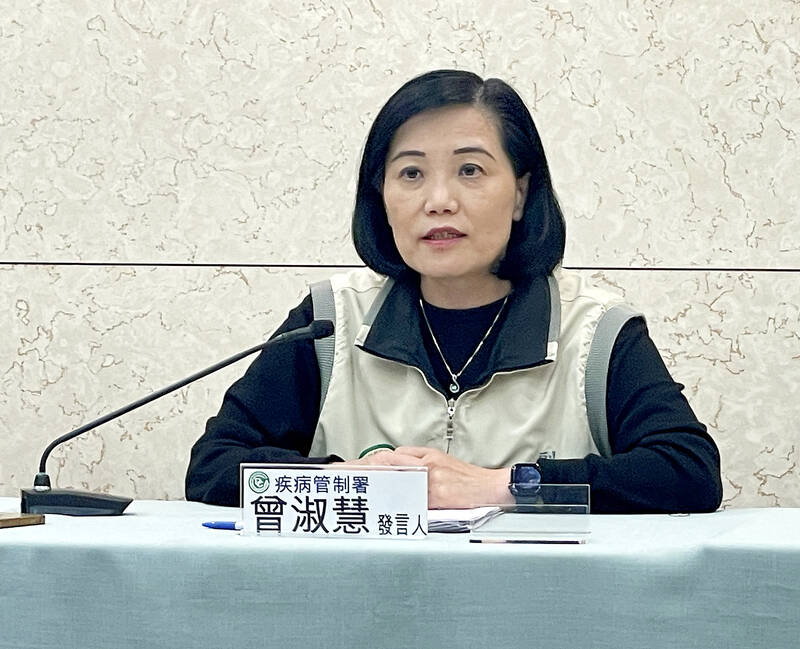
Photo: Lo Pi, Taipei Times
The CDC’s first-ever procurement of enhanced immune response flu vaccines are intended for the elderly population, it said, adding that Taiwan is the first Asian country to include the vaccine in a government-funded immunization program.
Taiwan-based Adimmune, UK-based GSK, France-based Sanofi, and Taiwan-based TTY Biopharm would supply 47.5 percent, 26.3 percent, 11.3 percent and 9.1 percent respectively of the standard-dose vaccines, the CDC said.
A reserve supply of 40,000 doses was ordered from each of the five contractors, it added.
TTY Biopharm and Sanofi would supply 60 percent and 40 percent respectively of the enhanced vaccines, with a reserve order of 15,000 from each, it said.
Public health officials awarded the contracts based on a cost-benefit analysis, the firms’ ability to make timely deliveries, supply stability, capacity for additional orders and corporate social responsibility, it said.
Standard-dose vaccine deliveries are scheduled from late September through the middle of October, while the enhanced vaccine deliveries are scheduled for late September, the CDC said.
The planning process and delivery timetables were expedited in anticipation of high public demand based on last year’s figures, it said.
In related news, Minister of Health and Welfare Shih Chung-liang (石崇良) said at a news conference in Taipei marking the opening of the Taiwan Asia-Pacific Hub for Rare Disease Innovation and Treatment that the National Health Insurance (NHI) from July would fully cover screening for diseases in newborns.
Hospitals screen newborns for 21 disorders, including 18 rare diseases, and the government provides a NT$200 (US$6.35) subsidy for the examinations, with parents paying the difference out of pocket, Shih said.
The new policy means that the NHI would fully cover the NT$750 cost of the screenings and add spinal muscular atrophy (SMA) tests to the package, he said.
The ministry is allocating close to NT$100 million to the policy, which would benefit up to 100,000 infants a year, Shih said.
Kaohsiung Medical University Hospital pediatrician Jong Yuh-jyh (鐘育志), an SMA expert, said that medical advances have made the disease treatable, if discovered in time, where previously the death rate was almost 100 percent.
Infants who received treatment before symptoms manifested had a 100 percent chance of walking unassisted at 18 months of age, he said, adding that early prognosis is critical to survival and quality of life.
An initial positive result is not confirmation that the infant has SMA and the child should undergo additional tests to confirm the prognosis, a Health Promotion Administration spokesperson said.
Medical Excellence Taiwan chairman Chen Yu-ray (陳昱瑞) said that the rare diseases hub would facilitate medical research on rare diseases across government agencies, academia and the healthcare industry.
The integration of data and clinical feedback would prove invaluable to doctors’ efforts to treat diseases, Chen said.

REASONS FOR TRAVEL: An assistant professor said that proposed amendments to penalize drivers if they used drugs overseas would not deter people from traveling People who operate a motor vehicle under the influence of marijuana would have their driver’s license revoked, even if they used the substance while overseas, the Ministry of Transportation and Communications said yesterday, citing proposed amendments to the Road Traffic Management and Penalty Act (道路交通管理處罰條例). The amendments would also authorize the government to revoke the licenses of people determined to have used Category 1 or Category 2 narcotics, even if they were not operating a vehicle while under the influence of drugs, as well as ban them from taking the license test for three years, the ministry said. People aged 18 or

GLOBALGIVING: ‘ Caving to external pressure is not acceptable for an organization that has cultivated justice reform and human rights for 30 years,’ one NGO said A slew of non-government organizations (NGOs) have withdrawn from the GlobalGiving fundraising platform after it announced it would use “Chinese Taipei” instead of “Taiwan” from next month. The Taiwan Good Rice Association wrote on Facebook on Friday that it was informed on April 28 via a teleconference call of the change, which was made because the platform wanted to operate in China. Taiwan Good Rice is to terminate all cooperative relationships with GlobalGiving in response to the platform’s “unilateral and non-negotiable” decision to remove references to Taiwan, the NGO said. “Taiwan is in the official name of Taiwan Good Rice Association and the

HEAVY WEATHER: Typhoon Jangmi is due to crash straight into the Ryukyus as airlines look to shift flights to larger aircraft or cancel flights to Okinawa entirely Taiwan’s international air carriers announced flight adjustments over the weekend as Typhoon Jangmi is forecast to hit the Ryukyu Islands today and tomorrow. The Central Weather Administration (CWA) upgraded Jangmi from a tropical storm to a typhoon at 8am yesterday, with the eye located 580km south of Naha city. It was moving north at 19kph. Today, China Airlines’ CI-120, CI-121, CI-122 and CI-123 flights between Taoyuan and Naha, Okinawa, have been canceled as well as CI-132 and CI-133 between Kaohsiung and Naha. EVA Air’s BR-112, BR-113, BR-186 and BR-185 flights between Taoyuan and Naha are also canceled. Low-cost carrier Tigerair Taiwan canceled IT-230,
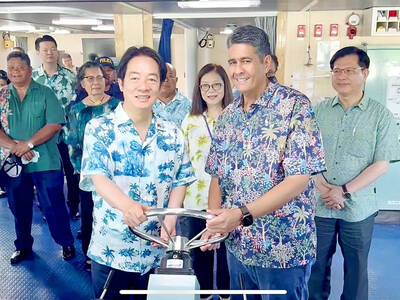
MULTIPRONGED APPROACH: China has sought to pressure Palau across a number of fronts, but the island nation has staunchly resisted overtures to ditch Taiwan Palau has been firm in backing Taiwan despite Chinese pressure that uses tourism economics, cyberattacks and criminal infiltration as tools to threaten the Pacific ally into renouncing its recognition of Taiwan as a sovereign state. The Presidential Office yesterday announced that Vice President Hsiao Bi-khim (蕭美琴) would visit Palau from Saturday to Wednesday next week at the invitation of Palauan President Surangel Whipps Jr. Whipps in April said in an interview that China had outspokenly asked Palau to “denounce Taiwan.” “And we have said: ‘We have no enemies, but nobody tells us who our friends are,’” he said. Whipps has told reporters multiple times


 RSS
RSS