

Lawyers and civil groups today petitioned for a constitutional review of the Taoyuan Aerotropolis zone expropriation, the largest such project in Taiwan’s history.
The Taoyuan Aerotropolis project, the first phase of which covered more than 2,500 hectares, has been mired in controversy since the planning stage.
Under Article 4 of the Land Expropriation Act (土地徵收條例), there are vague grounds for “zone expropriation,” allowing the government to expropriate thousands of hectares, Aerotropolis litigation team lawyer Lin Hsu-feng (林旭峰) told a news conference outside the Judicial Yuan in Taipei.
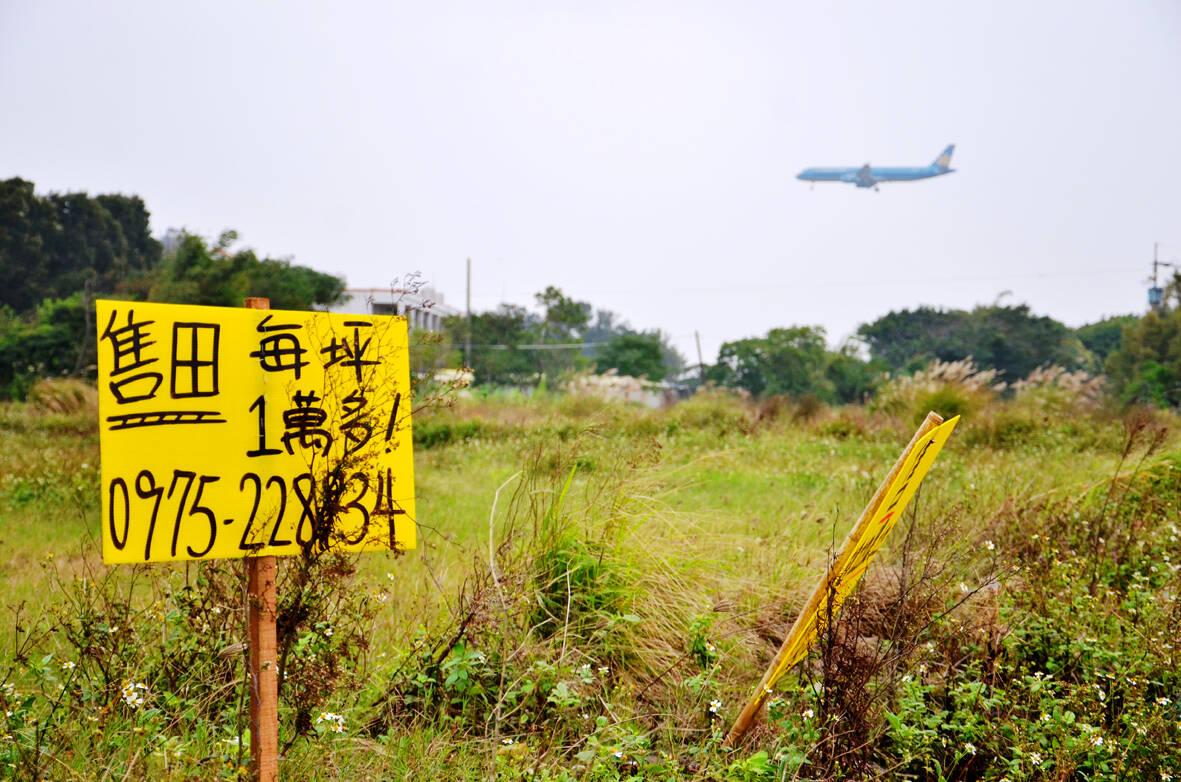
Photo: Chiu Yi-tung, Taipei Times
The scope can also exceed the actual needs of public infrastructure, Lin added.
Some expropriated land is not used directly for public purposes, but is later developed and sold, allowing private parties to profit while lowering government construction costs, Lin said.
Original landowners receive much smaller plots under the land-for-compensation system, effectively bearing the cost of public construction themselves, he said.
The system strays from the Constitution’s requirement of serving public interest and may contravene proportionality, fair burden-sharing and property rights, he said, adding that that the Constitutional Court should clarify the government’s expropriation limits.
The advance zone expropriation system under Article 4, Paragraph 2 of the Land Expropriation Act goes against the Urban Planning Act’s (都市計畫法) principle that planning should guide development, turning urban planning into a tool to justify land expropriation, lawyer Hsiung Yi-ling (熊依翎) said.
The advance zone expropriation system was designed in part to reduce public resistance and speed up expropriation, but in practice has expanded the scope of expropriation and may allow the state to intervene in land development for financial gain, Hsiung said.
This undermines the requirement that expropriation serve a clear public interest, contravenes due process and infringes on property rights, she said.
The current system effectively replaces legal procedures set out in the Land Expropriation Act with administrative regulations that end up overriding the law, raising serious constitutional concerns, National Chengchi University land economics professor Hsu Shih-jung (徐世榮) said.
Shezidao Self-help Association spokesperson Li Hua-ping (李華萍) urged the Constitutional Court to address the system’s infringement on people’s fundamental rights.
People are entitled to basic protections such as property rights and the right to housing, but they lose control over their property and livelihood under the zone expropriation system, Li said.
Zone expropriation is unjust and should not be used as a pretext for forced evictions, she said.

NATURE TAKES ITS COURSE: The agency’s head said he felt a sense of loss watching red-banded snakes eat the babies, as they had decided on non-intervention The Forestry and Nature Conservation Agency yesterday released a documentary on a hundred-pace viper that had incubated 16 eggs, all of which hatched, but only a baby viper escaped after they were attacked by red-banded snakes. The agency’s Taichung branch last year launched the viper reproduction monitoring project soon after forest rangers Lin Chun-yu (林俊佑) and Chou Chia-cheng (周家成) spotted a pregnant hundred-pace viper in a grass-covered burrow near a parking lot in Tbulan Village (松鶴部落). The Atayal village, in Taichung’s Heping District (和平), is headed by Ecyang Yapu, who was positive about the project and assisted in access control and power
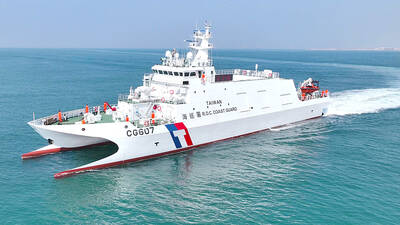
The Coast Guard Administration (CGA) yesterday said that it had deployed vessels to “monitor” Chinese ships operating in waters off the east coast. The CGA said it dispatched vessels in response to a China Coast Guard announcement that it had carried out another “routine law-enforcement patrol” in waters off the east coast. “The CGA firmly rejects China’s cognitive warfare campaign of ‘law enforcement in name, jurisdictional expansion in practice,’” it said on X. As of 11am yesterday, two China Coast Guard ships were “loitering and drifting” about 105 nautical miles (195km) and 74 nautical miles east of Green Island (綠島) respectively, it said. It
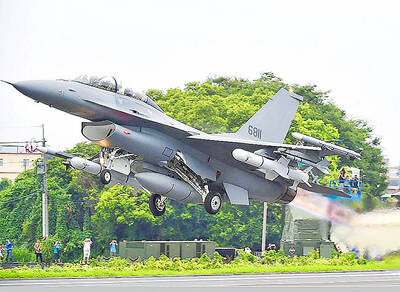
A sharp rise in compensation to be paid by air force officers who leave before completing their required service could indicate an increase in pilots leaving the military early, an analyst said on Friday, warning that the trend could worsen a shortage of experienced personnel. Chieh Chung (揭仲), a researcher at the Association for Strategic Foresight, issued the warning even though the number of volunteer military personnel is expected to increase next year. The planned headcount for volunteer military personnel, covering officers, noncommissioned officers (NCO) and enlisted soldiers, is 158,223 for next year, up 4,258 from 153,965 this year, Chieh said. The increase
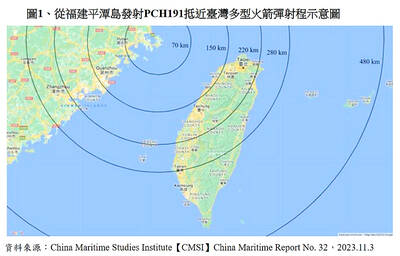
Potential improvements to munitions used by China’s long-range rocket-artillery units could extend their range to cover the entire Miyako Strait, which might give the Chinese People’s Liberation Army (PLA) the ability to secure the strategic waterway, the Mainland Affairs Council (MAC) said in a report. The PLA’s long-range rocket-artillery units deployed along the Taiwan Strait are concentrated along the coast of Fujian Province, including Changle, Pingtan and Shishi, the quarterly report on China said. The artillery brigades of the PLA’s 71st, 72nd and 73rd group armies have been deployed, with preparations for potential battlefield operations under way since August 2022, the report


 RSS
RSS