


The Chinese Nationalist Party (KMT) is allegedly facing internal divisions after caucus whip Fu Kun-chi (傅?萁) during a caucus meeting floated the idea of reverting the party’s special defense budget proposal to an earlier version.
Fu reportedly aligned with KMT Chairwoman Cheng Li-wun (鄭麗文), agreeing that if Deputy Legislative Speaker Johnny Chiang (江啟臣) wins the Taichung mayoral election, Fu would be appointed deputy speaker, a party source said, speaking on condition of anonymity.
The reported arrangement drew internal criticism, with some members saying the position should be determined by Legislative Speaker Han Kuo-yu (韓國瑜) and supported by the caucus, rather than being informally prearranged, the source said.
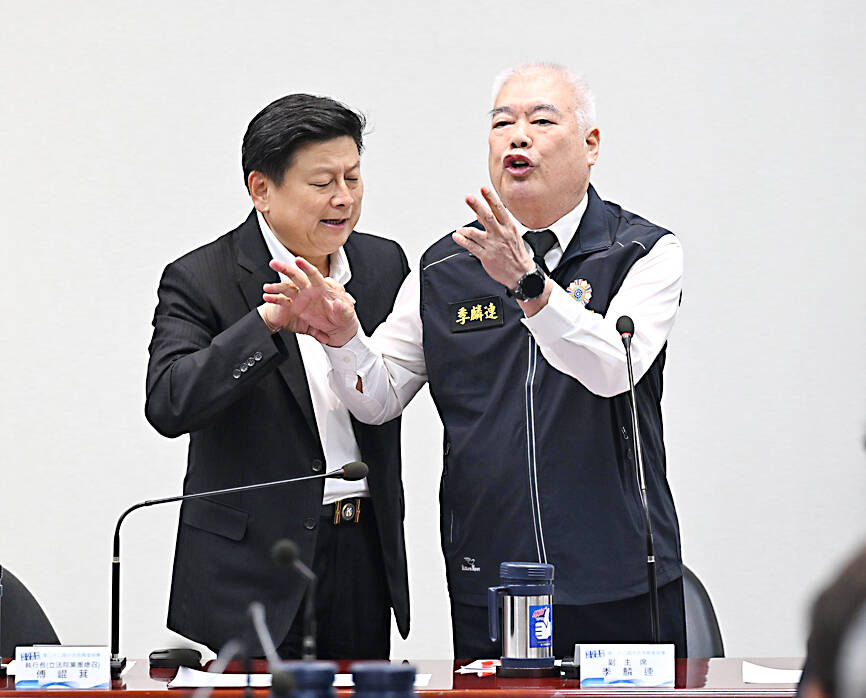
Photo: Chang Chia-ming, Taipei Times
The dispute is rooted in disagreements over the special statute for procurement of defense resilience and asymmetric combat capability programs (化防衛韌性及不對稱戰力計畫採購特別條例), commonly referred to as the special defense budget.
Ahead of a March 5 KMT caucus meeting on the proposal, the party’s central committee held an impromptu news conference outlining its position, a move that reportedly caught legislators off guard.
The KMT caucus’ discussion focused on a proposed NT$350 billion (US$11.09 billion) “+N” framework, which was later revised to NT$380 billion “+N,” which some legislators viewed as limiting internal deliberation.
By Thursday last week, party sources indicated that the KMT was open to considering an NT$800 billion budget.
In an interview with CNews on Tuesday, Cheng said the party would not oppose that figure if the US issues official letters of acceptance (LOAs) for arms procurement.
The “+N” component of the KMT’s proposal accounts for a potential second batch of arms LOAs valued at about US$14 billion, Cheng said.
Approving the budget without confirmed procurement could risk inefficient use of funds, she said, citing possible abuse by the Democratic Progressive Party (DPP).
The internal divide might complicate negotiations on Wednesday next week aimed at easing pressure ahead of the November local elections.
Divisions within the KMT over the defense budget have long been evident, Democratic Progressive Party (DPP) spokesman Justin Wu (吳崢) said, adding that the KMT was delaying progress.
There is a serious rift within the KMT regarding its stance on the special defense budget bill, as Chiang had called for the review to be completed as soon as possible, while Taichung Mayor Lu Shiow-yen (盧秀燕) and KMT Legislator Ko Chih-en (柯志恩) previously agreed that “an arms procurement budget of NT$800 billion to NT$1 trillion is very pragmatic,” he said.
KMT Legislator Hsu Chiao-hsin (徐巧芯) during cross-party negotiations at the legislature on Monday mentioned the possibility of discussing an NT$800 billion budget, but Fu once again blocked the discussion, saying it was “merely individual party members’ opinion,” Wu said.
DPP caucus chief executive Chuang Jui-hsiung (莊瑞雄) yesterday said the special defense budget should not be dependent on the emotions of the chairperson of the opposition party.
The focus was passing a comprehensive special act, not the sum of the budget, Chuang said, adding that the question of how much the budget should be and whether that is approved is another matter.
Additional reporting by Lin Che-yuan
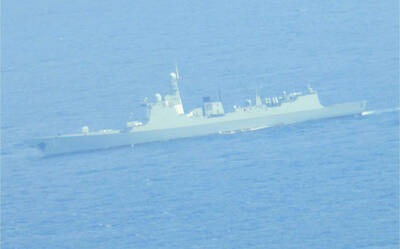
The military has spotted two Chinese warships operating in waters near Penghu County in the Taiwan Strait and sent its own naval and air forces to monitor the vessels, the Ministry of National Defense (MND) said. Beijing sends warships and warplanes into the waters and skies around Taiwan on an almost daily basis, drawing condemnation from Taipei. While the ministry offers daily updates on the locations of Chinese military aircraft, it only rarely gives details of where Chinese warships are operating, generally only when it detects aircraft carriers, as happened last week. A Chinese destroyer and a frigate entered waters to the southwest
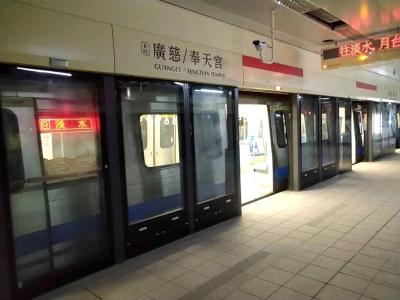
The eastern extension of the Taipei MRT Red Line could begin operations as early as late June, the Taipei Department of Rapid Transit Systems said yesterday. Taipei Rapid Transit Corp said it is considering offering one month of free rides on the new section to mark its opening. Construction progress on the 1.4km extension, which is to run from the current terminal Xiangshan Station to a new eastern terminal, Guangci/Fengtian Temple Station, was 90.6 percent complete by the end of last month, the department said in a report to the Taipei City Council's Transportation Committee. While construction began in October 2016 with an
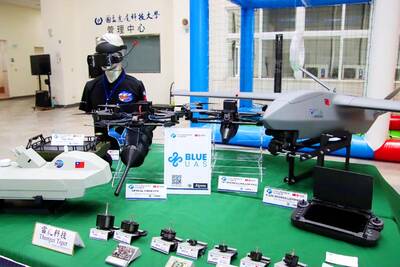
NON-RED SUPPLY: Boosting the nation’s drone industry is becoming increasingly urgent as China’s UAV dominance could become an issue in a crisis, an analyst said Taiwan’s drone exports to Europe grew 41.7-fold from 2024 to last year, with demand from Ukraine’s fight against Russian aggression the most likely driver of growth, a study showed. The Institute for Democracy, Society and Emerging Technology (DSET) in a statement on Wednesday said it found that many of Taiwan’s uncrewed aerial vehicle (UAV) sales were from Poland and the Czech Republic. These countries likely transferred the drones to Ukraine to aid it in its fight against the Russian invasion that started in 2022, it said. Despite the gains, Taiwan is not the dominant drone exporter to these markets, ranking second and fourth

Japanese Prime Minister Sanae Takaichi’s comment last year on Tokyo’s potential reaction to a Taiwan-China conflict has forced Beijing to rewrite its invasion plans, a retired Japanese general said. Takaichi told the Diet on Nov. 7 last year that a Chinese naval blockade or military attack on Taiwan could constitute a “survival-threatening situation” for Japan, potentially allowing Tokyo to exercise its right to collective self-defense. Former Japan Ground Self-Defense Force general Kiyofumi Ogawa said in a recent speech that the remark has been interpreted as meaning Japan could intervene in the early stages of a Taiwan Strait conflict, undermining China’s previous assumptions


 RSS
RSS