


Draft amendments to the Budget Act (預算法) that would institutionalize universal cash handouts if tax revenue reaches 115 percent of the budgeted amount were advanced directly to a second reading and sent to cross-party negotiations by the Chinese Nationalist Party (KMT) on Friday last week.
A draft of the bill was first passed in committee review in March last year, but it was shelved in August after ruling and opposition parties failed to reach a consensus.
While past handouts have been one-offs, the opposition is pushing to institutionalize returning tax revenue to the public when it significantly exceeds projections by establishing a clear and transparent mechanism, a KMT caucus member said yesterday.
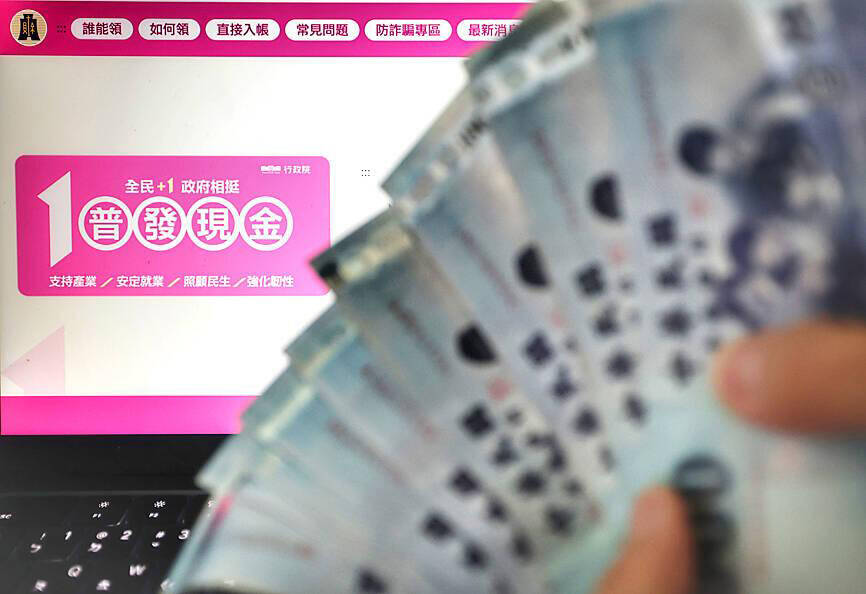
Photo: CNA
This is not just about handing out cash, they said, but about establishing a sustainable long-term system to safeguard people’s livelihoods.
The Executive Yuan has maintained a conservative and even resistant stance, because it would subject public finances to clear rules rather than leaving them to the Executive Yuan’s discretion, they said.
Decisions about when to issue handouts and how much to distribute rest almost exclusively with the Executive Yuan, concentrating that power in the hands of a few, they added.
This is not about pleasing voters but fairness, since tax revenue comes from the people and should be returned when the government collects more than necessary, rather than becoming a tool to expand spending, the KMT caucus member said.
“This is truly putting people’s livelihoods first,” they said.
Since 2021, actual tax revenue has exceeded annual budget projections by more than NT$300 billion (US$9.52 billion) each year, the KMT caucus said at the Legislative Yuan.
To clarify the use of surplus tax revenues, the caucus drafted an amendment adding Article 81-1 to the Budget Act, specifying the uses and allocations for excess tax revenue with the aim of addressing the issue through a formalized system.
The draft amendment states that when annual net tax revenue reaches 115 percent of the budgeted amount, priority should be given to covering any gap between revenues and expenditures for that year; if there is a surplus, universal cash payments should be distributed.
Since tax revenue comes from the public, any significant surplus should be returned to the people, the proposal says.
Universal cash handouts would ease inflationary pressures, boost domestic consumption and allow people to share in economic growth, it adds.
Democratic Progressive Party (DPP) spokesman Lee Kuen-cheng (李坤城) yesterday said that the opposition should stop proposing “profit without capital” and pass the central government budget quickly, as failure to do would ultimately harm the public.
If there is a budget surplus, it reflects the DPP government’s success in driving economic growth rather than collecting too much taxes, he said. Any surplus should be retained so the state has “ammunition” to respond to international developments, especially as the opposition’s amendments to the Act Governing the Allocation of Government Revenues and Expenditures (財政收支劃分法) have weakened the central government’s fiscal flexibility, he added.
Lee urged the opposition to pass this year’s central government budget, saying that “one cannot expect a horse to run fast without feeding it.”
Additional reporting by Chen Yun

Actor Darren Wang (王大陸) was sentenced to six months in prison, commutable to a fine, by the New Taipei District Court today for contravening the Personal Data Protection Act (個人資料保護法) in a case linked to an alleged draft-dodging scheme. Wang allegedly paid NT$3.6 million (US$114,380) to an illegal group to help him evade mandatory military service through falsified medical documents, prosecutors said. He transferred the funds to Chen Chih-ming (陳志明), the alleged mastermind of a draft-evasion ring, although he lost contact with him as he was already in detention on fraud charges, they said. Chen is accused of helping a

SECURITY: Starlink owner Elon Musk has taken pro-Beijing positions, and allowing pro-China companies to control Taiwan’s critical infrastructure is risky, a legislator said Starlink was reluctant to offer services in Taiwan because of the nation’s extremely high penetration rates in 4G and 5G services, the Ministry of Digital Affairs said yesterday. The ministry made the comments at a meeting of the legislature’s Transportation Committee, which reviewed amendments to Article 36 of the Telecommunications Management Act (電信管理法). Article 36 bans foreigners from holding more than 49 percent of shares in public telecommunications networks, while shares foreigners directly and indirectly hold are also capped at 60 percent of the total, unless specified otherwise by law. The amendments, sponsored by Chinese Nationalist Party (KMT) Legislator Ko
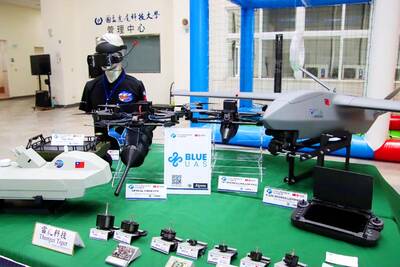
NON-RED SUPPLY: Boosting the nation’s drone industry is becoming increasingly urgent as China’s UAV dominance could become an issue in a crisis, an analyst said Taiwan’s drone exports to Europe grew 41.7-fold from 2024 to last year, with demand from Ukraine’s fight against Russian aggression the most likely driver of growth, a study showed. The Institute for Democracy, Society and Emerging Technology (DSET) in a statement on Wednesday said it found that many of Taiwan’s uncrewed aerial vehicle (UAV) sales were from Poland and the Czech Republic. These countries likely transferred the drones to Ukraine to aid it in its fight against the Russian invasion that started in 2022, it said. Despite the gains, Taiwan is not the dominant drone exporter to these markets, ranking second and fourth
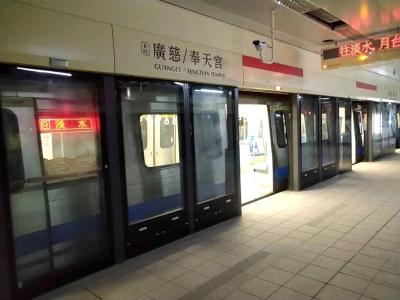
The eastern extension of the Taipei MRT Red Line could begin operations as early as late June, the Taipei Department of Rapid Transit Systems said yesterday. Taipei Rapid Transit Corp said it is considering offering one month of free rides on the new section to mark its opening. Construction progress on the 1.4km extension, which is to run from the current terminal Xiangshan Station to a new eastern terminal, Guangci/Fengtian Temple Station, was 90.6 percent complete by the end of last month, the department said in a report to the Taipei City Council's Transportation Committee. While construction began in October 2016 with an


 RSS
RSS