


Water shortages affecting central and southern Taiwan since December last year have eased with the arrival of spring rains, the Irrigation Agency said yesterday.
Drought conditions in Kaohsiung have been fully resolved, while Tainan’s water outlook is more favorable than the past few years, when it faced historic droughts, the agency said.
Water supplies in central and southern Taiwan had been under pressure from December through April, but recent rainfall has improved conditions, particularly in Kaohsiung, it said.
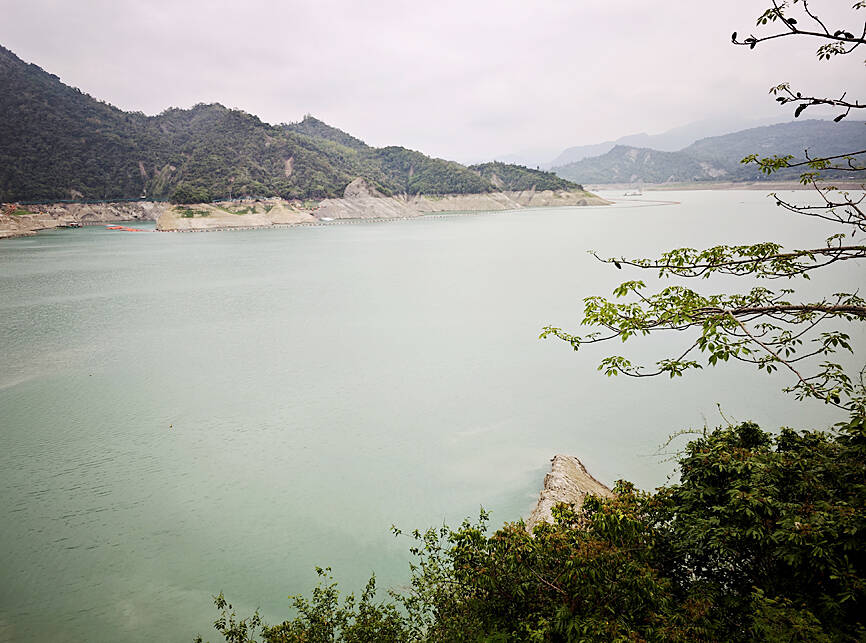
Photo: Wu Chun-feng, Taipei Times
Irrigation Agency Director-General Tsai Sheng-fu (蔡昇甫) said several rounds of spring rain, much falling in Kaohsiung’s catchment areas, has significantly improved agricultural water supplies in the region.
The rainfall, combined with the end of the rice crop heading period this month — when water demand is highest — meant drought conditions affecting agriculture in Kaohsiung had been lifted, Tsai said.
Tainan still requires close monitoring, but recent investments in dredging, expanded reservoir capacity, irrigation infrastructure upgrades and earlier water management measures have improved the situation, he said.
Although spring rainfall in Tainan has been limited, storage at Zengwen Reservoir (曾文水庫) and Wushantou Reservoir (烏山頭水庫) remain at least one-third higher than levels recorded during the severe drought years of 2021 and 2023, he said.
Taiwan has entered the rainy season. During the earlier dry spell, the agency completed inspections, follow-up checks and improvements at more than 39,000 irrigation facilities nationwide.
It also completed dredging work covering 434km, removing more than 100,000m3 of sediment.
Tsai said that under increasingly extreme climate conditions, droughts and floods had become routine, with authorities often having to respond to both in the same year.
Based on long-term domestic and international weather forecasts, Taiwan is expected to gradually enter an El Nino year in the second half of this year, he said, adding that any typhoons striking Taiwan could bring strong winds and torrential rain.
To improve flood prevention, the agency has introduced smart technologies in the past few years, including remote camera monitoring at key irrigation canal points.
By combining live images with weather radar data, authorities can determine the best timing for opening and closing floodgates, Tsai said.
Heavy rainfall can also trigger landslides and sediment disasters that rapidly alter water flows, he said.
Automated systems can significantly reduce the time previously required for manual decisionmaking, helping minimize losses and speed repairs, he said.
In the past, repairing damaged water channels often took more than 30 days, but that has now been reduced to about 10 days, improving disaster resilience, Tsai said.
To prepare for flood-season agricultural disruptions, the Ministry of Agriculture said it has also readied nearly 335 tonnes of public grain reserves and 6,180 tonnes of refrigerated vegetables to be released as needed to stabilize supply, prices and volumes.

Actor Darren Wang (王大陸) was sentenced to six months in prison, commutable to a fine, by the New Taipei District Court today for contravening the Personal Data Protection Act (個人資料保護法) in a case linked to an alleged draft-dodging scheme. Wang allegedly paid NT$3.6 million (US$114,380) to an illegal group to help him evade mandatory military service through falsified medical documents, prosecutors said. He transferred the funds to Chen Chih-ming (陳志明), the alleged mastermind of a draft-evasion ring, although he lost contact with him as he was already in detention on fraud charges, they said. Chen is accused of helping a

SECURITY: Starlink owner Elon Musk has taken pro-Beijing positions, and allowing pro-China companies to control Taiwan’s critical infrastructure is risky, a legislator said Starlink was reluctant to offer services in Taiwan because of the nation’s extremely high penetration rates in 4G and 5G services, the Ministry of Digital Affairs said yesterday. The ministry made the comments at a meeting of the legislature’s Transportation Committee, which reviewed amendments to Article 36 of the Telecommunications Management Act (電信管理法). Article 36 bans foreigners from holding more than 49 percent of shares in public telecommunications networks, while shares foreigners directly and indirectly hold are also capped at 60 percent of the total, unless specified otherwise by law. The amendments, sponsored by Chinese Nationalist Party (KMT) Legislator Ko

NON-RED SUPPLY: Boosting the nation’s drone industry is becoming increasingly urgent as China’s UAV dominance could become an issue in a crisis, an analyst said Taiwan’s drone exports to Europe grew 41.7-fold from 2024 to last year, with demand from Ukraine’s fight against Russian aggression the most likely driver of growth, a study showed. The Institute for Democracy, Society and Emerging Technology (DSET) in a statement on Wednesday said it found that many of Taiwan’s uncrewed aerial vehicle (UAV) sales were from Poland and the Czech Republic. These countries likely transferred the drones to Ukraine to aid it in its fight against the Russian invasion that started in 2022, it said. Despite the gains, Taiwan is not the dominant drone exporter to these markets, ranking second and fourth

The eastern extension of the Taipei MRT Red Line could begin operations as early as late June, the Taipei Department of Rapid Transit Systems said yesterday. Taipei Rapid Transit Corp said it is considering offering one month of free rides on the new section to mark its opening. Construction progress on the 1.4km extension, which is to run from the current terminal Xiangshan Station to a new eastern terminal, Guangci/Fengtian Temple Station, was 90.6 percent complete by the end of last month, the department said in a report to the Taipei City Council's Transportation Committee. While construction began in October 2016 with an


 RSS
RSS