


Beijing's new economic proposals targeting Kinmen and Lienchiang (Matsu) counties merit special attention because they could be aimed at turning the outlying islands into a showcase for cross-strait integration while deepening divisions in Taiwan, academics said on Sunday.
China announced a package of 10 “incentive measures” on the final day of Chinese Nationalist Party (KMT) Chairwoman Cheng Li-wun's (鄭麗文) six-day visit to the country, aimed at benefiting certain sectors in Taiwan while offering deeper integration with Kinmen and Matsu.
The two counties are composed of islands just off the coast of China’s Fujian Province, and are closer to China than Taiwan’s main island.
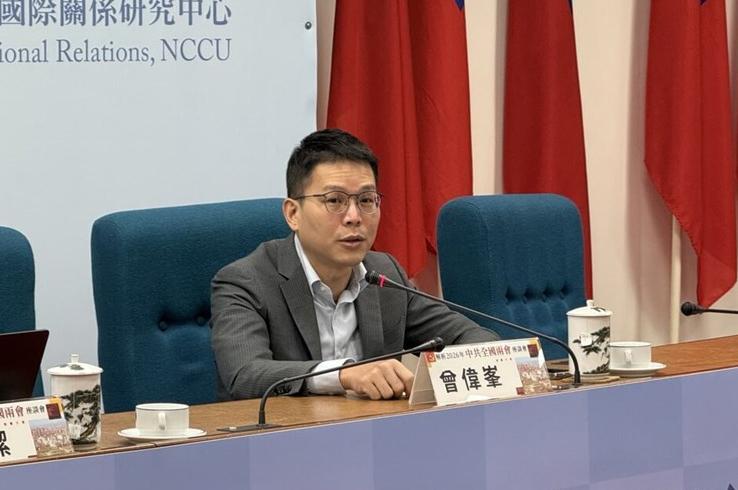
Photo: CNA
The proposed "four links" — water, electricity, gas and bridges — between Fujian Province and Kinmen and Matsu could have a major effect in terms of physical integration, said Tzeng Wei-feng (曾偉峯), an associate research fellow at National Chengchi University's Institute of International Relations.
Kinmen relies mainly on water imported from China for its freshwater supply, while Matsu depends primarily on reservoirs and other local water sources, he said.
There are no electricity and gas links or bridges between China and the two island groups, though passenger ferry services operate under the so-called "small three links."
The proposed "four links" reflect China's desire to deepen interdependence between Fujian Province and Kinmen and Matsu, and turn them into a showcase for cross-strait integration meant to convince Taiwanese that peace is possible and can bring prosperity, Tzeng said.
Combined with expanded film, television and youth exchanges, the broader aim behind the proposed "four links" could be to foster a stronger sense of identification with China among Taiwanese, he said.
The measure could also pose national security risks, such as increasing China's capacity for infiltration in Taiwan or generating bottom-up pressure on the government to shift policy, Tzeng said.
Because of the proximity of Kinmen and Matsu to China and their small populations, it is unlikely that many Taiwanese would be more inclined to support Beijing because of the Chinese initiatives related to those islands, he said.
However, China is not that concerned with whether people on Taiwan proper are actually influenced by this "showcase," Tzeng said.
Instead, Beijing's goal is "to unilaterally push forward the unification process," he said.
"It may start with Kinmen and Matsu, then perhaps move on to Penghu, and eventually, to Taiwan proper," he said.
The actual effect of Beijing's policy is "uncertain," but its logic is to advance its goals from the bottom up — moving from the outlying islands to Taiwan proper, from the grassroots level up and from economics to politics, Tzeng said.
Chang Hung-yuan (張弘遠), a professor in Chihlee University of Technology's Department of International Trade, said that, given the lack of formal bilateral contact, China's announced measures could be used to create internal divisions in Taiwan.
If Kinmen or Matsu were to face water, electricity or gas shortages, Beijing could frame the situation as the result of Taiwan's unwillingness to negotiate, he said.
Chang's remarks appeared to find some resonance at the Kinmen County Council on Monday, where independent Councilor Tsai Shui-yu (蔡水游), commenting on a proposed bridge, said that Chinese authorities had already built it "to Kinmen's doorstep."
"It would not be a bad thing" if the link could be completed first, he said.
In response, Kinmen County Commissioner Chen Fu-hai (陳福海), an independent, said that "there is not much we can do" regarding Beijing's 10 measures without the central government's approval.
Chen's remarks were broadly in line with the stance of the Mainland Affairs Council.
Matters involving cross-border infrastructure are subject to the evaluations and participation of government agencies and formal negotiations between the two sides, it said on Sunday.

FUKUOKA SITUATION: Japanese media reported that the pathogen is expected to be identified by the summer, while the CDC downplayed the idea that it was hMPV A “mysterious cold-like illness” reported in Japan’s Fukuoka Prefecture does not seem to be a new disease, but Japanese authorities have been asked about the situation, the Centers for Disease Control (CDC) said yesterday. The Fukuoka Prefectural Medical Association on Wednesday told a news conference that a “mystery cold” that has become a hot topic on social media is “highly likely to be caused by some kind of viral infection,” Japan’s KBC News reported. “Many people are experiencing symptoms starting with a sore throat, followed by a runny nose, phlegm and a severe cough,” KBC News reported, citing association officials. Health authorities are

Nvidia Corp CEO Jensen Huang (黃仁勳) arrived in Taiwan yesterday ahead of upcoming AI and technology events, saying he plans to meet with clients and Taiwan Semiconductor Manufacturing Co Chairman C.C. Wei (魏哲家) during his visit. After landing at Taipei Songshan Airport, Huang posed for photos with fans and handed out Yakult drinks to reporters and supporters waiting at the scene, saying he has “a lot to do” during the trip. Asked about reports that Nvidia’s planned headquarters site in Taipei’s Beitou Shilin Technology Park could break ground on May 27, Huang said that if the company holds an event, he would

The Ministry of Finance this afternoon announced the winning numbers for the March-April uniform invoice lottery. The winning number for the NT$10 million (US$318,060) special prize is 19531471, and the winning number for the NT$2 million grand prize is 85941329. Three numbers were drawn for the NT$200,000 first prize: 07225810, 20231230 and 83518781. Those with receipts matching the last seven digits of any of the first-prize numbers will win the NT$40,000 second prize, while those matching the last six digits will win the NT$10,000 third prize. Those whose receipts match the last five digits of the first-prize numbers can claim the NT$4,000 fourth prize,
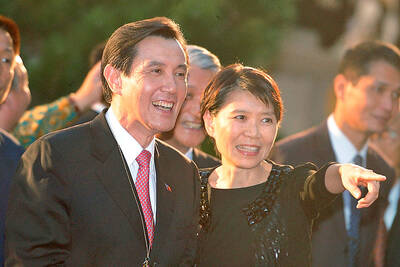
Former president Ma Ying-jeou (馬英九) yesterday expressed “shock and regret” over a statement issued by his wife without his consent, and rejected her assertion that his eldest sister, Ma Yi-nan (馬以南), would manage his medical care or act as his spokesperson amid an ongoing embezzlement probe into his foundation. Ma Ying-jeou in a statement said he was shocked by a statement by his wife, Chou Mei-ching (周美青), regarding his affairs. Ma Yi-nan “must not” be in charge of his healthcare and other personal affairs, nor can she be allowed to represent the Ma family, the former president said. He said he was also


 RSS
RSS