


Taiwan should use the current global energy crisis to reassess its energy policy and reduce reliance on fossil fuels, Pegatron Corp chairman Tung Tzu-hsien (童子賢) said.
Rising energy prices triggered by the US-Israel conflict with Iran highlight vulnerabilities in Taiwan’s energy structure, the electronics manufacturing service provider’s chairman said.
Taiwan should not adopt the mindset of “it is the same everywhere,” but instead reassess the integrity and rationality of its energy policies, he said, adding that “Taiwan should not waste this energy crisis.”
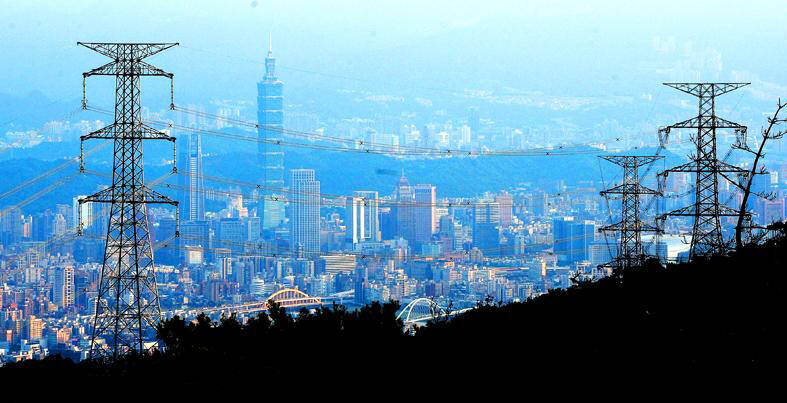
Photo: Lin Cheng-kun, Taipei Times
Whether by increasing nuclear power or expanding renewable energy, fossil fuel-reliant energy should be reduced by 20 percent by 2030, he said.
Over the past decade, Taiwan has promoted energy transformation by adopting a strategy of increasing natural gas power generation to phase out nuclear energy and reduce carbon emissions, but that has resulted in a reliance on imports of liquefied natural gas (LNG), which experiences significant price and supply fluctuations, and results in lower energy resilience, Tung said.
The share of LNG in Taiwan’s power generation has risen from about 30 percent in 2015 to about 50 percent this year, he said.
In comparison, regional competitors such as Japan and South Korea have more balanced energy mixes, he added. South Korea generates 30.4 percent of its power from nuclear energy, 29.1 percent from coal and 26.1 percent from LNG, while Japan’s mix includes 9.5 percent nuclear, 27.6 percent coal and 31 percent LNG, he said.
Meanwhile, after Taiwan shut down its last nuclear power plant in May last year, coal now accounts for 31.3 percent of energy while natural gas makes up as much as 50.2 percent, Tung said.
That totals 81.5 percent, which is significantly higher than Japan and South Korea, indicating that Taiwan’s energy structure is more concentrated and vulnerable, he added.
Taiwan, Japan and South Korea compete in semiconductors, electronics and precision machinery — industries that depend on stable and affordable power, Tung said.
If Taiwan’s energy mix diverges too sharply from its competitors, resulting in unstable prices or supply, it could erode the nation’s competitive advantage, he added.
The cost per LNG shipment has increased by about NT$1 billion (US$31.52 million), with Taiwan importing about 400 shipments annually, Tung said, adding that prolonged conflict and rising prices would place heavy pressure on public finances and electricity costs.
Taiwan’s LNG reserves cover about 11 days, 90 days for crude oil and up to 540 days for nuclear fuel, meaning supply disruptions could quickly lead to power shortages, Tung said.
LNG should serve as a supplementary energy source rather than the primary one, he added.
Responding to reports that the government might restart coal-fired plants, Tung said such measures would only provide short-term relief while worsening pollution and structural imbalances.
Despite a decade of energy transition, renewable energy accounts for only about 15 percent of Taiwan’s total energy generation, lagging behind the EU’s 71 percent and China’s 41 percent, he said.
Tung urged the government to take note of the global reconsideration of nuclear energy, citing moves by the EU, the US, Japan and South Korea to integrate nuclear power with renewables to reduce dependence on LNG.

FUKUOKA SITUATION: Japanese media reported that the pathogen is expected to be identified by the summer, while the CDC downplayed the idea that it was hMPV A “mysterious cold-like illness” reported in Japan’s Fukuoka Prefecture does not seem to be a new disease, but Japanese authorities have been asked about the situation, the Centers for Disease Control (CDC) said yesterday. The Fukuoka Prefectural Medical Association on Wednesday told a news conference that a “mystery cold” that has become a hot topic on social media is “highly likely to be caused by some kind of viral infection,” Japan’s KBC News reported. “Many people are experiencing symptoms starting with a sore throat, followed by a runny nose, phlegm and a severe cough,” KBC News reported, citing association officials. Health authorities are

Nvidia Corp CEO Jensen Huang (黃仁勳) arrived in Taiwan yesterday ahead of upcoming AI and technology events, saying he plans to meet with clients and Taiwan Semiconductor Manufacturing Co Chairman C.C. Wei (魏哲家) during his visit. After landing at Taipei Songshan Airport, Huang posed for photos with fans and handed out Yakult drinks to reporters and supporters waiting at the scene, saying he has “a lot to do” during the trip. Asked about reports that Nvidia’s planned headquarters site in Taipei’s Beitou Shilin Technology Park could break ground on May 27, Huang said that if the company holds an event, he would

The Ministry of Finance this afternoon announced the winning numbers for the March-April uniform invoice lottery. The winning number for the NT$10 million (US$318,060) special prize is 19531471, and the winning number for the NT$2 million grand prize is 85941329. Three numbers were drawn for the NT$200,000 first prize: 07225810, 20231230 and 83518781. Those with receipts matching the last seven digits of any of the first-prize numbers will win the NT$40,000 second prize, while those matching the last six digits will win the NT$10,000 third prize. Those whose receipts match the last five digits of the first-prize numbers can claim the NT$4,000 fourth prize,

SIX SUBSIDIES: The monthly allowance for older farmers is to increase to NT$10,000, and NT$5,000 is to be given to homemakers under the national pension system, Lai said The government is to implement major welfare policies for disadvantaged groups, including raising the monthly allowance for older farmers to NT$10,000 and providing homemakers with NT$5,000 per month, President William Lai (賴清德) said yesterday. Lai made the remarks during a visit to Wangling Temple in Chiayi County, saying that the planned increases were being introduced amid economic growth and an increase in tax revenue. Touting a policy, in which the government plans to provide a monthly allowance of NT$5,000 for every child under the age of 18 in a bid to address Taiwan’s low birthrate, Lai said that if received for the


 RSS
RSS