


Injured green sea turtles in the wild need 500 days to recover without human intervention, much slower than most large marine life, joint research by Academia Sinica’s Biodiversity Research Center and TurtleSpot Taiwan showed.
The research team and citizen scientists took part in TurtleSpot’s project, collecting 7,233 sea turtle sighting data in waters off Pingtung County’s Siaoliouciou Island (小琉球) from 2010 to 2024.
They used wildlife photographic identification to identify 709 turtles, of which 105 turtles experienced injuries.
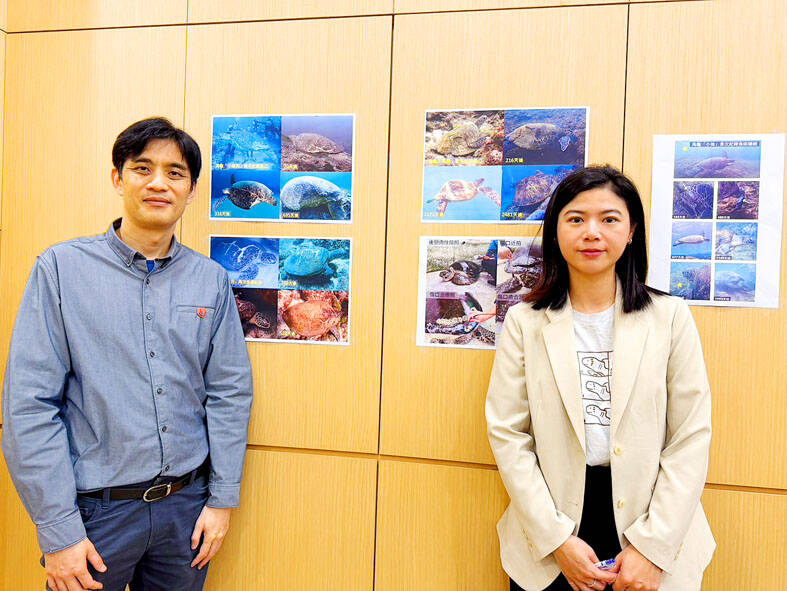
Photo: Yang Yuan-ting, Taipei Times
Thirteen of the 105 injured turtles had multiple re-encounters that allowed the team to conduct follow-up research and estimate their healing durations, TurtleSpot cofounder Fong Chia-ling (馮加伶) said yesterday.
Green sea turtles have a daily wound healing rate ranging from 0.08 percent to 1.53 percent, likely due to the species’ low metabolism and slow carapace scute regrowth, she said.
Their recovery in the wild is two to four-fold more time-consuming than other large marine life, such as whale sharks, reef manta rays or short-beaked common dolphins, she added.
It takes green sea turtles more than 500 days on average — or more than 600 days in serious cases — to fully recover from external injuries without human intervention, Fong said.
The research showed that injuries caused by vessel propellers required about 527 days to heal, while those from fishing line entanglement required at least 538 days.
Injuries of unknown causes required about 560 days of recovery and severe wounds took 600 days on average, it found.
About 80 percent of turtles could fully heal from injuries such as limb loss or shell deformity, and could continue to feed and survive in the long term, the research found.
However, about 10.5 percent of turtles were repeatedly injured by propellers, showing that targeted conservation measures must be taken, the researchers said.
Center director Benny Chan (陳國勤) said the research portrays a more realistic picture of the survival challenges facing wild sea turtles, as it overcomes past studies’ limitations of using only data from rescue institutions.
It also showed that citizen scientists could contribute much to academic research, he added.
The research team called on the government to set up go-slow zones around sea turtles’ feeding hotspots, which would require vessels to sail at a speed of six knots or slower, to minimize the risk of hitting turtles.
Fishing line recycling stations should also be set up and biodegradable fishing lines should be promoted to reduce entanglement incidents, it added.
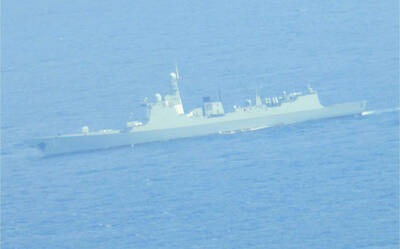
The military has spotted two Chinese warships operating in waters near Penghu County in the Taiwan Strait and sent its own naval and air forces to monitor the vessels, the Ministry of National Defense (MND) said. Beijing sends warships and warplanes into the waters and skies around Taiwan on an almost daily basis, drawing condemnation from Taipei. While the ministry offers daily updates on the locations of Chinese military aircraft, it only rarely gives details of where Chinese warships are operating, generally only when it detects aircraft carriers, as happened last week. A Chinese destroyer and a frigate entered waters to the southwest
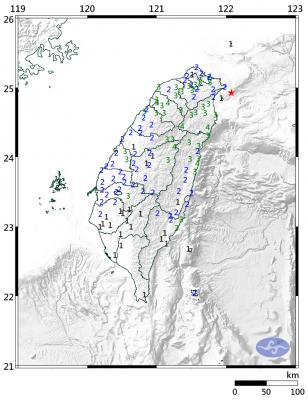
A magnitude 6.1 earthquake struck off the coast of Yilan County at 8:39pm tonight, the Central Weather Administration (CWA) said, with no immediate reports of damage or injuries. The epicenter was 38.7km east-northeast of Yilan County Hall at a focal depth of 98.3km, the CWA’s Seismological Center said. The quake’s maximum intensity, which gauges the actual physical effect of a seismic event, was a level 4 on Taiwan’s 7-tier intensity scale, the center said. That intensity level was recorded in Yilan County’s Nanao Township (南澳), Hsinchu County’s Guansi Township (關西), Nantou County’s Hehuanshan (合歡山) and Hualien County’s Yanliao (鹽寮). An intensity of 3 was

Japanese Prime Minister Sanae Takaichi’s comment last year on Tokyo’s potential reaction to a Taiwan-China conflict has forced Beijing to rewrite its invasion plans, a retired Japanese general said. Takaichi told the Diet on Nov. 7 last year that a Chinese naval blockade or military attack on Taiwan could constitute a “survival-threatening situation” for Japan, potentially allowing Tokyo to exercise its right to collective self-defense. Former Japan Ground Self-Defense Force general Kiyofumi Ogawa said in a recent speech that the remark has been interpreted as meaning Japan could intervene in the early stages of a Taiwan Strait conflict, undermining China’s previous assumptions
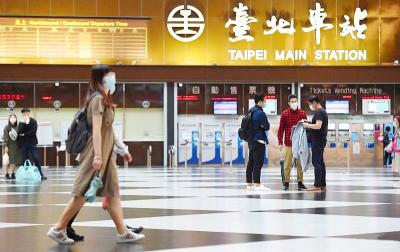
Taiwan Railways Corp (TRC) today announced that Shin Kong Mitsukoshi has been selected as the preferred bidder to operate the Taipei Railway Station shopping mall, replacing the current operator, Breeze Development Co Ltd. Among eight qualified firms that delivered presentations and were evaluated by a review committee, Shin Kong Mitsukoshi was ranked first, while Breeze was named the runner-up, the rail company said in a statement. Contract negotiations are to proceed in accordance with regulations, it said, adding that if negotiations with the top bidder fail, it could invite the second-ranked applicant to enter talks. Breeze in a statement today expressed doubts over


 RSS
RSS