


Eight opposition-nominated members of the Public Television Service (PTS) board review committee resigned yesterday, escalating a dispute over nomination procedures and political norms ahead of a scheduled review meeting on Thursday next week.
In a joint open letter addressed to Legislative Speaker Han Kuo-yu (韓國瑜), committee members Wu Yung-chien (吳永乾), Tung Pao-cheng (董保城), Tu Sheng-tsung (杜聖聰), Liao Yuan-hao (廖元豪), Hsu Liang-yuan (許良源), Lo Kuo-chun (羅國俊), Ma Yung-jui (馬詠睿) and Pan Tsu-yin (潘祖蔭) announced their decision to step down.
They said Minister of Culture Li Yuan (李遠) contravened the spirit of the Public Television Act (公共電視法) and long-standing legislative practices by failing to consult political parties in advance regarding candidate nominations.
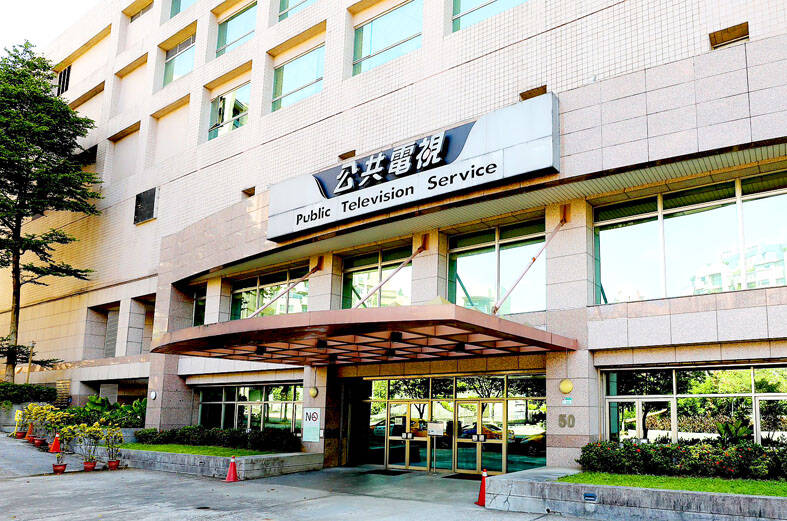
Photo courtesy of the Public Television Service
Li had repeatedly pushed nominations based on personal judgement rather than cross-party consensus, making it difficult for them to fulfill the Legislative Yuan’s mandate to conduct a fair and credible review, the members said.
Without adhering to established consultation practices, the legitimacy of the review process would be undermined, they added.
The dispute follows earlier appeals from the same group urging the Ministry of Culture to engage in dialogue with all political parties over the selection of PTS board candidates.
At the time, the ministry said that appointments of board members should be determined by the professional judgement of impartial reviewers and called for rational discussion over the candidates’ qualifications.
The ministry in response to the letter said that committee members should engage in substantive, professional deliberations and reach decisions through voting, adding that none of the 49 provisions of the act stipulates a requirement for “cross-party negotiations.”
Past board selections required multiple rounds of review spanning nearly 1,000 days, the ministry said, criticizing what it described as “political coercion and hostage-taking” disguised as negotiation.
The ministry said its 10 nominees were the result of broad consultation and careful consideration, and highlighted their diversity in expertise, background, age and social credibility.
It rejected accusations that the nominations served personal interests.
Officials said that although a meeting earlier this month had already met quorum requirements, the ministry rescheduled the session to Thursday next week to ensure fair participation, particularly given the smaller number of opposition-nominated members.
The ministry urged the resigning members to uphold their duty as representatives of the public interest and return to the review process, warning against abandoning their role at a critical stage.

The military has spotted two Chinese warships operating in waters near Penghu County in the Taiwan Strait and sent its own naval and air forces to monitor the vessels, the Ministry of National Defense (MND) said. Beijing sends warships and warplanes into the waters and skies around Taiwan on an almost daily basis, drawing condemnation from Taipei. While the ministry offers daily updates on the locations of Chinese military aircraft, it only rarely gives details of where Chinese warships are operating, generally only when it detects aircraft carriers, as happened last week. A Chinese destroyer and a frigate entered waters to the southwest

A magnitude 6.1 earthquake struck off the coast of Yilan County at 8:39pm tonight, the Central Weather Administration (CWA) said, with no immediate reports of damage or injuries. The epicenter was 38.7km east-northeast of Yilan County Hall at a focal depth of 98.3km, the CWA’s Seismological Center said. The quake’s maximum intensity, which gauges the actual physical effect of a seismic event, was a level 4 on Taiwan’s 7-tier intensity scale, the center said. That intensity level was recorded in Yilan County’s Nanao Township (南澳), Hsinchu County’s Guansi Township (關西), Nantou County’s Hehuanshan (合歡山) and Hualien County’s Yanliao (鹽寮). An intensity of 3 was

Japanese Prime Minister Sanae Takaichi’s comment last year on Tokyo’s potential reaction to a Taiwan-China conflict has forced Beijing to rewrite its invasion plans, a retired Japanese general said. Takaichi told the Diet on Nov. 7 last year that a Chinese naval blockade or military attack on Taiwan could constitute a “survival-threatening situation” for Japan, potentially allowing Tokyo to exercise its right to collective self-defense. Former Japan Ground Self-Defense Force general Kiyofumi Ogawa said in a recent speech that the remark has been interpreted as meaning Japan could intervene in the early stages of a Taiwan Strait conflict, undermining China’s previous assumptions
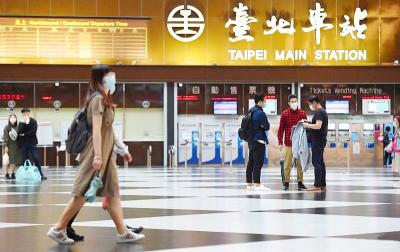
Taiwan Railways Corp (TRC) today announced that Shin Kong Mitsukoshi has been selected as the preferred bidder to operate the Taipei Railway Station shopping mall, replacing the current operator, Breeze Development Co Ltd. Among eight qualified firms that delivered presentations and were evaluated by a review committee, Shin Kong Mitsukoshi was ranked first, while Breeze was named the runner-up, the rail company said in a statement. Contract negotiations are to proceed in accordance with regulations, it said, adding that if negotiations with the top bidder fail, it could invite the second-ranked applicant to enter talks. Breeze in a statement today expressed doubts over


 RSS
RSS