


National Health Insurance (NHI) spending on cancer treatments last year rose to a record NT$156.7 billion (US$4.92 billion), up NT$26.5 billion from 2020, with an average annual growth rate of about 5 percent, NHI data showed.
The number of patients seeking cancer treatment last year increased to 970,104, rising by an average of 5 percent annually over the past five years, National Health Insurance Administration (NHIA) data showed.
Breast cancer accounted for the largest number of cases at 198,878, followed by colorectal and anal cancers (120,624); lung, trachea and bronchus cancers (111,620); and prostate cancer (79,696), the data showed.
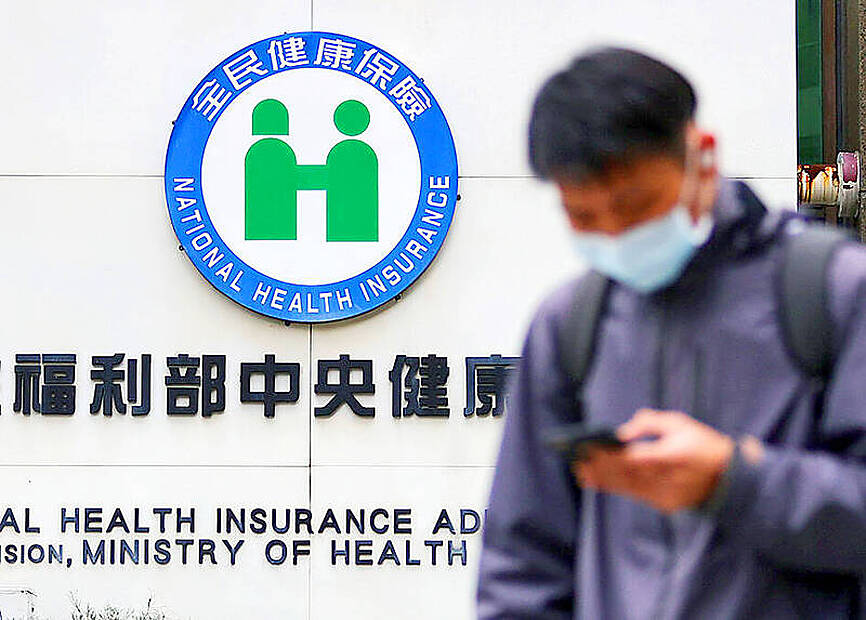
Photo: CNA
For the first time in a decade, the cost of pancreatic cancer treatment was among the top 10, the data showed.
NHIA’s Medical Review and Pharmaceutical Benefits Division director Huang Yu-wen (黃育文) said the rising costs are mainly driven by Taiwan’s aging population and expanded cancer screening programs, reflecting increased health investment and improved access to care.
Pancreatic cancer is often diagnosed at a late stage and has fewer treatment options, which results in higher costs and slower advances in drug development, she said, adding that the NHIA found that there was a significant gap in treatment for the disease.
Overall, the government has increased its funding for cancer prevention and treatment, with the Health Promotion Administration boosting its cancer screening budget by about NT$600 million to expand early detection, one of the key pillars of cancer control, Huang said.
Other priorities include investing in advanced diagnostic technologies and new treatments to improve precision care, she said.
The NHIA would continue to monitor treatment quality and outcomes through digital management systems, with the goal of reducing cancer mortality and improving overall public health, she added.
Meanwhile, on the sidelines of an event on Saturday celebrating the NHI system’s 31st anniversary, Minister of Health and Welfare Shih Chung-liang (石崇良) said the NHIA’s smartphone app (全民健保行動快易通), or “My Health Bank (健康存摺),” has new functions, such as an artificial intelligence (AI)-assisted health risk assessment and “health coin” collection.
The app once served as a platform for checking COVID-19 test results, and purchasing rationed masks and rapid COVID-19 test kits, so more than 1.2 million people have downloaded the app, Shih said, adding that the app received more than 600 million queries since its launch.
After the pandemic slowed down, the number of people who regularly used the app declined, and now it only has about 1 to 3 million users, he said.
Taiwan has become a super-aged society with more than 20 percent of the population aged 65 or older, and its average life expectancy has exceeded 80-years-old, but longer living does not mean healthy living, Shih said.
About 85 percent of people aged 65 or older have at least one chronic illness and nearly half have at least three chronic conditions, so the NHI system is evolving with the times — extending its focus from “disease treatment” to “precision prevention,” and using digital tools to promote healthy lifestyles and health self-management, he said.
“My Health Bank not only keeps individuals’ medical records, but its functions have also been expanding,” he said, adding that a lifestyle scale was added last year, which helps people assess their nutrition intake, sleep quality, exercise and stress levels.
An AI-assisted health education function — first targeting people with diabetes — and the atherosclerotic cardiovascular disease risk scale, which would help people better manage their health condition and seek professional assistance when needed, were also added to the app, he said.
National Taiwan University Hospital superintendent Yu Chung-jen (余忠仁) said the number of queries for My Health Bank indicates that people are paying more attention to health information, and that the app makes it easier for people to discuss their health conditions with doctors, which helps them with long-term health management.
However, healthy diet and lifestyle habits, as well as exercise are still the keys to health and longevity, and people should put more emphasis on their maintaining their health than relying on medical resources for treating illnesses, Yu added.

SPACE VETERAN: Kjell N. Lindgren, who helps lead NASA’s human spaceflight missions, has been on two expeditions on the ISS and has spent 311 days in space Taiwan-born US astronaut Kjell N. Lindgren is to visit Taiwan to promote technological partnerships through one of the programs organized by the US for its 250th national anniversary. Lindgren would be in Taiwan from Tuesday to Saturday next week as part of the US Bureau of Educational and Cultural Affairs’ US Speaker Program, organized to celebrate the 250th anniversary of the signing of the Declaration of Independence, the American Institute in Taiwan (AIT) said in a statement yesterday. Lindgren plans to engage with key leaders across the nation “to advance cutting-edge technological partnerships and inspire the next generation of scientists and engineers,”

UNREASONABLE SURVEILLANCE: A camera targeted on an road by a neighbor captured a man’s habitual unsignaled turn into home, netting him dozens of tickets The Taichung High Administrative Court has canceled all 45 tickets given to a man for failing to use a turn signal while driving, as it considered long-term surveillance of his privacy more problematic than the traffic violations. The man, surnamed Tseng (曾), lives in Changhua County and was reported 45 times within a month for failing to signal while driving when he turned into the alley where his residence is. The reports were filed by his neighbor, who set up security cameras that constantly monitored not only the alley but also the door and yard of Tseng’s house. The surveillance occurred from July

A Japan Self-Defense Forces vessel entered the Taiwan Strait yesterday, Japanese media reported. After passing through the Taiwan Strait, the Ikazuchi was to proceed to the South China Sea to take part in a joint military exercise with the US and the Philippines, the reports said. Japan Self-Defense Force vessels were first reported to have passed through the strait in September, 2024, with two further transits taking place in February and June last year, the Asahi Shimbun reported. Yesterday’s transit also marked the first time since Japanese Prime Minister Sanae Takaichi took office that a Japanese warship has been sent through the Taiwan

‘SAME OLD TRICK’: Even if Beijing resumes individual travel to Taiwan, it would only benefit Chinese tourism companies, the Economic Democracy Union convener said China’s 10 new “incentives” are “sugar-coated poison,” an official said yesterday, adding that Taiwanese businesses see them clearly for what they are, but that Beijing would inevitably find some local collaborators to try to drums up support. The official, speaking on condition of anonymity, made the remark ahead of a news conference the General Chamber of Commerce is to hold today. The event, titled “Industry Perspectives on China’s Recent Pro-Taiwan Policies,” is expected to include representatives from industry associations — such as those in travel, hotels, food and agriculture — to request the government cooperate with China’s new measures, people familiar with


 RSS
RSS