


Incentive payments for hospitals and clinics for opening during the Lunar New Year holiday reduced emergency room visits by 25 percent from the holiday period last year, the National Health Insurance Administration (NHIA) said yesterday.
After emergency rooms reported overcrowding during the Lunar New Year holiday last year, the Ministry of Health and Welfare in the second half of last year began preparing to avoid the problem again this year.
To help address the issue, it allocated NT$1.6 billion (US$50.13 million) in bonuses for hospitals and primary care clinics that opened during the holiday, allowing people seeking medical care options other than emergency rooms.
Photo: Chiu Chih-jou, Taipei Times
NHI payments for emergency room, and inpatient diagnostic, nursing and pharmaceutical service fees were doubled, while diagnostic and pharmaceutical service fees at clinics were increased by 30 to 100 percent, depending on the day of the Lunar New Year.
In the five days from Lunar New Year’s Eve on Feb. 16 to Feb. 20, there were on average 20 percent more hospitals operating compared with the equivalent five-day period a year earlier, NHIA data showed.
The increase for clinics over the same period averaged 5.8 percent, while it was 14 percent for pharmacies, the data showed.
In the six days from Feb. 16 to Feb. 21, there were about 850,000 outpatient visits nationwide, an increase of nearly 30 percent compared with about 660,000 visits in the corresponding period last year, the data showed.
There were about 170,000 emergency room visits in the six-day period last month, a reduction of more than 25 percent compared with about 230,000 last year, the data showed.
Emergency-room visits for cardiovascular events or cancer-related illness remained about the same as last year, while visits for less-severe issues such as flu-like illness or diarrhea reduced significantly, the NHIA said.
The data indicate that the policy effectively relieved emergency room overcrowding, preserving resources for critical injuries and illnesses, the agency said.
NHIA Director-General Chen Lian-yu (陳亮妤) said that it was the first time the agency had used “other services” funding to support incentive payments.
Other steps it took to address the overcrowding issue included allowing people with prescriptions for chronic illnesses to refill them 14 days in advance to ensure they did not run out of medication during the Lunar New Year holiday, Chen said.
The NHIA’s mobile app added a Lunar New Year section, allowing people to conveniently check which hospitals and clinics were open during the holiday, the agency said.
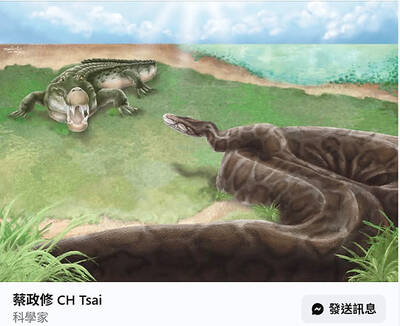
Taiwanese paleontologists have discovered fossil evidence that pythons up to 4m long inhabited Taiwan during the Pleistocene epoch, reporting their findings in the international scientific journal Historical Biology. National Taiwan University (NTU) Institute of Ecology and Evolutionary Biology associate professor Tsai Cheng-hsiu (蔡政修) led the team that discovered the largest snake fossil ever found in Taiwan. The single trunk vertebra was discovered in Tainan at the Chiting Formation, dated to between 400,000 and 800,000 years ago in the Middle Pleistocene, the paper said. The area also produced Taiwan’s first avian fossil, as well as crocodile, mammoth, saber-toothed cat and rhinoceros fossils, it said. Discoveries

Taiwanese paleontologists have discovered fossil evidence that pythons up to 4m long inhabited Taiwan during the Pleistocene epoch, reporting their findings in the international scientific journal Historical Biology. National Taiwan University (NTU) Institute of Ecology and Evolutionary Biology associate professor Tsai Cheng-hsiu (蔡政修) led the team that discovered the largest snake fossil ever found in Taiwan. A single trunk vertebra was discovered in Tainan at the Chiting Formation, dated to between 800,000 to 400,000 years ago in the Middle Pleistocene, the paper said. The area also produced Taiwan’s first avian fossil, as well as crocodile, mammoth, sabre-toothed cat and rhinoceros fossils, it said. Discoveries
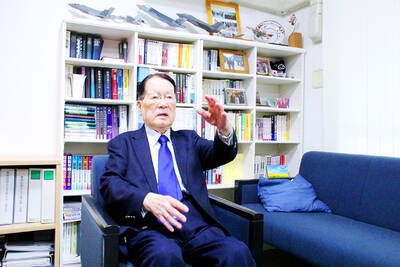
Whether Japan would help defend Taiwan in case of a cross-strait conflict would depend on the US and the extent to which Japan would be allowed to act under the US-Japan Security Treaty, former Japanese minister of defense Satoshi Morimoto said. As China has not given up on the idea of invading Taiwan by force, to what extent Japan could support US military action would hinge on Washington’s intention and its negotiation with Tokyo, Morimoto said in an interview with the Liberty Times (sister paper of the Taipei Times) yesterday. There has to be sufficient mutual recognition of how Japan could provide
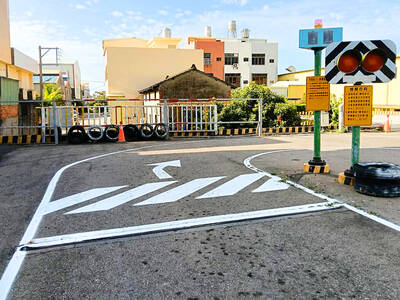
UPDATED TEST: The new rules aim to assess drivers’ awareness of risky behaviors and how they respond under certain circumstances, the Highway Bureau said Driver’s license applicants who fail to yield to pedestrians at intersections or to check blind spots, or omit pointing-and-calling procedures would fail the driving test, the Highway Bureau said yesterday. The change is set to be implemented at the end of the month, and is part of the bureau’s reform of the driving portion of the test, which has been criticized for failing to assess whether drivers can operate vehicles safely. Sedan drivers would be tested regarding yielding to pedestrians and turning their heads to check blind spots, while drivers of large vehicles would be tested on their familiarity with pointing-and-calling


 RSS
RSS