


Taichung Mayor Lu Shiow-yen (盧秀燕), who is on an 11-day trip in the US, on Friday met with Boston Mayor Michelle Wu (吳弭). The two talked about potential cooperation between their cities.
“It was an honor to welcome Ms. Lu Shiow-yen, Mayor of Taichung City, Taiwan [@lushiowyen] and members of the Taichung delegation to Boston City Hall today,” Wu wrote on Facebook, posting photos of the meeting.
“Boston and Taichung City share a deep commitment to international collaboration and making our cities great places to live,” Wu added.
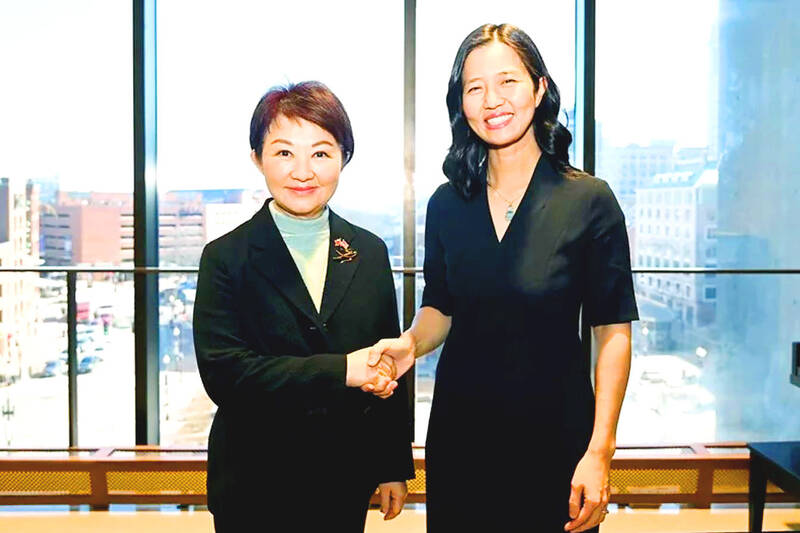
Photo courtesy of the Boston City Government
Born to Taiwanese parents in Chicago, Wu in 2021 became the first female and minority mayor of Boston.
While addressing a group of overseas Taiwanese in Boston later the same day, Lu said she and Wu are female mayors and share the same hopes of improving lives, infrastructure, education and medical care in their cities, a statement issued by the Taichung City Government said.
Lu also touted industrial development in Taichung.
Taichung has developed an outstanding machinery industry in the global market, while major semiconductor suppliers, such as contract chipmaker Taiwan Semiconductor Manufacturing Co and US-based memorychip supplier Micron Technology Inc, have set up production sites in the city, Lu said.
Led by the machinery and semiconductor industries, Taichung is transforming itself into an artificial intelligence-based robotics hub, making the city one of the favorites of top tech professionals, she added.
Lu, who is in her second term as Taichung mayor until December, said that during her tenure, she has invested heavily in National Health Insurance subsidies for elderly people and pushed for the most affordable public babysitting services in Taiwan.
She said she believes a great city should invest in welfare and education, and that only efforts to take good care of elderly people and children would reduce the concerns the younger generation has about family care and encourage them to work hard for a better future.
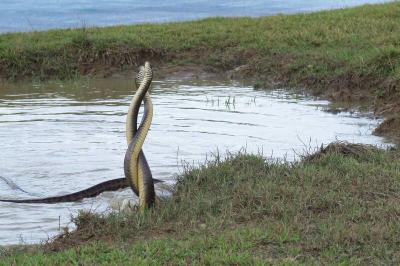
Kenting National Park service technician Yang Jien-fon (楊政峰) won a silver award in World Grand Prix Photography Awards Spring Season for his photograph of two male rat snakes intertwined in combat. Yang’s colleagues at Kenting National Park said he is a master of nature photography who has been held back by his job in civil service. The awards accept entries in all four seasons across six categories: architectural and urban photography, black-and-white and fine art photography, commercial and fashion photography, documentary and people photography, nature and experimental photography, and mobile photography. Awards are ranked according to scores and divided into platinum, gold and
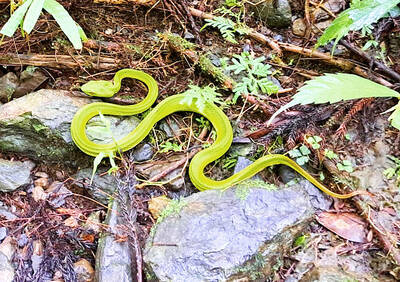
More than half of the bamboo vipers captured in Tainan in the past few years were found in the city’s Sinhua District (新化), while other districts had smaller catches or none at all. Every year, Tainan captures about 6,000 snakes which have made their way into people’s homes. Of the six major venomous snakes in Taiwan, the cobra, the many-banded krait, the brown-spotted pit viper and the bamboo viper are the most frequently captured. The high concentration of bamboo vipers captured in Sinhua District is puzzling. Tainan Agriculture Bureau Forestry and Nature Conservation Division head Chu Chien-ming (朱健明) earlier this week said that the
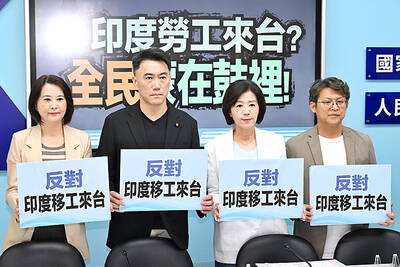
The Chinese Nationalist Party (KMT) caucus yesterday said it opposes the introduction of migrant workers from India until a mechanism is in place to prevent workers from absconding. Minister of Labor Hung Sun-han (洪申翰) on Thursday told the Legislative Yuan that the first group of migrant workers from India could be introduced as early as this year, as part of a government program. The caucus’ opposition to the policy is based on the assessment that “the risk is too high,” KMT caucus secretary-general Lin Pei-hsiang (林沛祥) said. Taiwan has a serious and long-standing problem of migrant workers absconding from their contracts, indicating that
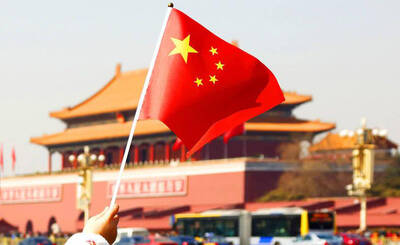
TRADE-OFF: Beijing seeks to trade a bowl of tempura for a Chinese delicacy, an official said, while another said its promises were attempts to interfere in the polls The government must carefully consider the national security implications of building a bridge connecting Kinmen County and Xiamen, China, the Public Construction Commission (PCC) said yesterday. PCC Commissioner Derek Chen (陳金德), who is also a minister without portfolio, made the remarks in a meeting of the legislature’s Transportation Committee, after Democratic Progressive Party Legislator Hsu Fu-kuei (徐富癸) asked about China’s proposal of new infrastructure projects to further connect Kinmen and Lienchiang (Matsu) counties with Xiamen. China unveiled the bridge plan, along with nine other policies for Taiwan, on Sunday, the last day of Chinese Nationalist Party (KMT) Chairwoman Cheng Li-wun’s (鄭麗文) visit


 RSS
RSS