

A bill aimed at enhancing space cooperation between Taiwan and the US yesterday cleared the committee stage in the US Senate, with senators saying it would help counter threats from Beijing.
The Taiwan and American Space Assistance (TASA) Act would now head to the Senate floor after being passed by the Senate Committee on Commerce, Science and Transportation.
The act allows for extended cooperation between the Taiwan Space Agency and both NASA and the US National Oceanic and Atmospheric Administration (NOAA). Areas of cooperation would include satellite program development, space exploration, as well as atmospheric and weather programs.
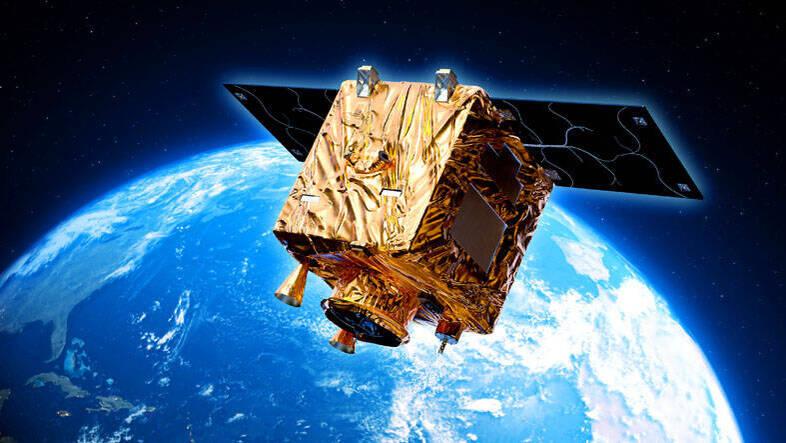
Photo courtesy of the Taiwan Space Agency
The act would also allow NASA and NOAA to exchange personnel with the Taiwan Space Agency to bolster Taiwan’s space capabilities.
The bipartisan bill was first introduced in September last year by US representatives French Hill and Gabe Amo.
NASA and the NOAA have limited authority to work with the Taiwan Space Agency, which was launched in 2022, due to the US government’s “one China” policy, Hill and Amo said in a statement last year.
The act helps the US counter threats from China and addresses gaps in NASA’s ability to cooperate with Taiwan’s space efforts, US senators Eric Schmitt, Tammy Duckworth and Michael Bennet said in a joint statement yesterday.
Space exploration and satellite operations are becoming central to US national security and would help to counter “malign influences such as China,” Schmitt said.
“As the United States continues to be the global leader in space exploration and in expanding new, innovative technology for space and satellite operations, it’s crucial that we work with our partners in the Indo-Pacific to advance and prosper,” Duckworth said.
“Taiwan is a vibrant democracy, a key economic partner, and an increasingly capable space player. This legislation will enable NASA and NOAA cooperation with Taiwan’s Space Agency, strengthening our joint ability to tackle shared challenges in space,” Bennet said.
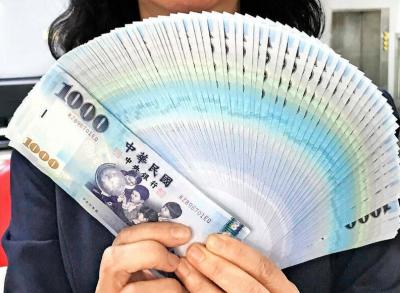
The first batch of individual income tax refunds for this tax season is to be deposited on Friday, covering more than 3.65 million cases and totaling NT$61.24 billion (US$1.89 billion), with an average refund of NT$16,745 per case, the National Taxation Bureau of Kaohsiung said. After the annual individual income tax filing deadline, regional tax bureaus process refunds in three batches based on the filing method used by taxpayers, the bureau said, adding that the three batches are scheduled for Friday, Oct. 30, and Jan. 20 next year. The first batch covers taxpayers who completed online filing before June 1, those who

NEW AND IMPROVED: The N700ST is based on Japan’s N700S Shinkansen, and features a lighter design, better energy efficiency and upgraded accessibility facilities The first set of N700ST high-speed rail carriages, scheduled to arrive in Taiwan next month, would begin service on July 1 next year, Taiwan High Speed Rail Corp (THSRC) said yesterday. THSRC chairman Shih Che (史哲) made the remarks during a ceremony in Hitachi Ltd’s Kasado Works in Yamaguchi Prefecture, Japan, where he and Hitachi Railway Systems Business Unit CEO Giuseppe Marino unveiled the locomotive of the first N700ST train. More than 200 guests attended the unveiling. “The first set of N700ST trains will soon be shipped to Taiwan from the prefecture’s Kasado Port. Hopefully, all the required tests will be completed successfully
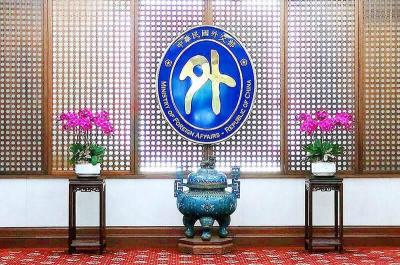
Taiwan has suspended visa processing for Moroccan nationals in response to Morocco halting visa applications for Taiwanese travelers worldwide, the Ministry of Foreign Affairs said today. The Moroccan embassy in Japan on Thursday last week informed Taiwanese travel agencies that it would suspend its visa confirmation letter application service for Taiwanese seeking to travel to Morocco, the ministry said in a statement. Taiwanese are required to obtain a visa confirmation letter before traveling to Morocco, the Bureau of Consular Affairs Web site says. Applications are submitted through the Moroccan Embassy in Japan, which forwards them to authorities in Morocco for review. Once approved,

RELIGIOUS GROUNDS: Followers of the I-Kuan Tao are especially advised not to travel to China, following a 50 percent surge in religious detentions in three months Nineteen people have been detained in China in the past three months because of their religious beliefs, representing a 50 percent surge from the previous three months, Straits Exchange Foundation Secretary-General Lo Wen-chia (羅文嘉) said yesterday. The Legislative Yuan’s Internal Administration Committee invited the foundation, Mainland Affairs Council (MAC) and other agencies to deliver a report on the government’s response to the growing number of missing Taiwanese citizens in China. From Jan. 1, 2024, to Wednesday last week, 402 people have gone missing, been detained for questioning or imprisoned in China, MAC data showed. Of the total cases, 154 are missing, 32 have


 RSS
RSS