


A National Health Insurance (NHI) premium exemption for children younger than six, reported to be proposed by the Chinese Nationalist Party (KMT) caucus, should be carefully evaluated, the Ministry of Health and Welfare said yesterday.
The Chinese-language United Daily News yesterday reported that the KMT’s think tank suggested amending the Child and Juvenile Welfare and Rights Protection Act (兒童及少年福利與權益保障法) to exempt children aged six or younger from NHI premiums, to help address Taiwan’s low birthrate.
The article quoted KMT Legislator Hung Meng-kai (洪孟楷) as saying that most KMT lawmakers supported the change, and it would be proposed by the party caucus as a priority bill to ease the financial burden on young parents.
Photo: CNA
The ministry said that the government already provides subsidies to partially or fully cover premiums for economically disadvantaged families, ensuring universal access to healthcare.
As the reported KMT proposal would involve fiscal expenditure, the ministry urged lawmakers to conduct a comprehensive evaluation of overall childcare policies and deliberate it carefully.
The government’s subsidies cover low-income and middle-to-low-income households with children and adolescents younger than 18; indigenous peoples younger than 20, or aged 55 or older enrolled under “Category 6, Type 2”; and people with disabilities, it said.
Moreover, the government provides medical subsidies for all children aged three and younger, and economically disadvantaged children younger than 18, it said.
An average of NT$1.7 billion (US$54.09 million) per year was allocated for subsidies for children aged three and younger, including outpatient and inpatient copayments, between 2020 and 2024, benefiting over 8.88 million total visits, the ministry said.
Children younger than 18 from low-income or middle-low-income households, those under protective care or placement, and those with developmental delays, premature births or rare diseases are also eligible for medical subsidies, it said.
The subsidies for children younger than 18 also include those with catastrophic illness or who are eligible through assessments by local government social workers, it added.
The subsidies cover out-of-pocket hospitalization expenses and nursing fees beyond NHI coverage, as well as fees for early intervention assessments and therapeutic training, the ministry said.
An average of NT$150 million per year was allocated for the subsidy, to cover an average of 18,000 visits per year.
Taiwan College of Healthcare executive chairman Hung Tzu-ren (洪子仁) said a child’s monthly NHI premium is linked to their parents’ economic situation, meaning that children from wealthier families pay more.
The system was established in “the spirit of mutual aid,” with the economically advantaged contributing more to help the disadvantaged, Hung said.
If the KMT proposal exempts parents from paying premiums for all children younger than six, wealthy families would be benefiting from the kind of subsidies originally intended for economically disadvantaged families, he said, adding that the change would be against the “ability-to-pay principle” and the spirit of mutual aid.
Furthermore, the exemptions would create a budget crowding-out effect, which would be detrimental to the NHI system’s long-term financial sustainability, he said.
There are many solutions to address the nation’s declining birthrate, including enhancing birth subsidies and creating more childcare-friendly environments, but creating across-the-board premiums exemptions for children younger than 6 — potentially harming the NHI system’s core spirit and fiscal sustainability — should be carefully considered, Hung said.
Additional reporting by CNA

FUKUOKA SITUATION: Japanese media reported that the pathogen is expected to be identified by the summer, while the CDC downplayed the idea that it was hMPV A “mysterious cold-like illness” reported in Japan’s Fukuoka Prefecture does not seem to be a new disease, but Japanese authorities have been asked about the situation, the Centers for Disease Control (CDC) said yesterday. The Fukuoka Prefectural Medical Association on Wednesday told a news conference that a “mystery cold” that has become a hot topic on social media is “highly likely to be caused by some kind of viral infection,” Japan’s KBC News reported. “Many people are experiencing symptoms starting with a sore throat, followed by a runny nose, phlegm and a severe cough,” KBC News reported, citing association officials. Health authorities are

Nvidia Corp CEO Jensen Huang (黃仁勳) arrived in Taiwan yesterday ahead of upcoming AI and technology events, saying he plans to meet with clients and Taiwan Semiconductor Manufacturing Co Chairman C.C. Wei (魏哲家) during his visit. After landing at Taipei Songshan Airport, Huang posed for photos with fans and handed out Yakult drinks to reporters and supporters waiting at the scene, saying he has “a lot to do” during the trip. Asked about reports that Nvidia’s planned headquarters site in Taipei’s Beitou Shilin Technology Park could break ground on May 27, Huang said that if the company holds an event, he would

The Ministry of Finance this afternoon announced the winning numbers for the March-April uniform invoice lottery. The winning number for the NT$10 million (US$318,060) special prize is 19531471, and the winning number for the NT$2 million grand prize is 85941329. Three numbers were drawn for the NT$200,000 first prize: 07225810, 20231230 and 83518781. Those with receipts matching the last seven digits of any of the first-prize numbers will win the NT$40,000 second prize, while those matching the last six digits will win the NT$10,000 third prize. Those whose receipts match the last five digits of the first-prize numbers can claim the NT$4,000 fourth prize,
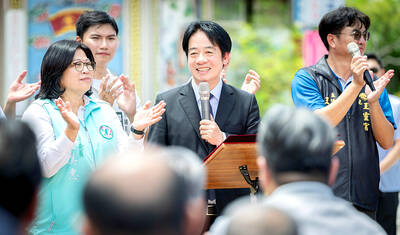
SIX SUBSIDIES: The monthly allowance for older farmers is to increase to NT$10,000, and NT$5,000 is to be given to homemakers under the national pension system, Lai said The government is to implement major welfare policies for disadvantaged groups, including raising the monthly allowance for older farmers to NT$10,000 and providing homemakers with NT$5,000 per month, President William Lai (賴清德) said yesterday. Lai made the remarks during a visit to Wangling Temple in Chiayi County, saying that the planned increases were being introduced amid economic growth and an increase in tax revenue. Touting a policy, in which the government plans to provide a monthly allowance of NT$5,000 for every child under the age of 18 in a bid to address Taiwan’s low birthrate, Lai said that if received for the


 RSS
RSS