


A fire that broke out yesterday north of the Jhihben River (知本溪) estuary in Taitung has destroyed more than 50 hectares, with firefighters unable to extinguish the blaze.
The fire broke out in an undeveloped area north of the Jhihben River estuary at about 5pm yesterday and spread fast, fueled by dry weeds, dead wood and strong winds off the coast.
When the Taitung County Fire Department arrived, the area was already engulfed in flames, authorities said.
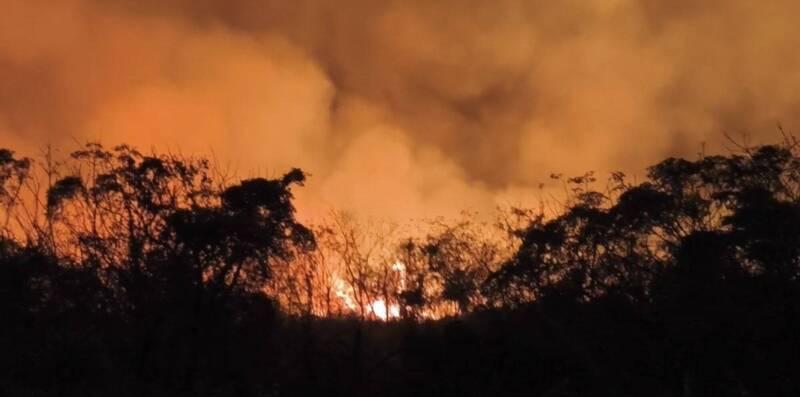
Photo: CNA
Firefighters tried to put out the fire with hoses, but it had spread too far and they were unable to enter the fire zone, authorities said, adding that they created firebreaks around the perimeter while volunteer firefighters entered the forest from small paths to spray water on the flames.
Last night, the fire was visible up to 10km away in Taitung City, with the sky glowing red.
The Taitung County Environmental Protection Bureau last night issued an air pollution alert, saying that downwind areas might be affected by smoke and that air quality in Taitung City would be impacted.
Residents in downwind areas should stay indoors as much as possible, keep their doors and windows tightly closed and wear a mask when outside, the bureau said.
The fire was still burning as of 8am this morning and more than 50 hectares were estimated to have been destroyed, the fire department said.
The fire was still spreading and its cause was under investigation, the fire department and police said.
The 300-hectare area north of the Jhihben River estuary was once planned for private development and later for a solar panel project, but both fell through, leaving the largely undeveloped land a natural wildlife habitat.
Fires often break out in the area around this time of year, and some people have asked online whether they are set deliberately.
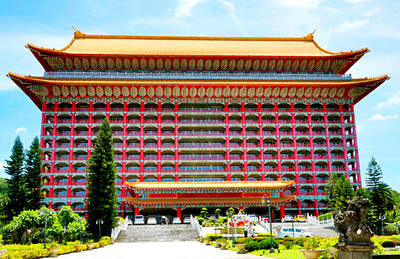
The Grand Hotel Taipei on Saturday confirmed that its information system had been illegally accessed and expressed its deepest apologies for the concern it has caused its customers, adding that the issue is being investigated by the Ministry of Justice Investigation Bureau. The hotel said that on Tuesday last week, it had discovered an external illegal intrusion into its information system. An initial digital forensic investigation confirmed that parts of the system had been accessed, it said, adding that the possibility that some customer data were stolen and leaked could not be ruled out. The actual scope and content of the affected data

DO THEY BITE IT? Cats have better memories than people might think, but their motivation is based entirely around the chance of getting fed Cats can remember the identity of the people who fed them the day before, Taipei-based veterinarians said on Friday, debunking a popular myth that cats have a short memory. If a stray does not recognize the person who fed them the previous day, it is likely because they are not carrying food and the cat has no reason to recognize them, said Wu Chou Animal Hospital head Chen Chen-huan (陳震寰). “When cats come to a human bearing food, it is coming for the food, not the person,” he said. “The food is the key.” Since the cat’s attention is on the food, it

‘LIKE-MINDED PARTNER’: Tako van Popta said it would be inappropriate to delay signing the deal with Taiwan because of China, adding he would promote the issue Canadian senators have stressed Taiwan’s importance for international trade and expressed enthusiasm for ensuring the Taiwan-Canada trade cooperation framework agreement is implemented this year. Representative to Canada Harry Tseng (曾厚仁) in an interview with the Central News Agency (CNA) said he was increasingly uneasy about Ottawa’s delays in signing the agreement, especially as Ottawa has warmed toward Beijing. There are “no negotiations left. Not only [is it] initialed, we have three versions of the text ready: English, French and Mandarin,” Tseng said. “That tells you how close we are to the final signature.” Tseng said that he hoped Canadian Prime Minister Mark Carney

Taiwan must act to preempt potential Section 301 investigations as US President Donald Trump moves to a new tariff strategy, following a US Supreme Court ruling that voided tariff measures, an academic said yesterday. Countries running the largest trade surpluses with the US face a growing likelihood of Section 301 investigations, Chung-Hua Institution for Economic Research president Lien Hsien-ming (連賢明) said. Section 301 refers to a provision of the Trade Act of 1974 that allows Washington to impose retaliatory tariffs over perceived unfair trade practices, including the running of large trade surpluses. Because Taiwan has become the fourth-largest source of the US’ trade


 RSS
RSS