


Women in Taiwan must work an average of 59 additional days in 2025 to earn the same annual salary as men, one day more than in 2024, according to data released yesterday by the Ministry of Labor.
Taiwan’s gender pay gap last year stood at 16.1 percent, meaning women earned 83.9 percent of men’s average hourly wages, the ministry said in a statement.
Based on preliminary results from a wage survey conducted by the Directorate General of Budget, Accounting and Statistics, women earned an average hourly wage of NT$340 (US$10.89) last year, compared with NT $405 for men.
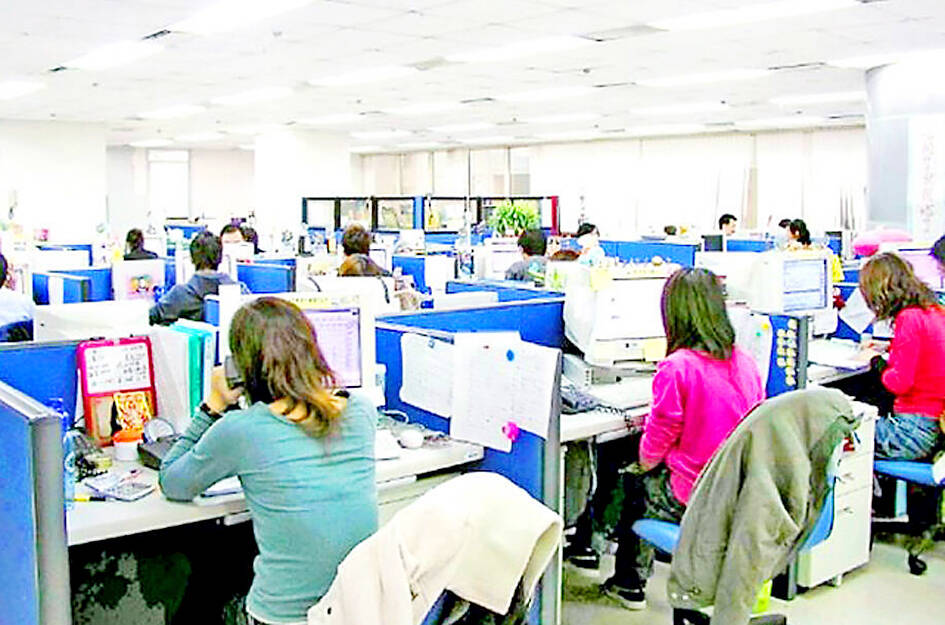
Photo: Taipei Times
The wage gap translates into women needing to work 59 more days than men to match annual earnings, placing Taiwan’s Equal Pay Day on Feb. 28 this year, or the 59th day of the calendar year, the ministry said.
The gender pay gap widened by 0.3 percentage points from 2024 and by 0.5 percentage points compared with 2019, said Jasmine Mei (梅家瑗), head of the ministry’s Department of Statistics.
One such sector is electronic components manufacturing, where men earned an average hourly wage of NT$727 last year, compared with NT$417 for women, resulting in a gender pay gap of 42.7 percent.
According to the ministry, this disparity has widened in recent years, likely due to gender distribution across different job roles, with men more heavily represented in higher-paying research and engineering positions.
When electronic components manufacturing is excluded, the gender pay gap across other industrial and service sectors narrows to 11.3 percent, down 0.3 percentage points from the previous year and 1.5 percentage points from 2019, the ministry said.
The healthcare sector also recorded a relatively large gender pay gap of 43.1 percent last year, although the figure declined compared with both 2024 and 2019.
The ministry noted that Taiwan’s gender pay gap in recent years has remained 13 to 16.5 percentage points lower than those reported in Japan and South Korea.
When compared to the United States using median annual salary data for full-time workers, Taiwan’s gap of 16.2 percent in 2024 was also lower than the 17.3 percent reported in the US, the ministry said.
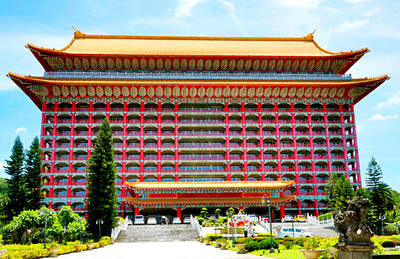
The Grand Hotel Taipei on Saturday confirmed that its information system had been illegally accessed and expressed its deepest apologies for the concern it has caused its customers, adding that the issue is being investigated by the Ministry of Justice Investigation Bureau. The hotel said that on Tuesday last week, it had discovered an external illegal intrusion into its information system. An initial digital forensic investigation confirmed that parts of the system had been accessed, it said, adding that the possibility that some customer data were stolen and leaked could not be ruled out. The actual scope and content of the affected data

DO THEY BITE IT? Cats have better memories than people might think, but their motivation is based entirely around the chance of getting fed Cats can remember the identity of the people who fed them the day before, Taipei-based veterinarians said on Friday, debunking a popular myth that cats have a short memory. If a stray does not recognize the person who fed them the previous day, it is likely because they are not carrying food and the cat has no reason to recognize them, said Wu Chou Animal Hospital head Chen Chen-huan (陳震寰). “When cats come to a human bearing food, it is coming for the food, not the person,” he said. “The food is the key.” Since the cat’s attention is on the food, it

Taiwan must act to preempt potential Section 301 investigations as US President Donald Trump moves to a new tariff strategy, following a US Supreme Court ruling that voided tariff measures, an academic said yesterday. Countries running the largest trade surpluses with the US face a growing likelihood of Section 301 investigations, Chung-Hua Institution for Economic Research president Lien Hsien-ming (連賢明) said. Section 301 refers to a provision of the Trade Act of 1974 that allows Washington to impose retaliatory tariffs over perceived unfair trade practices, including the running of large trade surpluses. Because Taiwan has become the fourth-largest source of the US’ trade

People hold incense and pray with offerings in front of Taipei’s Kuanghwa Market yesterday. The fifth day of the Lunar New Year is traditionally about welcoming the God of Wealth, during which companies and shops set off firecrackers to celebrate their reopening and pray for good business in the new year.


 RSS
RSS