


The Taipei City Government yesterday said the private sector is flooding officials with inquiries about a proposal on seven-hour work days, amid criticism from city councilors that the municipality overpromised, but underdelivered.
The comments came a day after Taipei Mayor Chiang Wan-an (蔣萬安) announced an initiative to support flexible work hours for parents of children aged 12 or younger.
The policy — which would subsidize 80 percent of lost wages due to less work hours — is scheduled to go into effect on Sunday.

Photo: Taipei Times
Many businesses have called the Taipei Department of Labor regarding the policy’s implementation and eligibility requirements, a city government spokesperson said.
A Web page has been created for the program, and the city government is working on information packages, they said, adding that officials would communicate with business owners.
Taipei City Councilor Ho Meng-hua (何孟樺) yesterday slammed the Taipei City Government, saying Chiang has fluffed up the policy with promises that cannot be cashed.
The plan gave the impression that it would share personnel costs, but Chiang did not mention that each person could only receive a maximum of NT$15,000 (US$479.98) nor that the subsidy would only last eight months, she said.
Unless a person earns less than the NT$29,500 minimum wage and the company implements the program for less than eight months, NT$15,000 is nowhere near enough to cover 80 percent of lost wages, Ho said.
Companies would receive a maximum subsidy of NT$100,000, which would only cover six to seven employees, she added.
Additionally, the city government’s budget can only support 55 companies, Ho said.
“According to estimates, covering 80 percent of the lost wages for 240,000 parents over a year would require NT$8.7 billion, yet Chiang allocated only NT$5.5 million,” she said. “Is this a joke?”
“Chiang’s policy has the substance of a potato chip bag,” Ho said.
The Taipei City Government must adequately budget its policies and include big businesses in its plan if Chiang wishes to convince residents that the flexible hour initiative is not a lie to get their vote, she said.
Taipei City Councilor Chen Hsien-wei (陳賢蔚) said the city government was rushing the policy planning, and that its budget allocation, implementation plans, impact assessments and expected goals were unclear.
The city’s labor department said it allocated NT$5.5 million for the policy because it is still testing the private sector’s response to the proposal, adding that Chiang has pledged to establish a reserve fund should demand from businesses and residents exceed the initial budget.
Department of Labor Commissioner Wang Chiu-tung (王秋冬) said the initiative is intended only for private-sector employees, not government workers.
Regarding concerns that Taipei residents with children might face discrimination when they apply for work, Wang said the policy is intended as a tool to “retain talent” amid a labor shortage.
If discrimination does occur, people can report it to the department, he added.
As for whether people who are single or non-Taipei residents might have to work overtime to compensate for other employees’ reduced hours, the city government said it hoped that other cities or the central government would follow suit after seeing Taipei’s results.

Yangmingshan National Park authorities yesterday urged visitors to respect public spaces and obey the law after a couple was caught on a camera livestream having sex at the park’s Qingtiangang (擎天崗) earlier in the day. The Shilin Police Precinct in Taipei said it has identified a suspect and his vehicle registration number, and would summon him for questioning. The case would be handled in accordance with public indecency charges, it added. The couple entered the park at about 11pm on Thursday and began fooling around by 1am yesterday, the police said, adding that the two were unaware of the park’s all-day live
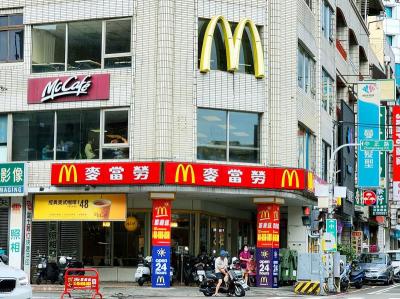
Fast food chain McDonald's is to raise prices by up to NT$5 on some products at its restaurants across Taiwan, starting on Wednesday next week, the company announced today. The prices of all extra value meals and sharing boxes are to increase by NT$5, while breakfast combos and creamy corn soup would go up by NT$3, the company said in a statement. The price of the main items of those meals, if ordered individually, would remain the same. Meanwhile, the price of a medium-sized lemon iced tea and hot cappuccino would rise by NT$3, extra dipping sauces for chicken nuggets would go up
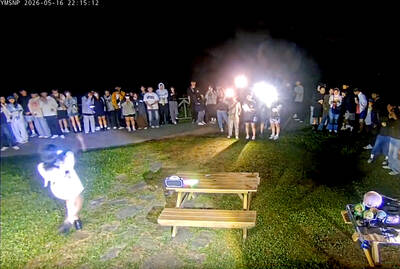
Yangmingshan National Park’s Qingtiangang (擎天崗) nature area has gone viral after a park livestream camera observed a couple in the throes of intimate congress, which was broadcast live on YouTube, drawing large late-night crowds and sparking a backlash over noise, bright lights and disruption to wildlife habitat. The area’s livestream footage appeared to show a couple engaging in sexual activity on a picnic table in the park on Friday last week, with the uncensored footage streamed publicly online. The footage quickly spread across social media, prompting a tide of visitors to travel to the site to “check in” and recreate the

Minister of Digital Affairs Lin Yi-ching (林宜敬) yesterday cited regulatory issues and national security concerns as an expert said that Taiwan is among the few Asian regions without Starlink. Lin made the remarks on Facebook after funP Innovation Group chief executive officer Nathan Chiu (邱繼弘) on Friday said Taiwan and four other countries in Asia — China, North Korea, Afghanistan and Syria — have no access to Starlink. Starlink has become available in 166 countries worldwide, including Ukraine, Malaysia, the Philippines and Vietnam, in the six years since it became commercial, he said. While China and North Korea block Starlink, Syria is not


 RSS
RSS