


Taiwan’s first indigenous lawyer, Pawan Yumin (楊志航), an Atayal, died at the age of 66 on Monday last week.
His family held a memorial yesterday at his community, M’bwanan, in Miaoli County’s Taian Township (泰安), where Council of Indigenous Peoples Minister Tseng Chih-yung (曾智勇) presented a posthumous commendation in recognition of his contributions to indigenous peoples and the legal profession.
Community members at the ceremony recalled that he was not only a steadfast legal advocate, but a powerful cultural inheritor who often shared Atayal stories, and emphasized the significance of giving equal weight to law and culture in restoring indigenous dignity in modern society.
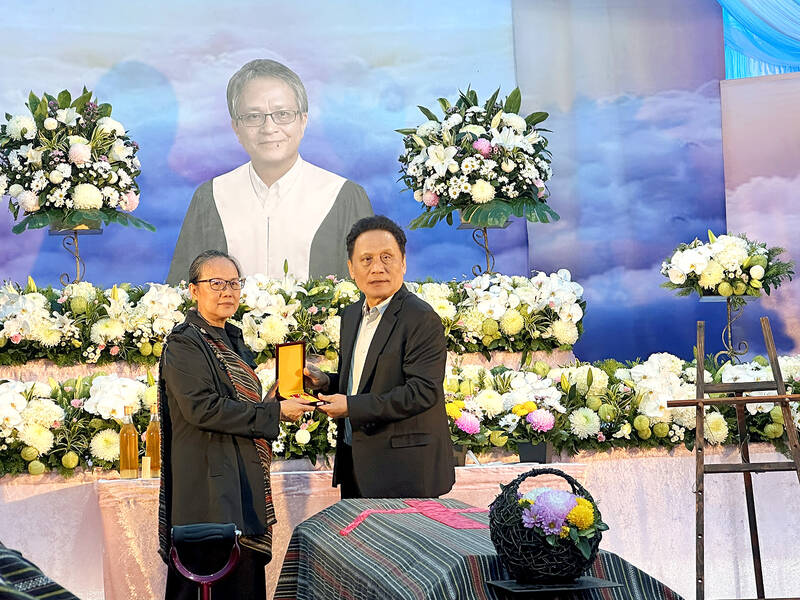
Photo courtesy of the Miaoli County Indigenous Peoples and Ethnic Group Development Department
Miaoli County Deputy Commissioner Chiu Li-li (邱俐俐) and Miaoli County Indigenous Peoples and Ethnic Group Development Department Director Maya Buyung attended the funeral.
Pawan Yumin left home at a young age to pursue his education, the department said in a statement yesterday.
Despite the challenges of the urban-rural divide, he graduated from National Taiwan University’s Department of Law in 1983 through perseverance and diligence, it said.
In 1991, he passed the bar exam, becoming the first indigenous lawyer in Taiwan’s judicial history, it said, adding that he dedicated himself to advancing and safeguarding indigenous rights.
Since 1993, he established several law firms to assist indigenous clients with land, forestry and cultural cases, contributing his professional expertise to his community, it said.
He safeguarded the rights of the indigenous peoples with his profession, voicing his concerns about how the laws were unfair to their people, it said.
He advocated for the establishment of an “indigenous court,” promoting the idea that the judicial system should respect indigenous culture, it said. To further his cause, he traveled to New Zealand to study the Maori Land Court, the department said.
When he returned, he proposed reforms that laid the groundwork for strengthening judicial protections for indigenous peoples, it said.
His life was a major breakthrough for indigenous peoples in the judicial field, it said, adding that his passing is not only a loss to his community, but a shared sorrow for Taiwanese society.
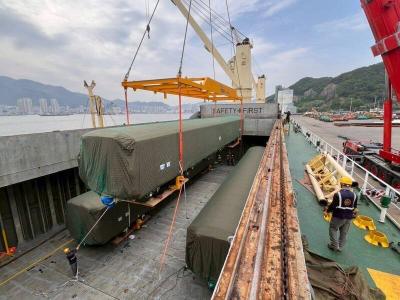
The first of 10 new high-capacity trains purchased from South Korea’s Hyundai Rotem arrived at the Port of Taipei yesterday to meet the demands of an expanding metro network, Taipei Rapid Transit Corp (TRTC) said yesterday. The train completed a three-day, 1,200km voyage from the Port of Masan in South Korea, the company said. Costing NT$590 million (US$18.79 million) each, the new six-carriage trains feature a redesigned interior based on "human-centric" transportation concepts, TRTC said. The design utilizes continuous longitudinal seating to widen the aisles and optimize passenger flow, while also upgrading passenger information displays and driving control systems for a more comfortable
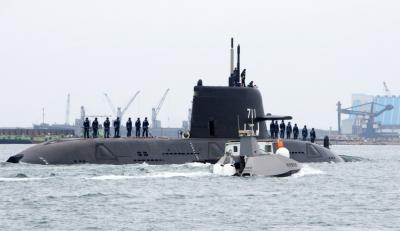
Taiwan's first indigenous defense submarine, the SS-711 Hai Kun (海鯤, or Narwhal), departed for its 13th sea trial at 7am today, marking its seventh submerged test, with delivery to the navy scheduled for July. The outing also marked its first sea deployment since President William Lai (賴清德) boarded the submarine for an inspection on March 19, drawing a crowd of military enthusiasts who gathered to show support. The submarine this morning departed port accompanied by CSBC Corp’s Endeavor Manta (奮進魔鬼魚號) uncrewed surface vessel and a navy M109 assault boat. Amid public interest in key milestones such as torpedo-launching operations and overnight submerged trials,
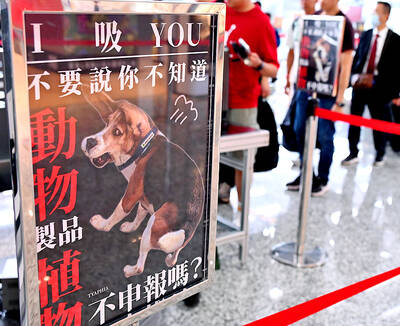
Quarantine awareness posters at Taiwan Taoyuan International Airport have gone viral for their use of wordplay. Issued by the airport branch of the Animal and Plant Health Inspection Agency, the posters feature sniffer dogs making a range of facial expressions, paired with advisory messages built around homophones. “We update the messages for holidays and campaign needs, periodically refreshing materials to attract people’s attention,” quarantine officials said. “The aim is to use the dogs’ appeal to draw focus to quarantine regulations.” A Japanese traveler visiting Taiwan has posted a photo on X of a poster showing a quarantine dog with a

Taiwan’s coffee community has launched a “one-person-one-e-mail” campaign, calling for people to send a protest-e-mail to the World Coffee Championships (WCC) urging it to redesignate Taiwanese competitors as from “Taiwan,” rather than “Chinese Taipei.” The call followed sudden action last week after the WCC changed all references to Taiwanese competitors from “Taiwan” to “Chinese Taipei,” including recent World Latte Art champion Bala (林紹興), who won the World Latte Art Championship in San Diego earlier this month. When Bala received the trophy, he was referred to as representing Taiwan, as well as in the announcement on the WCC’s Web site, until it


 RSS
RSS