


Latin America stands to benefit from President Donald Trump’s greater involvement, said Paraguay President Santiago Pena, who has emerged as one of the staunchest US allies in the region, as he also insisted on Paraguay’s ties to Taiwan.
“When the new national security strategy came out and they started talking about revitalizing the Monroe Doctrine, I think it’s a good idea,” Pena said in an interview with Bloomberg Television in Washington after meeting with Secretary of State Marco Rubio. Pena was referring to the US policy of influence in Latin America outlined by President James Monroe in the 19th century.
“It’s not that we’re going to be the same countries that we were 200 years ago,” he added. “We are completely different, and the type of partnership that we have built is different now, it’s stronger and we see each other as an ally. So it’s not that the US will colonize the countries in the Western Hemisphere.”
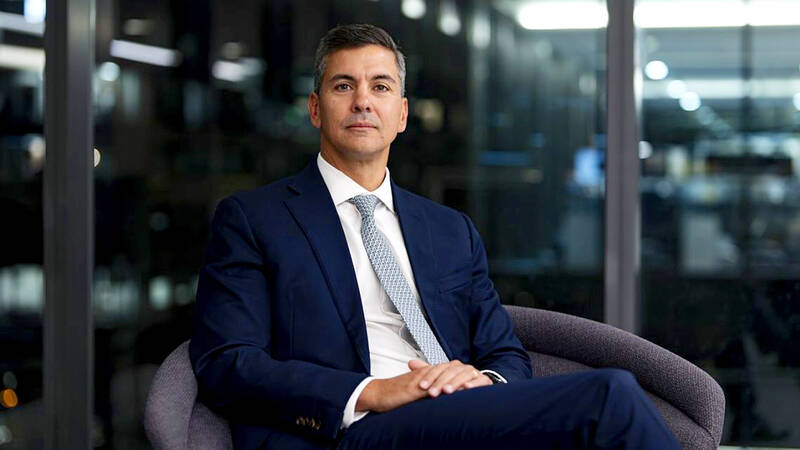
Photo: Bloomberg
Pena, who also participated in Trump’s Board of Peace meeting Thursday, hails from a region historically wary of US intervention. Yet he applauded Trump’s decision to launch a military operation to capture Venezuelan President Nicolas Maduro this year. The operation exposed Latin America’s polarized politics, with left-wing leaders condemning the move and right-wing leaders cheering on the US.
Maduro’s removal was the second best option after Venezuela’s failed elections in 2024, said Pena, who warned the transition to democracy in Venezuela could be a lengthy process. It took about four years for Paraguay to return to democracy after the fall of the Stroessner dictatorship in 1989, he said.
“Dictators, they usually don’t go with pamphlets and manifestations in the street, they usually go with bullets,” he said in reference to Maduro’s capture in early January. “If I give you my own experience in Paraguay, it took about three to four years, so I hope that it could be sooner, but it’s going to be around that time.”
The 47-year-old economist turned politician has largely aligned his government with Trump’s foreign policy agenda, which includes backing Israel and fighting organized crime in the Americas. Last year, he agreed to host US soldiers on Paraguayan soil under a bilateral security pact that remains subject to congressional approval.
Paraguay is also one of Taiwan’s few remaining diplomatic allies, a relationship that Pena said he will maintain. Trump has sought to contain, and even roll back, China’s presence in Latin America through his renewed version of the Monroe Doctrine. Since taking office, Trump pressured Panama into voiding port concessions held by a Chinese firm.
“We are the only country in South America that still has a relationship with Taiwan. This is not a minor issue when they think about the influence of China in the Western hemisphere,” he said, adding that Paraguay’s ties to Taiwan won’t change. “Not under my watch.”
Paraguay — a country of 6.1 million people wedged between Argentina and Brazil — has largely missed out on the China-led trade and investment boom in the region of the last two decades due to its 68-year-old alliance with Taiwan. Last year, Paraguay ran a trade deficit of more than $6 billion with China.
That lopsided trade relationship hasn’t prevented Paraguay from growing faster than most of its neighbors in recent years. After growing an estimated 6% in 2025, the central bank sees the economy expanding by about 4.2% this year led by services, manufacturing and construction. Since the start of Pena’s five-year term in August 2023, the country won its first investment grade credit ratings from S&P and Moody’s.
“We are very sure that Paraguay will continue to grow about 6% to 7% the next decade,” Pena said.
Earlier Thursday, Pena’s Finance Minister Carlos Fernandez met with investors in New York as the country looks to sell US dollar and local currency denominated global bonds to cover its 2026 funding needs.
“We have a very tight budget and we abide to a very strict financial plan,” Pena said. “The amount is going to be limited to what has been budgeted which is a little bit less than a $1 billion.”

Yangmingshan National Park authorities yesterday urged visitors to respect public spaces and obey the law after a couple was caught on a camera livestream having sex at the park’s Qingtiangang (擎天崗) earlier in the day. The Shilin Police Precinct in Taipei said it has identified a suspect and his vehicle registration number, and would summon him for questioning. The case would be handled in accordance with public indecency charges, it added. The couple entered the park at about 11pm on Thursday and began fooling around by 1am yesterday, the police said, adding that the two were unaware of the park’s all-day live

A former soldier and an active-duty army officer were yesterday indicted for allegedly selling classified military training materials to a Chinese intelligence operative for a total of NT$79,440. The Taipei District Prosecutors’ Office indicted Chen Tai-yin (陳泰尹) and Lee Chun-ta (李俊達) for contravening the National Security Act (國家安全法) and the Anti-Corruption Act (貪污治罪條例). Chen left the military in September 2013 after serving alongside then-staff sergeant Lee, now an army lieutenant, at the 21st Artillery Command of the army’s Sixth Corps from 2011 to 2013, according to the indictment. Chen met a Chinese intelligence operative identified as “Wang” (王) through a friend in November

Minister of Digital Affairs Lin Yi-ching (林宜敬) yesterday cited regulatory issues and national security concerns as an expert said that Taiwan is among the few Asian regions without Starlink. Lin made the remarks on Facebook after funP Innovation Group chief executive officer Nathan Chiu (邱繼弘) on Friday said Taiwan and four other countries in Asia — China, North Korea, Afghanistan and Syria — have no access to Starlink. Starlink has become available in 166 countries worldwide, including Ukraine, Malaysia, the Philippines and Vietnam, in the six years since it became commercial, he said. While China and North Korea block Starlink, Syria is not
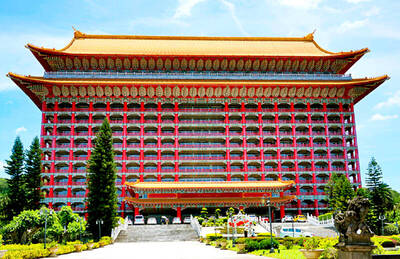
The Grand Hotel Taipei has rejected media reports claiming that the hotel had prevented CBS from broadcasting coverage of the Beijing summit between U.S. President Donald Trump and Chinese President Xi Jinping (習近平) on its premises. Media reports alleging that the hotel owner, dissatisfied with CBS’s coverage, prohibited the network from broadcasting political content on the hotel premises, are not true, the hotel said in a statement issued last night. The reports were “inconsistent with how the hotel actually handled the matter,” it said. The hotel said it received a refund request from a


 RSS
RSS