


Suddenly blurred vision might be a symptom of eye stroke caused by restricted blood flow, or vasoconstriction, from low temperatures during cold weather, a doctor warned as he called on people with chronic disease or nearsightedness to be careful.
Eye stroke, or retinal artery occlusion, has symptoms such as sudden vision loss or blurring and dark spots in the vision field, said Vision Eye Center ophthalmologist Chang Hsin-yu (張芯瑜), adding it is an acute condition that requires prompt medical care.
Winter is a high-risk period for eye stroke, especially for older people and people with “three highs” — high levels of blood lipids, blood sugar or blood pressure — as cold weather can aggravate vasoconstriction, she said.
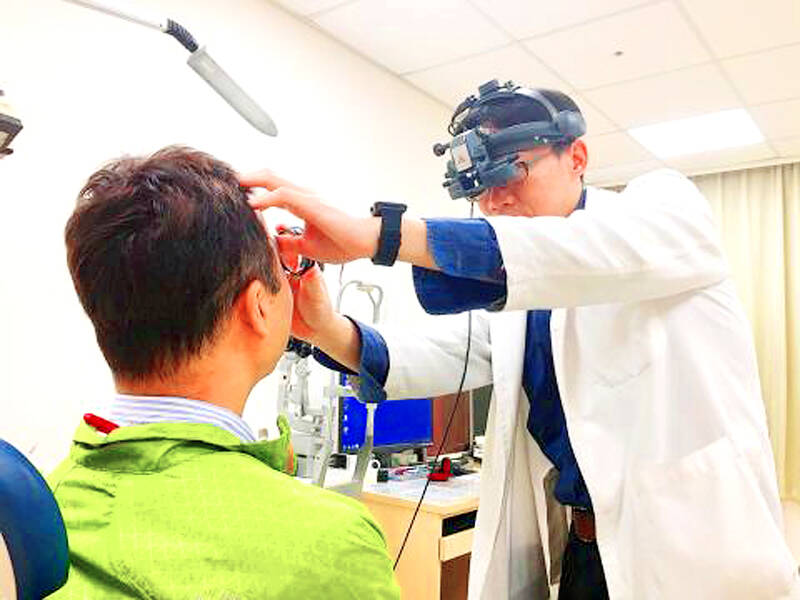
Photo: Lin Huei-chin, Taipei Times
People with severe nearsightedness should be careful as they are more prone to detached retinas, which could be complicated by eye stroke, Chang said.
Separately, many people recently sought medical attention for dry eyes or foreign body sensation in eyes, she said.
Dry eyes are not necessarily the symptom of dry eye syndrome but can be caused by allergens, poor air quality, dust or weather changes, Chang said.
Dry eyes and allergic conjunctivitis can worsen within a short period of time when temperatures drop or when transboundary dust or air pollution worsens, she said.
People should see a doctor for medical examinations promptly if their eye problems do not improve with regular hot compresses or artificial tears, Chang said.
Medical personnel would conduct examinations of the patient’s eye surface and determine whether patients need certain treatment such as artificial gels or eye ointments that require a doctor’s prescription, she said.
Extended screen time on digital devices has become a lifestyle disease, a major problem for older segments of the population, Huang said.
People regardless of age are advised to follow the “20-20-20” principle when using electronics, she said.
The “20-20-20” principle refers to taking a 20-second break every 20 minutes to look at an object 20 feet (6m) away.
Huang recommended that people use phones or tablets in a well-lit environment with the screen brightness kept moderately low and refrain from scrolling in the dark to minimize eye irritation, she said.
Although evidence-based medical research has yet to confirm that blue light from electronic devices has direct harmful effects on the human eye, prolonged exposure to a brightly lit screen is known to cause strain on eyes and ciliary muscles, Huang said.
Eye problems are intertwined with weather, environments and lifestyle, she said, calling on people to stay aware of changes in vision and continued discomfort in eyes during cold seasons.

FUKUOKA SITUATION: Japanese media reported that the pathogen is expected to be identified by the summer, while the CDC downplayed the idea that it was hMPV A “mysterious cold-like illness” reported in Japan’s Fukuoka Prefecture does not seem to be a new disease, but Japanese authorities have been asked about the situation, the Centers for Disease Control (CDC) said yesterday. The Fukuoka Prefectural Medical Association on Wednesday told a news conference that a “mystery cold” that has become a hot topic on social media is “highly likely to be caused by some kind of viral infection,” Japan’s KBC News reported. “Many people are experiencing symptoms starting with a sore throat, followed by a runny nose, phlegm and a severe cough,” KBC News reported, citing association officials. Health authorities are

Nvidia Corp CEO Jensen Huang (黃仁勳) arrived in Taiwan yesterday ahead of upcoming AI and technology events, saying he plans to meet with clients and Taiwan Semiconductor Manufacturing Co Chairman C.C. Wei (魏哲家) during his visit. After landing at Taipei Songshan Airport, Huang posed for photos with fans and handed out Yakult drinks to reporters and supporters waiting at the scene, saying he has “a lot to do” during the trip. Asked about reports that Nvidia’s planned headquarters site in Taipei’s Beitou Shilin Technology Park could break ground on May 27, Huang said that if the company holds an event, he would

The Ministry of Finance this afternoon announced the winning numbers for the March-April uniform invoice lottery. The winning number for the NT$10 million (US$318,060) special prize is 19531471, and the winning number for the NT$2 million grand prize is 85941329. Three numbers were drawn for the NT$200,000 first prize: 07225810, 20231230 and 83518781. Those with receipts matching the last seven digits of any of the first-prize numbers will win the NT$40,000 second prize, while those matching the last six digits will win the NT$10,000 third prize. Those whose receipts match the last five digits of the first-prize numbers can claim the NT$4,000 fourth prize,

SIX SUBSIDIES: The monthly allowance for older farmers is to increase to NT$10,000, and NT$5,000 is to be given to homemakers under the national pension system, Lai said The government is to implement major welfare policies for disadvantaged groups, including raising the monthly allowance for older farmers to NT$10,000 and providing homemakers with NT$5,000 per month, President William Lai (賴清德) said yesterday. Lai made the remarks during a visit to Wangling Temple in Chiayi County, saying that the planned increases were being introduced amid economic growth and an increase in tax revenue. Touting a policy, in which the government plans to provide a monthly allowance of NT$5,000 for every child under the age of 18 in a bid to address Taiwan’s low birthrate, Lai said that if received for the


 RSS
RSS