


Taiwanese doctors warned against using artificial intelligence (AI) for health advice, after a German study showed that Google AI cited YouTube videos in answers about medicine read by billions of people each month.
SE Ranking, a search engine optimization platform, found that YouTube videos made up 4.43 percent of the citations used by Google AI overview in more than 50,000 health queries, the Guardian said in a Jan. 26 report.
Among YouTube sourced content, just 34 percent cited creditable medical sources, and 1 percent used government health agencies and academic publications, it found.

Photo: Reuters
Google has disputed the findings, saying that the researchers utilized only German-language search results, which do not apply to the technology’s performance elsewhere in the world.
Medical professionals attending a conference by Technology Medica Center, Taiwan said that they have observed patients who try to make medical decisions solely on AI summaries of queries without reading cited sources.
Taiwan Municipal An-Nan Hospital head psychiatrist Chang Chun-hung (張俊鴻) said young patients are increasingly making use of generative AI for medical advice.
These patients did not check the sources, which most people would have done before, he said.
Relying on the AI summary might save time, but its tendency to project confidence in its short responses obscures uncertainty in the medical profession about complex conditions and variance in symptoms, Chang said.
AI summaries can find sources, but not identify their evidentiary strength and credibility, which means they cannot be utilized as a substitute for actual clinical observation by a qualified professional, he said.
The information provided by AI could come from small-sample research that has not been replicated, or studies that are irrelevant to the person making the query, Chang added.
This causes unnecessary emotional distress for patients, reduces public trust in doctors and wastes time and medical resources, he said.
Taipei Medical University vice president Tsai Pei-shan (蔡佩珊) said the proper place for search engines and AI summaries is for the public to understand a condition and not as a diagnostic tool.
Users need to check what are the sources and who wrote them when doing their own research and never rely on algorithmic tools to make medical decisions, she said.
Checking multiple sources and comparing different answers are crucial for reading about medicine and medical conditions, Tsai added.
“Changing a therapy, stopping the use of a prescription or refusing a check-up are not the type of decisions patients should make without asking a medical professional,” she said.
The government should be more aggressive in demanding AI platforms to display cautionary warnings prominently on query results, said Tsai Chang-youh (蔡長祐), a researcher at the National Cybersecurity Institute.
“International corporations such as Google should of course be consulted in the legislative process, but health information that can put lives at risk must be prioritized,” he said.

The manufacture of the remaining 28 M1A2T Abrams tanks Taiwan purchased from the US has recently been completed, and they are expected to be delivered within the next one to two months, a source said yesterday. The Ministry of National Defense is arranging cargo ships to transport the tanks to Taiwan as soon as possible, said the source, who is familiar with the matter. The estimated arrival time ranges from late this month to early next month, the source said. The 28 Abrams tanks make up the third and final batch of a total of 108 tanks, valued at about NT$40.5 billion

Travel agencies in Taiwan are working to secure alternative flights for travelers bound for New Zealand for the Lunar New Year holiday, as Air New Zealand workers are set to strike next week. The airline said that it has confirmed that the planned industrial action by its international wide-body cabin crew would go ahead on Thursday and Friday next week. While the Auckland-based carrier pledged to take reasonable measures to mitigate the impact of the workers’ strike, an Air New Zealand flight arriving at Taipei from Auckland on Thursday and another flight departing from Taipei for Auckland on Saturday would have to
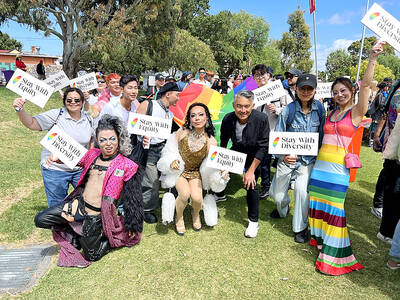
A group from the Taiwanese Designers in Australia association yesterday represented Taiwan at the Midsumma Pride March in Melbourne. The march, held in the St. Kilda suburb, is the city’s largest LGBTQIA+ parade and the flagship event of the annual Midsumma Festival. It attracted more than 45,000 spectators who supported the 400 groups and 10,000 marchers that participated this year, the association said. Taiwanese Designers said they organized a team to march for Taiwan this year, joining politicians, government agencies, professionals and community organizations in showing support for LGBTQIA+ people and diverse communities. As the first country in Asia to legalize same-sex
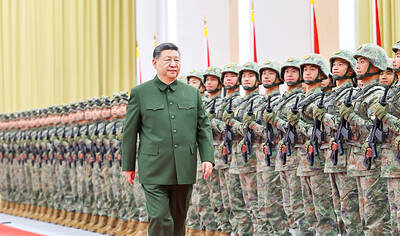
MOTIVES QUESTIONED The PLA considers Xi’s policies toward Taiwan to be driven by personal considerations rather than military assessment, the Epoch Times reports Chinese President Xi Jinping’s (習近平) latest purge of the Chinese People’s Liberation Army (PLA) leadership might have been prompted by the military’s opposition to plans of invading Taiwan, the Epoch Times said. The Chinese military opposes waging war against Taiwan by a large consensus, putting it at odds with Xi’s vision, the Falun Gong-affiliated daily said in a report on Thursday, citing anonymous sources with insight into the PLA’s inner workings. The opposition is not the opinion of a few generals, but a widely shared view among the PLA cadre, the Epoch Times cited them as saying. “Chinese forces know full well that


 RSS
RSS