


The Taichung District Court last week sentenced an undocumented Vietnamese migrant worker to eight years and two months in prison for illegally hunting and selling a stray cat and an endangered leopard cat.
The defendant, Ban Khac Hiep, was convicted of contravening the Firearms, Ammunition and Knives Control Act (槍砲彈藥刀械管制條例) and the Wildlife Conservation Act (野生動物保育法).
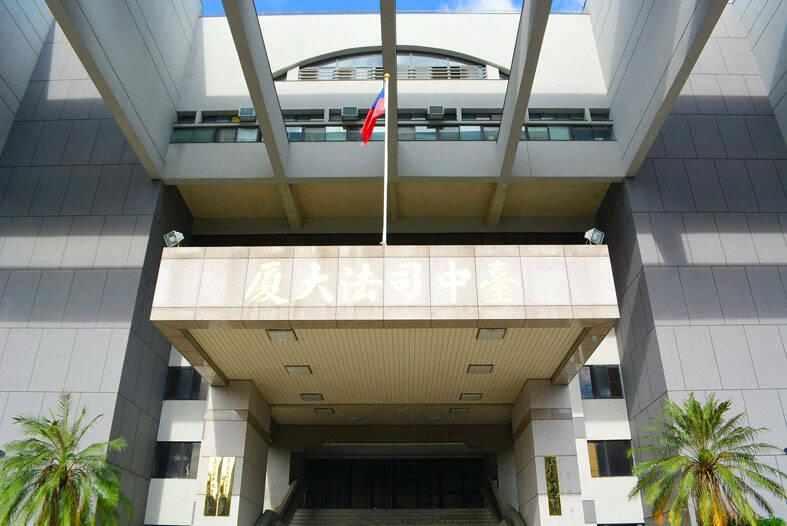
Photo: Chen Chien-chih, Taipei Times
He was also fined NT$240,000.
The ruling can be appealed.
Ban absconded from his legal place of work in October 2020 and later made a homemade hunting gun, which he used to hunt wildlife illegally for profit in March and April last year, prosecutors said.
He enlisted the help of an accomplice, Pham Van Cuong, to arrange the sale of the animals, prosecutors said.
On March 13 last year, Ban killed a stray cat and sold it through Pham to a buyer, with the two together reaping NT$1,500 in proceeds.
Ban shot and killed a leopard cat — a protected species in Taiwan — on April 19 last year, and again asked Pham to find a buyer.
The following day, Pham's Vietnamese girlfriend, surnamed Nguyen, delivered the leopard cat carcass to a buyer and collected NT$3,000.
Nguyen later received deferred prosecution, while Pham was sentenced in November last year to one year in prison for contravening the Wildlife Conservation Act.
Police investigating the case attempted to arrest Ban on June 4 last year at a makeshift structure in Taichung's Sinshe District (新社).
Officers said Ban aimed his modified firearm at them and fled while they withdrew to seek backup.
He was later apprehended and indicted.
In its ruling handed down on Wednesday last week, the court said that leopard cats are a rare and protected species in Taiwan, and that Ban showed disregard for animal life by killing and selling both a stray cat and protected wildlife.
The court said the offenses were serious and warranted a substantial sentence.

FUKUOKA SITUATION: Japanese media reported that the pathogen is expected to be identified by the summer, while the CDC downplayed the idea that it was hMPV A “mysterious cold-like illness” reported in Japan’s Fukuoka Prefecture does not seem to be a new disease, but Japanese authorities have been asked about the situation, the Centers for Disease Control (CDC) said yesterday. The Fukuoka Prefectural Medical Association on Wednesday told a news conference that a “mystery cold” that has become a hot topic on social media is “highly likely to be caused by some kind of viral infection,” Japan’s KBC News reported. “Many people are experiencing symptoms starting with a sore throat, followed by a runny nose, phlegm and a severe cough,” KBC News reported, citing association officials. Health authorities are

Nvidia Corp CEO Jensen Huang (黃仁勳) arrived in Taiwan yesterday ahead of upcoming AI and technology events, saying he plans to meet with clients and Taiwan Semiconductor Manufacturing Co Chairman C.C. Wei (魏哲家) during his visit. After landing at Taipei Songshan Airport, Huang posed for photos with fans and handed out Yakult drinks to reporters and supporters waiting at the scene, saying he has “a lot to do” during the trip. Asked about reports that Nvidia’s planned headquarters site in Taipei’s Beitou Shilin Technology Park could break ground on May 27, Huang said that if the company holds an event, he would

The Ministry of Finance this afternoon announced the winning numbers for the March-April uniform invoice lottery. The winning number for the NT$10 million (US$318,060) special prize is 19531471, and the winning number for the NT$2 million grand prize is 85941329. Three numbers were drawn for the NT$200,000 first prize: 07225810, 20231230 and 83518781. Those with receipts matching the last seven digits of any of the first-prize numbers will win the NT$40,000 second prize, while those matching the last six digits will win the NT$10,000 third prize. Those whose receipts match the last five digits of the first-prize numbers can claim the NT$4,000 fourth prize,

SIX SUBSIDIES: The monthly allowance for older farmers is to increase to NT$10,000, and NT$5,000 is to be given to homemakers under the national pension system, Lai said The government is to implement major welfare policies for disadvantaged groups, including raising the monthly allowance for older farmers to NT$10,000 and providing homemakers with NT$5,000 per month, President William Lai (賴清德) said yesterday. Lai made the remarks during a visit to Wangling Temple in Chiayi County, saying that the planned increases were being introduced amid economic growth and an increase in tax revenue. Touting a policy, in which the government plans to provide a monthly allowance of NT$5,000 for every child under the age of 18 in a bid to address Taiwan’s low birthrate, Lai said that if received for the


 RSS
RSS