


While absentee voting is a global trend, implementing it for the local elections in November would be a disaster at this stage, as it would involve complex logistics, Central Election Commission (CEC) chair nominee Michael You (游盈隆) said today.
The biggest challenge in implementing absentee voting is feasibility, while foreign interference is a secondary concern, You said in response to concerns that it could lead to ballot tampering or Chinese interference.
The Legislative Yuan’s Internal Administration and Judiciary and Organic Laws and Statutes committees met today to review nominations to the CEC.
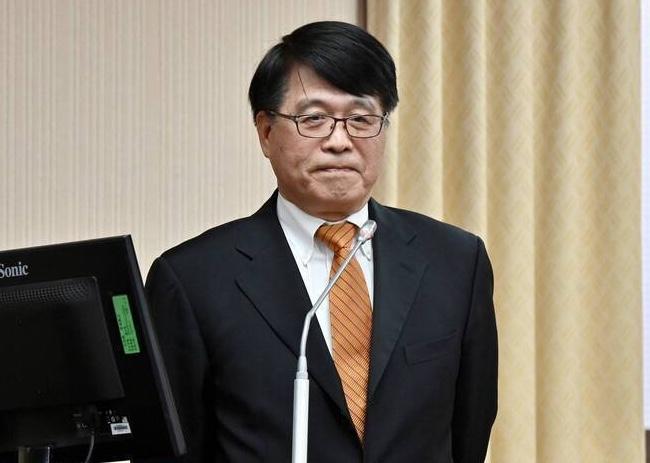
Photo: George Tsorng, Taipei Times
Chinese Nationalist Party (KMT) Legislator Niu Hsu-ting (牛煦庭) asked You if domestic absentee voting could be properly implemented and how much time would it take to prepare.
The question is currently making its way through the legislature, after the Taiwan People’s Party on Dec. 12 last year proposed a bill to enable absentee voting.
The CEC would put its full efforts into carrying out the legislation according to the law if it is passed, You said.
Absentee voting is a global trend and many people in Taiwan feel it is the right direction for the nation, he said.
“I definitely see it as progressive thinking,” he added.
However, practical realities cannot be ignored, and looking at the current election system, implementing absentee voting would involve extremely complex logistics, You said.
Implementing it for this year’s local elections in November “would definitely be a disaster at this stage,” he said.
The CEC previously said that implementing absentee voting for the upcoming elections would result in nearly 9,000 different ballots and risk tarnishing Taiwan’s globally respected elections.
Taiwan has never implemented absentee voting, so it is necessary to first conduct comprehensive research and consider all factors before proceeding, You said.
The CEC’s current step-by-step approach is feasible, but implementing comprehensive absentee voting for the upcoming local elections is “too bold, risky and foolhardy,” he said.
It would be better to begin with public referendums, gradually gain experience, address public concerns and move forward in stages, he added.

FUKUOKA SITUATION: Japanese media reported that the pathogen is expected to be identified by the summer, while the CDC downplayed the idea that it was hMPV A “mysterious cold-like illness” reported in Japan’s Fukuoka Prefecture does not seem to be a new disease, but Japanese authorities have been asked about the situation, the Centers for Disease Control (CDC) said yesterday. The Fukuoka Prefectural Medical Association on Wednesday told a news conference that a “mystery cold” that has become a hot topic on social media is “highly likely to be caused by some kind of viral infection,” Japan’s KBC News reported. “Many people are experiencing symptoms starting with a sore throat, followed by a runny nose, phlegm and a severe cough,” KBC News reported, citing association officials. Health authorities are

Nvidia Corp CEO Jensen Huang (黃仁勳) arrived in Taiwan yesterday ahead of upcoming AI and technology events, saying he plans to meet with clients and Taiwan Semiconductor Manufacturing Co Chairman C.C. Wei (魏哲家) during his visit. After landing at Taipei Songshan Airport, Huang posed for photos with fans and handed out Yakult drinks to reporters and supporters waiting at the scene, saying he has “a lot to do” during the trip. Asked about reports that Nvidia’s planned headquarters site in Taipei’s Beitou Shilin Technology Park could break ground on May 27, Huang said that if the company holds an event, he would

The Ministry of Finance this afternoon announced the winning numbers for the March-April uniform invoice lottery. The winning number for the NT$10 million (US$318,060) special prize is 19531471, and the winning number for the NT$2 million grand prize is 85941329. Three numbers were drawn for the NT$200,000 first prize: 07225810, 20231230 and 83518781. Those with receipts matching the last seven digits of any of the first-prize numbers will win the NT$40,000 second prize, while those matching the last six digits will win the NT$10,000 third prize. Those whose receipts match the last five digits of the first-prize numbers can claim the NT$4,000 fourth prize,

SIX SUBSIDIES: The monthly allowance for older farmers is to increase to NT$10,000, and NT$5,000 is to be given to homemakers under the national pension system, Lai said The government is to implement major welfare policies for disadvantaged groups, including raising the monthly allowance for older farmers to NT$10,000 and providing homemakers with NT$5,000 per month, President William Lai (賴清德) said yesterday. Lai made the remarks during a visit to Wangling Temple in Chiayi County, saying that the planned increases were being introduced amid economic growth and an increase in tax revenue. Touting a policy, in which the government plans to provide a monthly allowance of NT$5,000 for every child under the age of 18 in a bid to address Taiwan’s low birthrate, Lai said that if received for the


 RSS
RSS