

The Executive Yuan today approved draft amendments to the National Pension Act (國民年金法), with the government expecting to invest about NT$86 billion (US$2.72 billion) annually and an estimated 1.76 million people set to benefit.
The draft changes are aimed at raising benefit levels, easing means-testing thresholds and introducing a mechanism to adjust payments in line with price changes, the Cabinet told a news conference in Taipei today.
The proposed partial amendments would significantly boost several payout categories, said Chang Yu-hsuan (張鈺旋), director-general of the Ministry of Health and Welfare’s Department of Social Insurance.
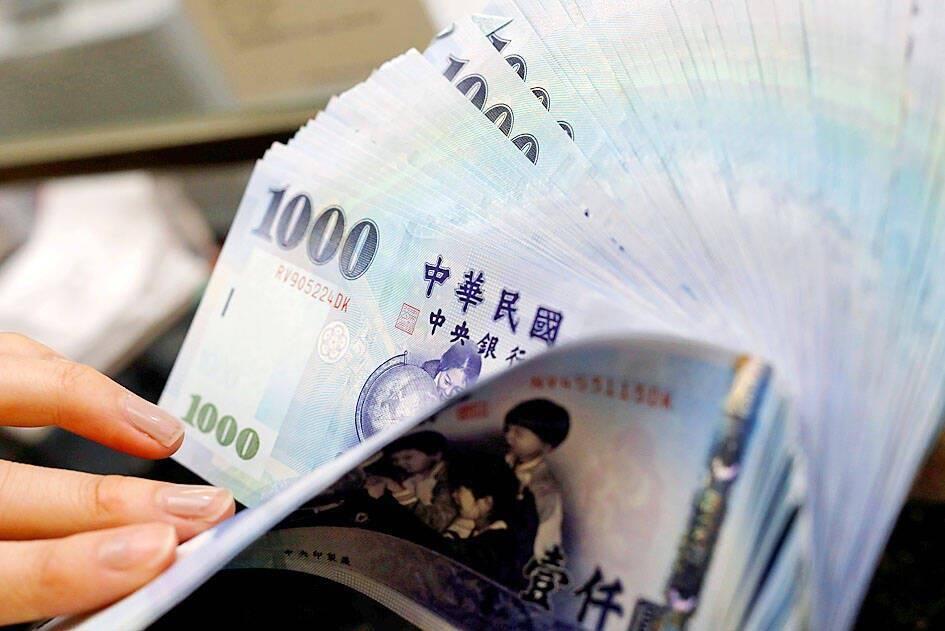
Photo: Reuters
The basic monthly guaranteed amount for elderly, survivor and indigenous peoples’ pensions would rise from NT$4,049 to NT$5,000, an increase of 23.5 percent, while the basic guaranteed disability pension would be raised from NT$5,437 to NT$6,715, she said.
The adjustments would help recipients cope with rising prices and maintain their basic purchasing power, the ministry said.
The proposed amendments would also relax "wealth exclusion" clauses to ensure fewer people are disqualified due to asset valuations.
The annual personal income threshold would be raised from NT$500,000 to NT$600,000, while the real estate asset cap would be adjusted to NT$10.25 million, the amendments state.
To prevent people from losing pension eligibility solely because they own and live in a home, the cap on deductions for a sole self-occupied residence would be removed, meaning such property would no longer be included in asset calculations, the amendments state.
To ensure benefits better reflect price fluctuations and preserve real purchasing power, adjustments to the basic pension amounts would no longer be limited to reviews every four years, they state.
If the cumulative increase in the consumer price index reaches 3 percent within two years, an immediate adjustment could be made, they state.
In addition, the draft amendments would remove the requirement for spouses to mandatorily pay premiums for the insured.
Under current regulations, to safeguard an insured persons' financial security, spouses who fail to pay premiums on behalf of the insured within a stipulated period face fines.
Asked whether the proposed changes would help boost participation in the national pension program, Deputy Minister of Health and Welfare Chuang Jen-hsiang (莊人祥) said he hoped that the amendments would lead to higher contribution rates.
At present, the cumulative contribution rate for the national pension stands at about 60 percent, rising to about 90 percent among those aged 65 or older, he said.
The national pension is designed to allow people to continue accumulating contribution years while transitioning between jobs, enabling them to receive higher retirement benefits while being covered by labor insurance during their working years, he said.
The bill is to be sent to the Legislative Yuan for deliberation.
If the increased benefit payments were to be implemented from this year, the required funding could only be allocated after the central government’s general budget completes statutory procedures, and would need to be covered through a supplementary budget of NT$16.98 billion, Premier Cho Jung-tai (卓榮泰) was quoted as saying by Executive Yuan spokesperson Michelle Lee (李慧芝).
Cho urged the Legislative Yuan to expedite deliberations on the general budget and lend its support for the sake of people’s livelihoods and the welfare of vulnerable groups, and to fulfill the government’s commitment to care for all citizens participating in the national pension program, Lee said.

Taiwan’s growing defense preparations might be sending a stronger signal to the US than to Beijing, highlighting the need for Taipei to tailor its deterrence efforts to different audiences, a US security academic said yesterday. Stanford University Freeman Spogli Institute for International Studies fellow Oriana Skylar Mastro made the comment during a Taipei Security Dialogue panel examining lessons Taiwan could draw from the wars in Ukraine and the Middle East. Mastro said she was impressed by Taiwan’s increased defense spending, emphasis on asymmetric capabilities and efforts to prepare society for conflict, but questioned whom those initiatives were influencing. She said when she asked
A total of 400 foreign “high- level” professionals have been naturalized as Republic of China (Taiwan) citizens over the past decade as the government has eased nationality rules to attract talent from a wider range of fields, the Ministry of the Interior said yesterday. The 400th high-level professional, who works in the electronics industry, was approved for ROC citizenship on Aug. 26, the MOI said. The MOI quoted the newly naturalized citizen as saying that Taiwan is a leader in fields such as semiconductors, electronics manufacturing, artificial intelligence development and energy technology. He also said
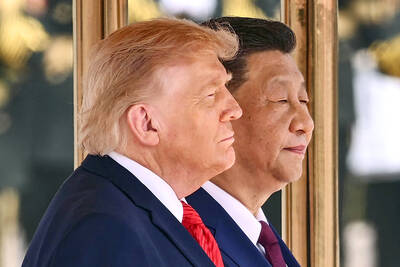
China has warned that it could cancel a planned US-China leaders’ summit if Washington approves new arms sales to Taiwan, a Japanese media outlet quoted sources as saying yesterday. US President Donald Trump, “apparently eager to showcase some diplomatic achievements ahead of November’s midterm congressional elections, places great importance on holding the summit with Chinese President Xi Jinping (習近平),” Japan’s Kyodo News reported. “While preparing for Xi’s upcoming trip, China has restated its position that the Taiwan issue is a ‘red line’ in bilateral relations,” the report said. The report said that when Xi met with Trump in Beijing in May, Xi said
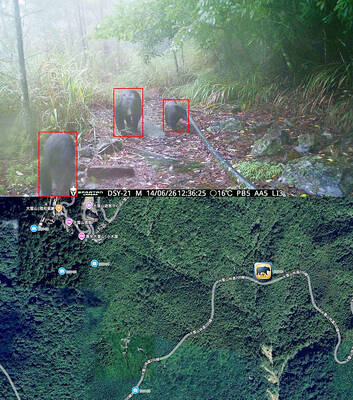
RARE PEEK: The footage released showed one of the bears staying in a cave for as long as 70 days, providing the first record of Formosan black bear’s overwintering The Forestry and Nature Conservation Agency yesterday released tracking records of released Formosan black bears for the first time, showing that they get much closer to human settlements than previously thought. The agency said it had captured two bears, Da Qu-ali (達古阿里) and Aziman (阿里曼), in indigenous villages in Hualien County and began to track them with a camera-mounted satellite collar after releasing them back into the wild. The results confirmed that the bears have moved from deep mountain areas into lowland hills closer to human communities, leading to an increase in human-bear conflicts, it said. The agency has introduced artificial intelligence-assisted early


 RSS
RSS