


The government should help expand the growth of Taiwan’s Phalaenopsis orchids, also known as moth orchids, to consolidate its competitive position in the US, the Taiwan Orchid Growers Association said.
Moth orchids are Taiwan’s largest agricultural export to the US, but competition from Canada and Latin American countries is intensifying as they are closer to the US and enjoy tariff-free status, the association said.
Taiwan exports orchids to more than 60 countries, with the moth orchid being the most prominent variety and the US its largest market, Ministry of Agriculture statistics show.
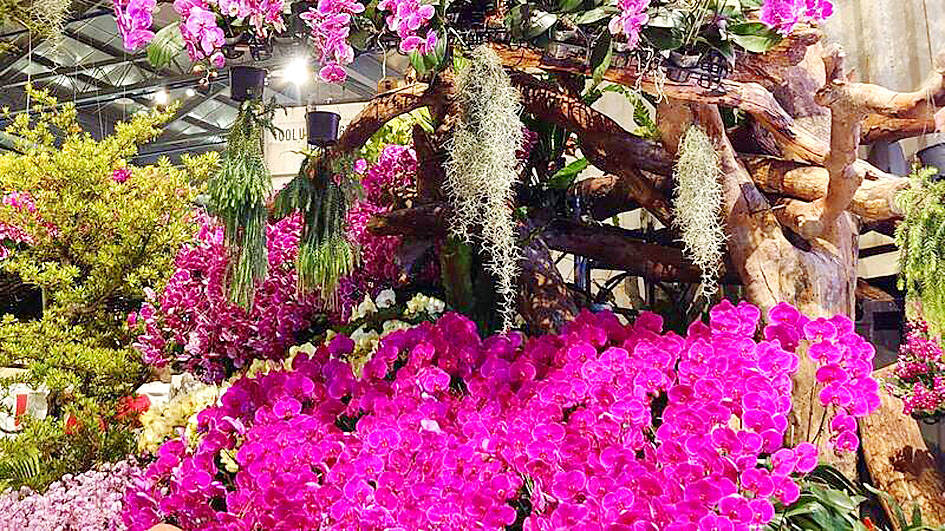
Photo: Hung Jui-chin, Taipei Times
Last year, Taiwan’s moth orchid exports to the US totaled 4,284 tonnes, down 214 tonnes, or 4.7 percent, from 4,498 tonnes in 2024.
Export value declined 10.8 percent from US$61.459 million in 2024 to US$54.794 million last year.
Taiwan used to enjoy tariff-free exports of moth orchids to the US, association secretary-general Tseng Chun-pi (曾俊弼) said.
This, coupled with Taiwan’s advantages in plant breeding research and development capability, made Taiwan’s moth orchids highly competitive in the US market, he said.
However, following the US’ imposition of “reciprocal” tariffs in August last year, and competitors establishing production bases in Canada or Latin America for tariff-free entry into the US and shorter deliveries, the competitive advantage of Taiwanese orchids has deteriorated, he said.
The Executive Yuan on Friday announced that the US has agreed to lower tariffs on Taiwanese goods from 20 percent to 15 percent, without stacking them on existing most-favored-nation rates.
Tseng on Sunday said that although US tariffs on Taiwanese exports have been lowered, costs for exporting Taiwanese moth orchids are still higher than those of competitors.
Deliveries could also be affected by shipping schedules due to strikes or other reasons, posing further risks, he said.
Many orchid growers hope to expand their production in the US, but they are concerned about the high costs there, he said.
As the government is willing to offer Taiwan Sugar Co’s (Taisugar) production base in California to Taiwanese orchid growers to help them, Tsai said the association has submitted a proposal to collaborate with the state-run enterprise in the US.
The association hopes the government would assist Taiwanese orchid growers in transforming their business and expanding supply chains in the US, he said.
In other news, Taiwan Tilapia Alliance chairman Kuo Chien-hsien (郭建賢) said the nation’s main rival in tilapia exports to the US is China.
While the US has imposed a higher tariff on Chinese exports in comparison with Taiwan, Beijing has resorted to large-scale dumping, he said.
The benefits of the lower US tariff on Taiwan, without stacking existing rates, are expected to start emerging this year, he said.
Meanwhile, Taiwan’s edamame exports to the US grew 17 percent last year.
Taiwan Frozen Food Processors Association president Wei Tung-chi (魏東啟) attributed the growth to China — Taiwan’s main competitor — having exited the US market.
The high quality of Taiwan’s edamame gives it an edge to continue expanding market share in the US, he said.
However, China is shifting its edamame export focus and “dumping” its products in Japan — Taiwan’s largest export market — resulting in Taiwanese edamame exports to Japan dropping more than 5 percent last year, he added.
Additional reporting by CNA
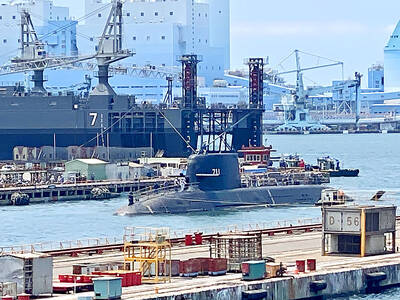
AGING: While Japan has 22 submarines, Taiwan only operates four, two of which were commissioned by the US in 1945 and 1946, and transferred to Taiwan in 1973 Taiwan would need at least 12 submarines to reach modern fleet capabilities, CSBC Corp, Taiwan chairman Chen Cheng-hung (陳政宏) said in an interview broadcast on Friday, citing a US assessment. CSBC is testing the nation’s first indigenous defense submarine, the Hai Kun (海鯤, Narwhal), which is scheduled to be delivered to the navy next month or in July. The Hai Kun has completed torpedo-firing tests and is scheduled to undergo overnight sea trials, Chen said on an SET TV military affairs program. Taiwan would require at least 12 submarines to establish a modern submarine force after assessing the nation’s operational environment and defense

A white king snake that frightened passengers and caused a stir on a Taipei MRT train on Friday evening has been claimed by its owner, who would be fined, Taipei Rapid Transit Corp (TRTC) said yesterday. A person on Threads posted that he thought he was lucky to find an empty row of seats on Friday after boarding a train on the Bannan (Blue) Line, only to spot a white snake with black stripes after sitting down. Startled, he jumped up, he wrote, describing the encounter as “terrifying.” “Taipei’s rat control plan: Release snakes on the metro,” one person wrote in reply, referring

Taiwan’s two cases of hantavirus so far this year are on par with previous years’ case numbers, and the government is coordinating rat extermination work, so there should not be any outbreaks, Centers for Disease Control (CDC) Director-General Philip Lo (羅一鈞) said today in an interview with the Liberty Times (the Taipei Times’ sister newspaper). An increase in rat sightings in Taipei and New Taipei City has raised concerns about the spread of hantavirus, as rats can carry the disease. In January, a man in his 70s who lived in Taipei’s Daan District (大安) tested positive posthumously for hantavirus, Taiwan’s
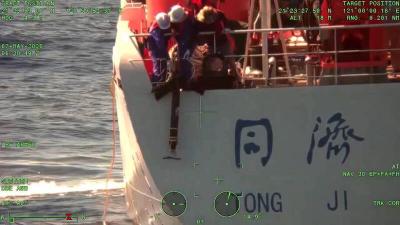
The coast guard today said that it had disrupted "illegal" operations by a Chinese research ship in waters close to the nation and driven it away, part of what Taipei sees a provocative pattern of China's stepped up maritime activities. The coast guard said that it on Thursday last week detected the Chinese ship Tongji (同濟號), which was commissioned only last year, 29 nautical miles (54km) southeast of the southern tip of Taiwan, although just outside restricted waters. The ship was observed lowering ropes into the water, suspected to be the deployment of scientific instruments for "illegal" survey operations, and the coast


 RSS
RSS