


Tests of six seaweed products marketed toward young children and infants showed that they contained lead and cadmium in excess of legal limits, the Food and Drug Administration (FDA) said yesterday, advising parents to not give them to their children.
Chinese-language Mirror Media magazine last week reported that it had received a tip-off that seaweed products imported from South Korea or made in Taiwan with ingredients imported from South Korea allegedly had excessive amounts of the heavy metals, but were still on the shelves.
The magazine said it purchased seven of the products and submitted them to SGS SA, an inspection, verification, testing and certification company, which reported that all of them contained heavy metals exceeding legal limits.
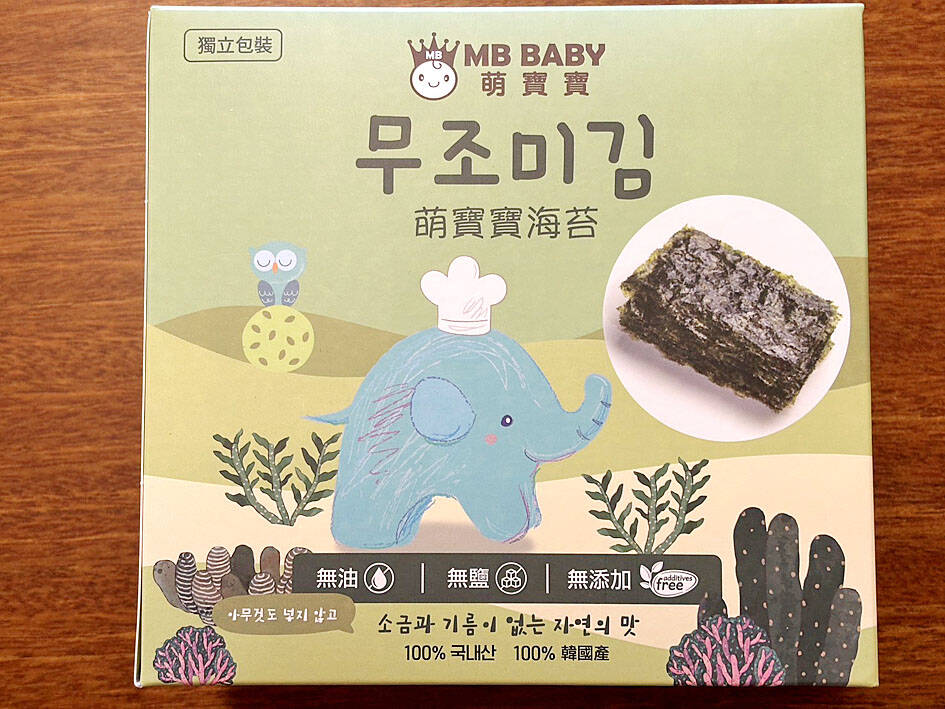
Photo courtesy of the Food and Drug Administration
The products had lead levels 1.4 to 4.4 times the limit and cadmium levels 22 to 53 times the limit, the magazine reported.
The FDA yesterday said that it and local health departments conducted random inspections on six of the seven products reported by the magazine, with one product sold out.
All six products failed to meet the maximum allowable limits for lead and cadmium as stipulated in Annex Table 1 of the Sanitation Standards for Contaminants and Toxins in Foods (食品中污染物質及毒素衛生標準), the FDA said.
The annex says the maximum level for cadmium in supplementary baby food is 0.04 milligrams per kilogram (mg/kg), while the general standard for seaweed is 1mg/kg on a wet weight basis.
The standards for lead are 0.05mg/kg and 1mg/kg respectively.
The companies supplying the six products — BEBE Kids’ Crispy Seaweed (BEBE 貝兒純淨海苔), LUSOL Unsalted and Unflavored Baked Seaweed (LUSOL 無鹽無調味烘烤海苔), YummyBaby 100% Pure Olive Oil Seaweed (芽米寶貝100%純橄欖油海苔), MB BABY Seaweed (MB BABY 萌寶寶海苔), HanAbbaDiary Kids’ Seaweed (韓爸田園日記嚴選初收孩苔) and Ibobomi Unflavored Kids’ Crispy Seaweed (Ibobomi 無調味海苔片) — have been ordered to recall them and remove them from the shelves, with 25,047 items removed as of Monday, the FDA said.
People who have purchased any of the six products should not eat them and can contact the retailer for a refund, it said.
The sold-out product tested in the magazine report, but not by the FDA, was Naeiae Organic Roasted Seaweed (Naeiae 韓國幼兒紫菜).
Testing showed that the six products had lead levels ranging from 0.14mg/kg to 0.206mg/kg and cadmium levels from 0.912mg/kg to 2.013mg/kg, said Liu Fang-ming (劉芳銘), director of the FDA’s Northern Taiwan Management Center.
MB BABY Seaweed had lead levels of 0.206mg/kg, about four times the allowable limit, while HanAbbaDiary Kids’ Seaweed had chromium levels of 2.013mg/kg, or about 50 times the allowable limit, Liu said.
Starting last week, the FDA listed imported seaweed products for young children and infants under “monitoring inspection” until Feb. 6, meaning they would be subject to batch-by-batch testing for heavy metals, he said, adding that adjustments to the inspection regime would be made according to the results of the testing.
Meanwhile, the FDA would reference regulations in other countries as it considers requiring food companies to label products as “infant food” if they are marketed as for children up to three years old so consumers could easily identify products that are subject to stricter food standards, Liu said.

The Ministry of Finance this afternoon announced the winning numbers for the March-April uniform invoice lottery. The winning number for the NT$10 million (US$318,060) special prize is 19531471, and the winning number for the NT$2 million grand prize is 85941329. Three numbers were drawn for the NT$200,000 first prize: 07225810, 20231230 and 83518781. Those with receipts matching the last seven digits of any of the first-prize numbers will win the NT$40,000 second prize, while those matching the last six digits will win the NT$10,000 third prize. Those whose receipts match the last five digits of the first-prize numbers can claim the NT$4,000 fourth prize,

SIX SUBSIDIES: The monthly allowance for older farmers is to increase to NT$10,000, and NT$5,000 is to be given to homemakers under the national pension system, Lai said The government is to implement major welfare policies for disadvantaged groups, including raising the monthly allowance for older farmers to NT$10,000 and providing homemakers with NT$5,000 per month, President William Lai (賴清德) said yesterday. Lai made the remarks during a visit to Wangling Temple in Chiayi County, saying that the planned increases were being introduced amid economic growth and an increase in tax revenue. Touting a policy, in which the government plans to provide a monthly allowance of NT$5,000 for every child under the age of 18 in a bid to address Taiwan’s low birthrate, Lai said that if received for the
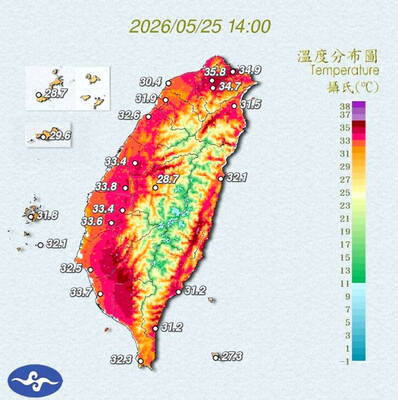
STAY COOL: The HPA recommended that people stay hydrated, use air-conditioning or fans while indoors, wear loose-fitting clothes and walk in the shade while outdoors Employers must implement measures such as installing cooling equipment, and providing drinking water and rest breaks for outdoor workers starting from Monday next week, the Taipei Department of Labor said on Sunday. Employers who fail to comply could face fines of NT$30,000 to NT$300,000 under the Occupational Safety and Health Act (職業安全衛生法), the department said. Businesses in Taipei employing fewer than 100 workers, as well as registered self-employed workers with labor insurance coverage, could receive on-site assessments and guidance from occupational safety consultants to help them apply for central government subsidies to implement or improve heat-protection measures, it said. Under the Ministry of
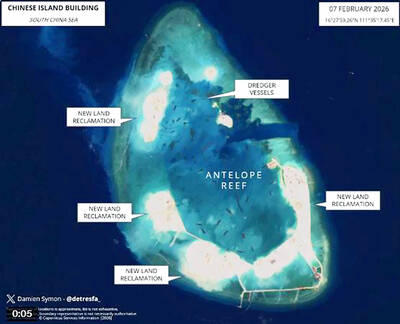
ISOLATION: The outposts would serve as support and backup bases, forcing US forces to either face China head-on or reroute, increasing travel time and operational costs China’s outposts in the South China Sea could be used to delay and constrain foreign forces during a conflict in the Taiwan Strait, giving Beijing a critical window to carry out amphibious landing and blockade operations, a report said. The Chinese Communist Party’s (CCP) forward operating bases on islands and reclaimed features in the South China Sea could delay foreign forces long enough for the Chinese People’s Liberation Army (PLA) to secure a key 48-to-72-hour window in the Taiwan Strait, a report commissioned by the Mainland Affairs Council found. The report, conducted by the Institute for National Defense and Security Research, examined


 RSS
RSS