


Proton therapy for childhood cancers has been included in National Health Insurance (NHI) coverage from the beginning of this year. The policy is expected to benefit about 100 children annually, the National Health Insurance Administration (NHIA) said yesterday.
With the addition of proton therapy for treating cancers in children, the NHI payment points for medical providers are tiered into three levels according to absorbed doses, NHIA Director-General Chen Lian-yu (陳亮妤) said.
They are set at 676,000 points for low-dose, 1.03 million points for medium-dose and 1.26 million points for high-dose treatments, she said.
Photo: CNA
Clinical evidence shows that precise and concentrated high-energy proton beams can target and destroy cancer cells, while minimizing damage to surrounding healthy tissue and organs, Taiwan Society for Therapeutic Radiology and Oncology chairman Chao Hsing-lung (趙興隆) said.
Compared with conventional radiotherapy, proton therapy not only has the advantages of lowering side effects, but also reduces the risk of secondary cancers, and is considered safer, while offering better long-term prognosis for children with cancer, he said.
While NHI fully covers proton therapy for treating children with cancer, it is limited to treatment indications that are empirically proven to be safe and effective, so not all childhood cancers are eligible, NHIA Medical Affairs Division head Huang Pei-shan (黃珮珊) said.
The agency estimated that about 100 children with cancer would benefit from the policy each year, supported by about NT$105 million (US$3.32 million) NHI funding per year, Huang said.
Two other NHI payment policies also took effect this month, including increased payment for emergency major trauma surgery or treatment, and a hyperlipidemia medical payment improvement program, the NHIA said.
To enhance hospitals’ emergency major trauma treatment capacity and resilience, the agency is offering increased NHI payment points as incentives for prompt treatment, Chen said.
Payment points are increased by 100 percent for medical services — including certain radiation examinations, procedures, surgeries and anesthesia — performed within two hours of a patient’s arrival at an emergency room, and increased by 60 percent if performed between two and four hours after their arrival, she said.
The incentive payment would first be distributed to frontline medical workers, to reward their emergency and critical care efforts, Formosa Association for the Surgery of Trauma secretary-general Kuo Ling-wei (郭令偉) said.
The hyperlipidemia medical payment improvement program was developed with nine local medical associations, and is a part of the NHIA’s “pay for performance” initiative for improving treatment quality, Chen said.
Based on the atherosclerotic cardiovascular disease risk levels and the “consensus on clinical pathway of blood cholesterol management,” the agency is encouraging healthcare centers to provide medical services to people with hyperlipidemia who are at “extremely high” and “very high” risk, she said.
The program offers case enrollment fees between 500 and 2,000 NHI payment points and a referral fee of 1,000 points for receiving treatment and follow-up treatment, she added.
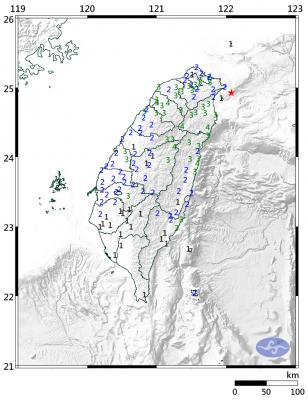
A magnitude 6.1 earthquake struck off the coast of Yilan County at 8:39pm tonight, the Central Weather Administration (CWA) said, with no immediate reports of damage or injuries. The epicenter was 38.7km east-northeast of Yilan County Hall at a focal depth of 98.3km, the CWA’s Seismological Center said. The quake’s maximum intensity, which gauges the actual physical effect of a seismic event, was a level 4 on Taiwan’s 7-tier intensity scale, the center said. That intensity level was recorded in Yilan County’s Nanao Township (南澳), Hsinchu County’s Guansi Township (關西), Nantou County’s Hehuanshan (合歡山) and Hualien County’s Yanliao (鹽寮). An intensity of 3 was
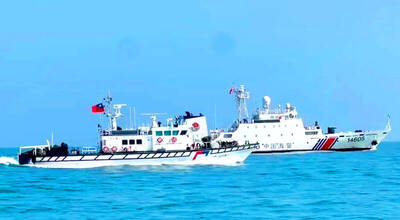
Instead of focusing solely on the threat of a full-scale military invasion, the US and its allies must prepare for a potential Chinese “quarantine” of Taiwan enforced through customs inspections, Stanford University Hoover fellow Eyck Freymann said in a Foreign Affairs article published on Wednesday. China could use various “gray zone” tactics in “reconfiguring the regional and ultimately the global economic order without a war,” said Freymann, who is also a nonresident research fellow at the US Naval War College. China might seize control of Taiwan’s links to the outside world by requiring all flights and ships entering or leaving Taiwan
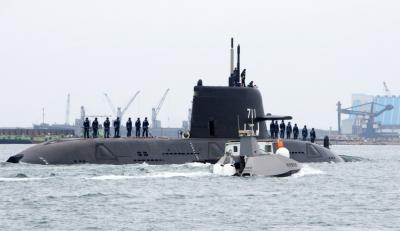
Taiwan's first indigenous defense submarine, the SS-711 Hai Kun (海鯤, or Narwhal), departed for its 13th sea trial at 7am today, marking its seventh submerged test, with delivery to the navy scheduled for July. The outing also marked its first sea deployment since President William Lai (賴清德) boarded the submarine for an inspection on March 19, drawing a crowd of military enthusiasts who gathered to show support. The submarine this morning departed port accompanied by CSBC Corp’s Endeavor Manta (奮進魔鬼魚號) uncrewed surface vessel and a navy M109 assault boat. Amid public interest in key milestones such as torpedo-launching operations and overnight submerged trials,
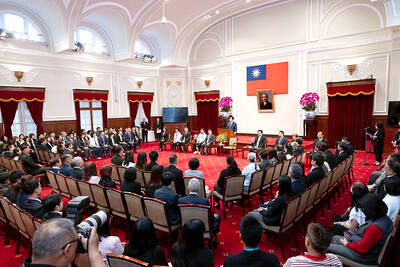
The next minimum wage hike is expected to exceed NT$30,000, President William Lai (賴清德) said yesterday during an award ceremony honoring “model workers,” including migrant workers, at the Presidential Office ahead of Workers’ Day today. Lai said he wished to thank the awardees on behalf of the nation and extend his most sincere respect for their hard work, on which Taiwan’s prosperity has been built. Lai specifically thanked 10 migrant workers selected for the award, saying that although they left their home countries to further their own goals, their efforts have benefited Taiwan as well. The nation’s industrial sector and small businesses lay


 RSS
RSS