


Prices at Formosa Chang rose today, a day after the Taiwanese restaurant chain — famous for its braised minced pork on rice — announced it would raise prices on 48 menu items due to higher raw material and operating costs.
In a news release, Formosa Chang said it decided to adjust prices on some items after a careful review, citing continued increases in costs related to raw materials, labor and environmental compliance, despite efforts to absorb the impact through internal measures and operational optimization.
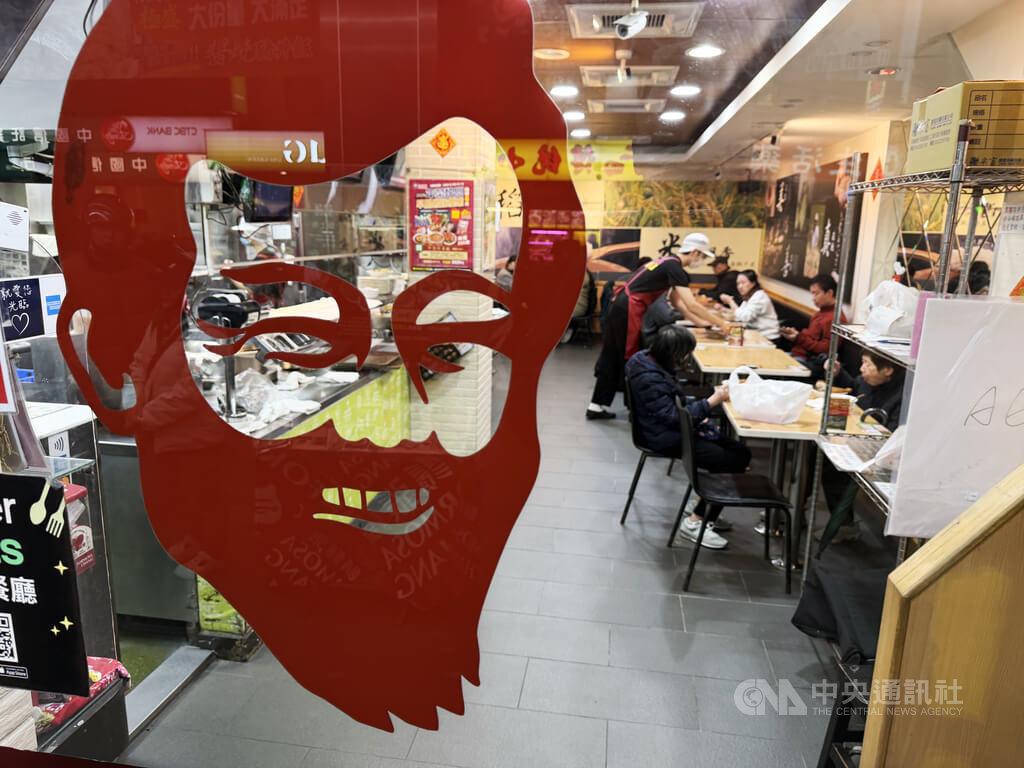
Photo: CNA
The price adjustments average 3.8 percent, including the chain's signature Taiwanese braised pork rice, which rose from NT$66 to NT$71 for a small bowl.
The chicken bento box increased from NT$85 to NT$89, while the crispy chicken leg bento went up from NT$135 to NT$140.
According to its Web site, Formosa Chang was founded in 1960 by Chang Yan-chuan (張炎泉) as a street food stall selling traditional Taiwanese snacks at Shuanglian Market (雙連菜市場) on Minsheng W Road in Taipei.
The business quickly grew and later expanded to more than 70 locations across New Taipei City, Taoyuan, Hsinchu, Miaoli County and Taichung.
Other than Formosa Chang, coffeehouse chain Louisa Coffee also recently raised prices on 90 items, citing the higher cost of ingredients, wages and utilities.

LOUD AND PROUD Taiwan might have taken a drubbing against Australia and Japan, but you might not know it from the enthusiasm and numbers of the fans Taiwan might not be expected to win the World Baseball Classic (WBC) but their fans are making their presence felt in Tokyo, with tens of thousands decked out in the team’s blue, blowing horns and singing songs. Taiwanese fans have packed out the Tokyo Dome for all three of their games so far and even threatened to drown out home team supporters when their team played Japan on Friday. They blew trumpets, chanted for their favorite players and had their own cheerleading squad who dance on a stage during the game. The team struggled to match that exuberance on the field, with

Taiwanese paleontologists have discovered fossil evidence that pythons up to 4m long inhabited Taiwan during the Pleistocene epoch, reporting their findings in the international scientific journal Historical Biology. National Taiwan University (NTU) Institute of Ecology and Evolutionary Biology associate professor Tsai Cheng-hsiu (蔡政修) led the team that discovered the largest snake fossil ever found in Taiwan. The single trunk vertebra was discovered in Tainan at the Chiting Formation, dated to between 400,000 and 800,000 years ago in the Middle Pleistocene, the paper said. The area also produced Taiwan’s first avian fossil, as well as crocodile, mammoth, saber-toothed cat and rhinoceros fossils, it said. Discoveries

Taiwanese paleontologists have discovered fossil evidence that pythons up to 4m long inhabited Taiwan during the Pleistocene epoch, reporting their findings in the international scientific journal Historical Biology. National Taiwan University (NTU) Institute of Ecology and Evolutionary Biology associate professor Tsai Cheng-hsiu (蔡政修) led the team that discovered the largest snake fossil ever found in Taiwan. A single trunk vertebra was discovered in Tainan at the Chiting Formation, dated to between 800,000 to 400,000 years ago in the Middle Pleistocene, the paper said. The area also produced Taiwan’s first avian fossil, as well as crocodile, mammoth, sabre-toothed cat and rhinoceros fossils, it said. Discoveries

Whether Japan would help defend Taiwan in case of a cross-strait conflict would depend on the US and the extent to which Japan would be allowed to act under the US-Japan Security Treaty, former Japanese minister of defense Satoshi Morimoto said. As China has not given up on the idea of invading Taiwan by force, to what extent Japan could support US military action would hinge on Washington’s intention and its negotiation with Tokyo, Morimoto said in an interview with the Liberty Times (sister paper of the Taipei Times) yesterday. There has to be sufficient mutual recognition of how Japan could provide


 RSS
RSS