


A 73-year-old man yesterday drowned at a public hot spring pool at the Taian Police Light Villa in Miaoli County, police said.
At 1:30pm yesterday, the man was discovered unconscious in the water by bathers, who immediately called for help, the Dahu Police Precinct said.
Firefighters and paramedics rushed the man to a hospital, where he was pronounced dead following emergency treatment, it said.

Photo courtesy of the police
The man had visited the resort earlier in the day with his wife and son, police said, adding that it is unclear how he drowned.
An autopsy was scheduled to be conducted today to determine the cause of death, police said, adding that they have not ruled out underlying health factors.
The villa, in Taian Hot Spring, is a popular destination for police officers. While the resort primarily serves police personnel, its public pool is open to the public.
Sudden temperature changes between hot and cold environments could place additional strain on the cardiovascular system, Taipei Tzu Chi Hospital cardiologist Li Chia-cheng (李家誠) said.
Blood vessels play a crucial role in regulating body temperature and maintaining circulation, he said.
While healthy people can usually adapt to temperature changes, those in high-risk groups often have damaged or weakened blood vessels, he said.
People with high blood pressure or a history of myocardial infarction are more vulnerable to cardiovascular problems if they soak improperly, he added
Bathers are advised to enter the pool gradually, keep water levels low, be aware of water temperatures, take regular breaks for rest and hydration, and limit the duration of each soak to prevent overexposure, Li said.
Entering a high-temperature pool too quickly could cause rapid vasodilation, while repeatedly alternating between hot and cold pools could lead to sharp fluctuations in blood pressure, he said.
Bathing on an empty stomach, immediately after eating or after drinking alcohol could also increase risks, as unstable blood sugar levels and redistributed blood flow might temporarily reduce blood supply to the brain and heart, Li said.
Symptoms of unstable blood pressure could include dizziness, palpitations, chest tightness, nausea, vomiting or shortness of breath, he said, adding that persistent discomfort could signal an impending heart attack or stroke.
People should ensure their blood pressure is stable before visiting hot springs, be alert to symptoms such as chest discomfort or palpitations, and carry their regular medications and inform companions where it is kept, Li said.

US President Donald Trump said "it’s up to" Chinese President Xi Jinping (習近平) what China does on Taiwan, but that he would be "very unhappy" with a change in the "status quo," the New York Times said in an interview published yesterday. Xi "considers it to be a part of China, and that’s up to him what he’s going to be doing," Trump told the newspaper on Wednesday. "But I’ve expressed to him that I would be very unhappy if he did that, and I don’t think he’ll do that," he added. "I hope he doesn’t do that." Trump made the comments in

NOT AN OPENING: Trump’s violation of international law does not affect China’s consideration in attacking Taiwan; Beijing lacks capability, not precedent, an official said Taiwanese officials see the US’ capture of the president of Venezuela as a powerful deterrent to Beijing’s aggression and a timely reminder of the US’ ability to defeat militaries equipped with Chinese-made weapons. The strikes that toppled Venezuelan President Nicolas Maduro signaled to authoritarian leaders, including Chinese President Xi Jinping (習近平), US President Donald Trump’s willingness to use military might for international affairs core to US interests, one senior official in Taipei’s security circle said. That reassured Taiwan, the person said. Taipei has also dismissed the idea that Trump’s apparent violation of international law could embolden Beijing, said the official, who was not
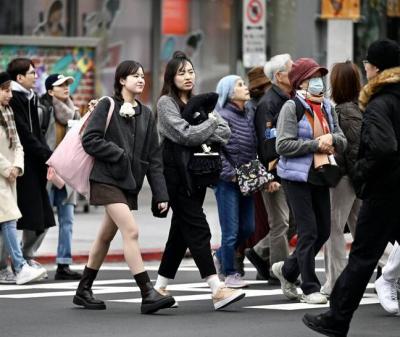
A cold surge advisory was today issued for 18 cities and counties across Taiwan, with temperatures of below 10°C forecast during the day and into tonight, the Central Weather Administration (CWA) said. New Taipei City, Taipei, Taoyuan and Hsinchu, Miaoli and Yilan counties are expected to experience sustained temperatures of 10°C or lower, the CWA said. Temperatures are likely to temporarily drop below 10°C in most other areas, except Taitung, Pingtung, Penghu and Lienchiang (Matsu) counties, CWA data showed. The cold weather is being caused by a strong continental cold air mass, combined with radiative cooling, a process in which heat escapes from
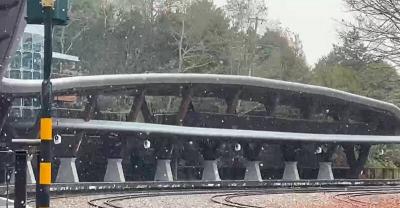
Snow this morning fell on Alishan for the first time in seven years, as a strong continental cold air mass sent temperatures plunging across Taiwan, the Central Weather Administration (CWA) said. The Alishan weather station, located at an elevation of about 2,200m in central Taiwan, recorded snowfall from 8:55am to 9:15am, when the temperature dropped to about 1°C, the CWA said. With increased moisture and low temperatures in the high-altitude Alishan area, the conditions were favorable for snow, CWA forecaster Tsai Yi-chi (蔡伊其) said. The last time snow fell at the Alishan weather station was on Jan. 10, 2018, while graupel fell there


 RSS
RSS