


Chinese social media users are calling for a lightning Venezuela-style black-bagging of Taiwan’s leaders in a prelude to taking over the nation, but analysts, academics and defense officials say China’s modernizing military is still far from ready.
In Taiwan, they say, China’s military has an adversary which has prepared for years against a “decapitation operation” on its leaders, possessing extensive air defenses and radar capabilities, as well as likely support from the US and its allies.
Although China has spent years acquiring advanced weapons, questions remain about the capabilities of its People’s Liberation Army (PLA) in using them effectively, as well as a command structure that must knit them together in combat.
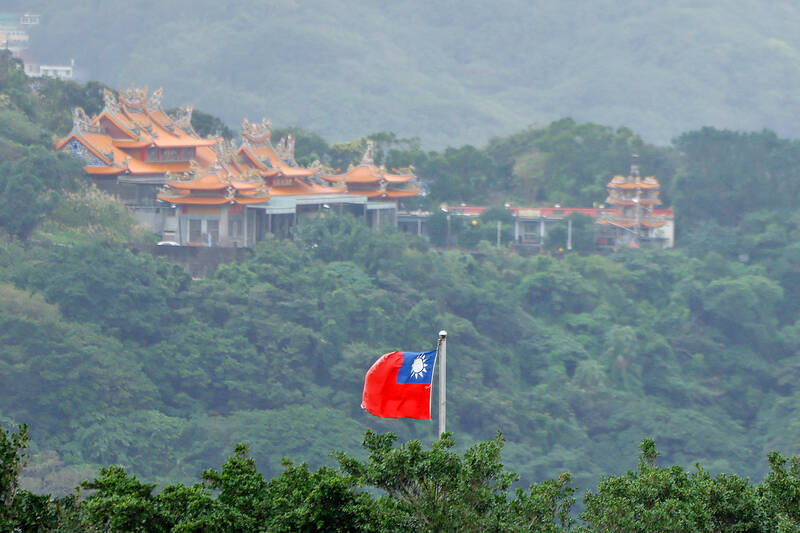
Photo: REUTERS
“Once such an operation runs into trouble, it would quickly escalate into a full-scale conflict, with extremely high political and military risk,” Democratic Progressive Party Legislator Chen Kuan-ting (陳冠廷) said.
Taiwan’s layered air-defense and early-warning systems mean any air assault or special-operations infiltration effort would risk detection as it crossed the Taiwan Strait, foreshadowing escalation, he said.
The US showcased its air dominance with last week’s raid to kidnap Venezuelan President Nicolas Maduro and his wife.
Its military controlled the skies with stealth fighters, jets that jammed enemy defenses, and covert reconnaissance drones and satellites feeding commanders real-time intelligence.
By contrast, the PLA “still has clear gaps in real joint-operations experience, electromagnetic and electronic-warfare capabilities, and actual combat validation of high-risk missions,” Chen said.
China’s defense ministry did not immediately respond to faxed questions from Reuters.
“Operationally, while the PLA is, in recent times, trying to get up to speed with force integration, it is still baby steps compared to what the Americans have for decades been accumulating,” said Collin Koh (許瑞麟), a defense analyst with Singapore’s S. Rajaratnam School of International Studies.
Taiwan is determined to defend its sovereignty and boost its defense, President William Lai (賴清德) said last month, after Beijing fired rockets toward Taiwan as part of its military drills.
The drills surrounding Taiwan — the most extensive to date — were accompanied by strong messaging from Chinese officials and the military.
“Any external forces that attempt to intervene in the Taiwan issue or interfere in China’s internal affairs will surely smash their heads bloody against the iron walls of the Chinese People’s Liberation Army,” China’s Taiwan Affairs Office said in a statement.
In October last year, Lai unveiled a multi-layered air-defense system called “T-Dome.”
It is intended to be similar to Israel’s “Iron Dome,” with a more efficient “sensor-to-shooter” mechanism for a higher kill rate that integrates weaponry from Taiwan-developed Tien Kung (天弓, “Sky Bow”) missiles to US-supplied HIMARS rocket systems.
In July, Taiwan’s military staged a drill to protect Taipei’s main airport from a hostile landing.
Su Tzu-yun (蘇紫雲), a researcher at Taiwan’s Institute for National Defense and Security, described significant defenses around Taipei, including long-range missiles in nearby mountains, shorter-range weapons at the Tamsui River (淡水河) entrance and troops equipped with shoulder-fired Stinger anti-aircraft missiles.
“Altogether, this forms a complete defensive perimeter,” Su said.
While military attaches say China has war-gamed extraction operations in Taipei in a broad range of military options to take control of Taiwan, some Chinese online users cited the US action in Venezuela as inspiration.
“The Venezuelan situation has provided us a solution for unifying Taiwan,” a social media user wrote.
“First, use special operations to arrest Lai Ching-te, then immediately announce the takeover of Taiwan, issue new identity cards… and achieve a swift and decisive victory,” they added.
Chen, who sits on the Legislative Yuan’s Foreign Affairs and National Defense Committee, dismissed such comments as “fantasy” and other analysts said any such attempt would quickly face hard military realities.
China has fielded aircraft to replicate platforms such as Boeing’s EA-18G Growler electronic-warfare jet and Northrop Grumman’s E-2D Advanced Hawkeye command and early warning aircraft, but their precise capabilities have yet to be proven, Koh said.
With the Chinese Communist Party still playing a role in the PLA’s command structure, doubts remain about its effectiveness, Koh said.
“A decentralized command-and-control hierarchy is essential; that allows field commanders to exercise necessary initiative to cope with the fluid, evolving and uncertain nature of military operations as events unfold,” Koh said.
Despite any perceived PLA shortcomings, Taiwan’s leaders are taking no chances.
“We have no capital to take them lightly,” said a senior Taiwanese security official, who spoke on condition of anonymity as the military issues are sensitive.
“After all, in the wake of this painful and shocking experience, China will also look for all kinds of ways to overcome these problems,” they said.

FUKUOKA SITUATION: Japanese media reported that the pathogen is expected to be identified by the summer, while the CDC downplayed the idea that it was hMPV A “mysterious cold-like illness” reported in Japan’s Fukuoka Prefecture does not seem to be a new disease, but Japanese authorities have been asked about the situation, the Centers for Disease Control (CDC) said yesterday. The Fukuoka Prefectural Medical Association on Wednesday told a news conference that a “mystery cold” that has become a hot topic on social media is “highly likely to be caused by some kind of viral infection,” Japan’s KBC News reported. “Many people are experiencing symptoms starting with a sore throat, followed by a runny nose, phlegm and a severe cough,” KBC News reported, citing association officials. Health authorities are

Nvidia Corp CEO Jensen Huang (黃仁勳) arrived in Taiwan yesterday ahead of upcoming AI and technology events, saying he plans to meet with clients and Taiwan Semiconductor Manufacturing Co Chairman C.C. Wei (魏哲家) during his visit. After landing at Taipei Songshan Airport, Huang posed for photos with fans and handed out Yakult drinks to reporters and supporters waiting at the scene, saying he has “a lot to do” during the trip. Asked about reports that Nvidia’s planned headquarters site in Taipei’s Beitou Shilin Technology Park could break ground on May 27, Huang said that if the company holds an event, he would

The Ministry of Finance this afternoon announced the winning numbers for the March-April uniform invoice lottery. The winning number for the NT$10 million (US$318,060) special prize is 19531471, and the winning number for the NT$2 million grand prize is 85941329. Three numbers were drawn for the NT$200,000 first prize: 07225810, 20231230 and 83518781. Those with receipts matching the last seven digits of any of the first-prize numbers will win the NT$40,000 second prize, while those matching the last six digits will win the NT$10,000 third prize. Those whose receipts match the last five digits of the first-prize numbers can claim the NT$4,000 fourth prize,
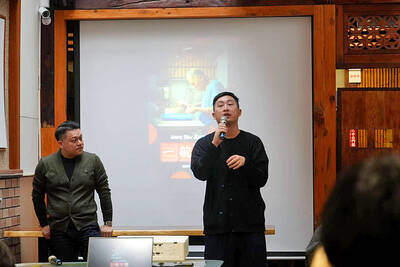
Taiwan Travelogue (臺灣漫遊錄), which earlier this week became the first Taiwanese novel to win the International Booker Prize, is to be adapted into a television series through a Taiwan-Japan coproduction, producer Chang Chen-yu (張辰漁) said yesterday. Chang, a producer at World Softest Production Film Co, wrote on Facebook that the company had been searching for projects with international appeal that retain a strong Taiwanese identity after colleagues and Japanese partners strongly recommended the novel. After reading the book, Chang said he immediately decided to pursue the screen rights. “A great story has the power to transcend time and borders, and connect countless people,”


 RSS
RSS