


Taiwan Railway Corp’s (TRC) Jiji Line, a popular tourist railway, yesterday partially resumed services, with trains running again to Jiji (集集) Station in Nantou County after being suspended for more than four years due to damage from natural disasters.
The Jiji Line runs 29.7km from Ershui (二水) Station in Changhua County and crosses eastward into Nantou County, serving stops including Jhuoshuei (濁水), Jiji, Shuili (水里) and the terminal station, Checheng (車埕).
The first stage of service resumption covers the section from Ershuei Station to Jiji Station, TRC said.

Photo: Liu Pin-chuan, Taipei Times
Each day, 11 trains would run to Jiji Station, with 12 going in the opposite direction, supporting tourism and local commuting needs, TRC said.
Full services to Checheng Station, a popular tourism destination, are expected to resume around July after remaining work is completed, the company added.
In August 2021, the line was partially shut down after torrential rain and earthquakes triggered a major landslide along Provincial Highway No. 16. The collapse buried and damaged tunnels and tracks running parallel to the highway, forcing the suspension of rail services between Jiji and Checheng.
Several tunnels on the line, built more than 80 years ago, also had long-term issues such as water leakage, insufficient clearance and poor track alignment, prompting TRC to carry out a comprehensive safety overhaul.
Major repair and reinforcement work began in 2024 and was completed late last year, allowing the first-stage reopening ahead of the Lunar New Year next month.
To mark the resumption, TRC yesterday operated a special service to Jiji, drawing railway enthusiasts and visitors.
Once the remaining section reopens, the upgraded infrastructure would support safer operations and allow larger trains to run, helping revive tourism and bolster transportation links for communities along the line, TRC said.

The military has spotted two Chinese warships operating in waters near Penghu County in the Taiwan Strait and sent its own naval and air forces to monitor the vessels, the Ministry of National Defense (MND) said. Beijing sends warships and warplanes into the waters and skies around Taiwan on an almost daily basis, drawing condemnation from Taipei. While the ministry offers daily updates on the locations of Chinese military aircraft, it only rarely gives details of where Chinese warships are operating, generally only when it detects aircraft carriers, as happened last week. A Chinese destroyer and a frigate entered waters to the southwest

A magnitude 6.1 earthquake struck off the coast of Yilan County at 8:39pm tonight, the Central Weather Administration (CWA) said, with no immediate reports of damage or injuries. The epicenter was 38.7km east-northeast of Yilan County Hall at a focal depth of 98.3km, the CWA’s Seismological Center said. The quake’s maximum intensity, which gauges the actual physical effect of a seismic event, was a level 4 on Taiwan’s 7-tier intensity scale, the center said. That intensity level was recorded in Yilan County’s Nanao Township (南澳), Hsinchu County’s Guansi Township (關西), Nantou County’s Hehuanshan (合歡山) and Hualien County’s Yanliao (鹽寮). An intensity of 3 was

Japanese Prime Minister Sanae Takaichi’s comment last year on Tokyo’s potential reaction to a Taiwan-China conflict has forced Beijing to rewrite its invasion plans, a retired Japanese general said. Takaichi told the Diet on Nov. 7 last year that a Chinese naval blockade or military attack on Taiwan could constitute a “survival-threatening situation” for Japan, potentially allowing Tokyo to exercise its right to collective self-defense. Former Japan Ground Self-Defense Force general Kiyofumi Ogawa said in a recent speech that the remark has been interpreted as meaning Japan could intervene in the early stages of a Taiwan Strait conflict, undermining China’s previous assumptions
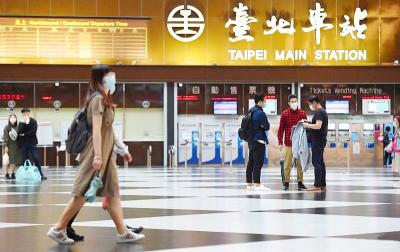
Taiwan Railways Corp (TRC) today announced that Shin Kong Mitsukoshi has been selected as the preferred bidder to operate the Taipei Railway Station shopping mall, replacing the current operator, Breeze Development Co Ltd. Among eight qualified firms that delivered presentations and were evaluated by a review committee, Shin Kong Mitsukoshi was ranked first, while Breeze was named the runner-up, the rail company said in a statement. Contract negotiations are to proceed in accordance with regulations, it said, adding that if negotiations with the top bidder fail, it could invite the second-ranked applicant to enter talks. Breeze in a statement today expressed doubts over


 RSS
RSS