


A self-styled “doctor” sharing health-related content on YouTube is likely an artificial intelligence (AI)-generated character, Taiwan FactCheck Center said, while two Taipei hospitals confirmed that no such doctor works for them.
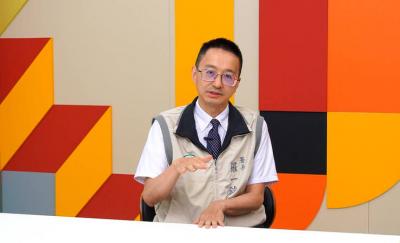
“Doctor Chen Chi-ming” (陳志明醫師) had posted several videos sharing health-related content, mainly healthcare tips for middle-aged and elderly people. The channel, which is no longer listed on YouTube, had more than 23,000 subscribers at one point, with one video receiving 150,000 views.
One of the videos claimed that a Taipei Veterans General Hospital (TVGH) study found that diabetes is not caused by insulin resistance, and that the hospital had developed a revolutionary bacterial therapy that could cure the chronic condition in three months.
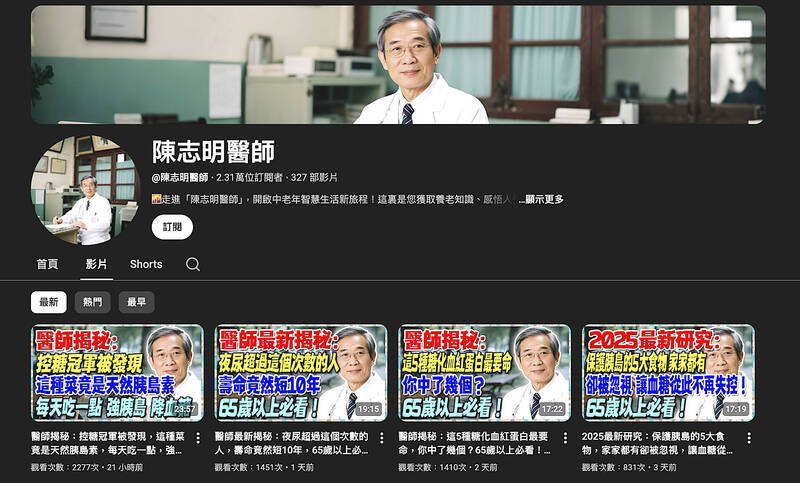
Photo: screen grab from YouTube
However, with help from National Institute of Cyber Security experts, Taiwan FactCheck Center said they found that the videos were likely produced by AI.
Some of the tells included that the stethoscope featured in the videos differed from a real stethoscope, and that while the profile picture, other images and the presenter in the videos all use the name “Chen Chi-ming,” they feature two characters with different faces, the center said.
The center said it researched medical studies and asked other doctors about the health content shared in the videos, finding that they lacked sufficient scientific basis.
The center also contacted National Taiwan University Hospital and TVGH, which the videos referenced.
The hospitals confirmed that no “Doctor Chen Chi-ming” works at their hospitals, and that his claim about a “breakthrough therapy” for diabetes does not exist, it said.
TVGH deputy superintendent Lee Wui-chiang (李偉強) on Sunday warned people to not easily believe health-related video, especially those with “sensational” titles.
He urged people to verify the information from multiple sources, and not to share such videos with friends and family without checking their authenticity.
Deputy Minister of Health and Welfare Lin Ching-yi (林靜儀) yesterday said the ministry would attempt to verify whether the creator is actually a licensed physician.
If the creator is not a licensed physician, but shares medical information while pretending to be a doctor, they might have contravened the Physicians Act (醫師法), she said.
The ministry would also discuss with the Ministry of Digital Affairs on whether Taiwan should introduce regulations that mandate that doctors who comment on medical issues on social media reveal where they are licensed to practice medicine.
Additional reporting by CNA
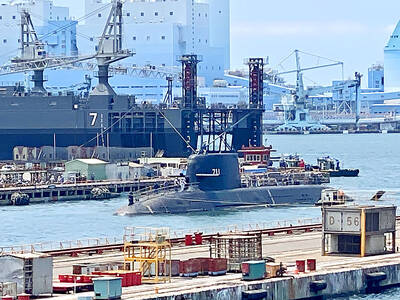
AGING: While Japan has 22 submarines, Taiwan only operates four, two of which were commissioned by the US in 1945 and 1946, and transferred to Taiwan in 1973 Taiwan would need at least 12 submarines to reach modern fleet capabilities, CSBC Corp, Taiwan chairman Chen Cheng-hung (陳政宏) said in an interview broadcast on Friday, citing a US assessment. CSBC is testing the nation’s first indigenous defense submarine, the Hai Kun (海鯤, Narwhal), which is scheduled to be delivered to the navy next month or in July. The Hai Kun has completed torpedo-firing tests and is scheduled to undergo overnight sea trials, Chen said on an SET TV military affairs program. Taiwan would require at least 12 submarines to establish a modern submarine force after assessing the nation’s operational environment and defense
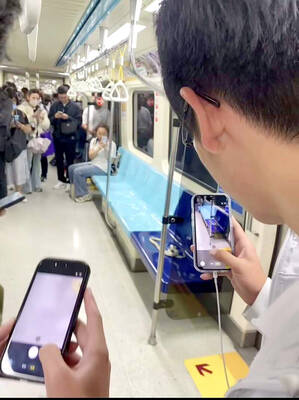
A white king snake that frightened passengers and caused a stir on a Taipei MRT train on Friday evening has been claimed by its owner, who would be fined, Taipei Rapid Transit Corp (TRTC) said yesterday. A person on Threads posted that he thought he was lucky to find an empty row of seats on Friday after boarding a train on the Bannan (Blue) Line, only to spot a white snake with black stripes after sitting down. Startled, he jumped up, he wrote, describing the encounter as “terrifying.” “Taipei’s rat control plan: Release snakes on the metro,” one person wrote in reply, referring
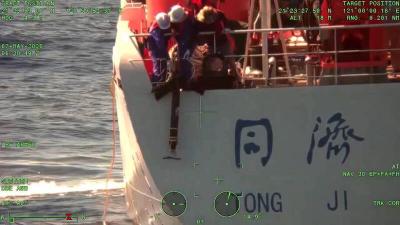
The coast guard today said that it had disrupted "illegal" operations by a Chinese research ship in waters close to the nation and driven it away, part of what Taipei sees a provocative pattern of China's stepped up maritime activities. The coast guard said that it on Thursday last week detected the Chinese ship Tongji (同濟號), which was commissioned only last year, 29 nautical miles (54km) southeast of the southern tip of Taiwan, although just outside restricted waters. The ship was observed lowering ropes into the water, suspected to be the deployment of scientific instruments for "illegal" survey operations, and the coast
Taiwan’s two cases of hantavirus so far this year are on par with previous years’ case numbers, and the government is coordinating rat extermination work, so there should not be any outbreaks, Centers for Disease Control (CDC) Director-General Philip Lo (羅一鈞) said today in an interview with the Liberty Times (the Taipei Times’ sister newspaper). An increase in rat sightings in Taipei and New Taipei City has raised concerns about the spread of hantavirus, as rats can carry the disease. In January, a man in his 70s who lived in Taipei’s Daan District (大安) tested positive posthumously for hantavirus, Taiwan’s


 RSS
RSS