


The Ministry of Environment yesterday announced new plastic reduction targets of 5 percent by 2030 and 10 percent by 2035 from last year, with plastic wrapping for e-commerce and retail products to be restricted.
Minister of Environment Peng Chi-ming (彭?明) said the ministry has been promoting plastic reduction and restriction since 2018, but most targets went unmet over the past seven years, with disposable beverage cups being the only item included in a full-scale plastic ban.
Given that previous regulations have reached a bottleneck, the ministry updated its targets for the next decade, he said.

Photo: CNA
The new goals are based on the EU’s Packaging and Packaging Waste Regulation, with last year defined as the baseline year, Peng said.
In addition to banning or restricting plastic use, the ministry would also enhance “user pays” mechanisms, introduce economic incentives, expand regulation scale and expand plastic reduction education, he said.
For example, about 80 percent of stalls at the Jianguo Flower Market (建國花市) in Taipei have already partnered with the ministry to promote the use of circular shopping bags, which accounted for nearly 10 percent of bags at the market, he said.
Plastic wrapping for retail and e-commerce goods would be targets for reduction, as well as plastic bags, straws, beverage cups and disposable utensils, Resource Circulation Administration Director-General Lai Ying-ying (賴瑩瑩) said.
The ministry would first encourage the adoption of green designs before enacting plastic restrictions, such as banning the use of polyvinyl chloride containers, she said.
Over the next two years, the ministry would promote packaging-free shopping and reusable packaging, she added.
The ministry would also encourage restaurant chains and large businesses to refrain from offering disposable utensils to dine in, Lai said.
Momo.com Inc sustainable development manager Jeanne Chang (張景儀) said the e-commerce company has about 15 million transactions each quarter and has engaged in resource circulation.
The company reduced wrapping weight by 26.58 percent last year and reached 34 percent as of October, she said.
It also promotes carbon reduction across its supply chain, including green point redemption, green logistics and green packaging, with about 700,000 people joining the program, she added.
UberEats public policy and government affairs manager Marvin Ma (馬培治) said the delivery platform has pledged to reach zero carbon emissions by 2040.
For four years, its app by default processes orders without utensils, and has since prevented plastic utensil use for about 65 percent of orders, he said, adding that the company has also launched a NT$5 discount on orders without straws.
Foodpanda senior public relations manager Yan Hui-yun (嚴慧筠) said its orders without utensils made up about 50 percent and had a cumulative total of up to 30 million kilograms in waste reduction as of this year.
Foodpanda also promotes recycling plastic bottles and has utilized such waste to make 1,500 circular food delivery boxes, she added.


Kenting National Park service technician Yang Jien-fon (楊政峰) won a silver award in World Grand Prix Photography Awards Spring Season for his photograph of two male rat snakes intertwined in combat. Yang’s colleagues at Kenting National Park said he is a master of nature photography who has been held back by his job in civil service. The awards accept entries in all four seasons across six categories: architectural and urban photography, black-and-white and fine art photography, commercial and fashion photography, documentary and people photography, nature and experimental photography, and mobile photography. Awards are ranked according to scores and divided into platinum, gold and

More than half of the bamboo vipers captured in Tainan in the past few years were found in the city’s Sinhua District (新化), while other districts had smaller catches or none at all. Every year, Tainan captures about 6,000 snakes which have made their way into people’s homes. Of the six major venomous snakes in Taiwan, the cobra, the many-banded krait, the brown-spotted pit viper and the bamboo viper are the most frequently captured. The high concentration of bamboo vipers captured in Sinhua District is puzzling. Tainan Agriculture Bureau Forestry and Nature Conservation Division head Chu Chien-ming (朱健明) earlier this week said that the
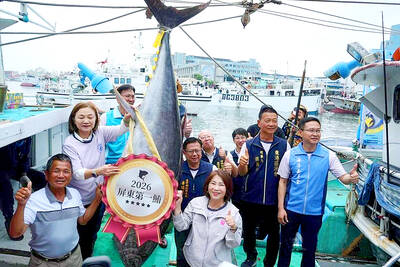
The first bluefin tuna of the season, brought to shore in Pingtung County and weighing 190kg, was yesterday auctioned for NT$10,600 (US$333.5) per kilogram, setting a record high for the local market. The auction was held at the fish market in Donggang Fishing Harbor, where the Siaoliouciou Island-registered fishing vessel Fu Yu Ching No. 2 delivered the “Pingtung First Tuna” it had caught for bidding. Bidding was intense, and the tuna was ultimately jointly purchased by a local restaurant and a local company for NT$10,600 per kilogram — NT$300 ,more than last year — for a total of NT$2.014 million. The 67-year-old skipper
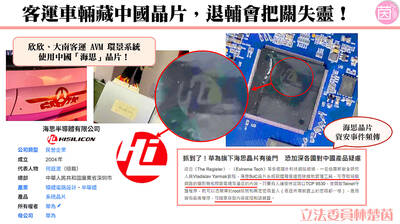
BREACH OF CONTRACT: The bus operators would seek compensation and have demanded that the manufacturer replace the chips with ones that meet regulations Two bus operators found to be using buses with China-made chips are to demand that the original manufacturers replace the systems and provide compensation for breach of contract, the Veterans Affairs Council said yesterday. Democratic Progressive Party Legislator Michelle Lin (林楚茵) yesterday said that Da Nan Bus Co and Shin-Shin Bus Co Ltd have fielded a total of 82 buses that are using Chinese chips. The bus models were made by Tron-E, while the systems provider was CYE Electronics, Lin said. Lin alleged that the buses were using chips manufactured by Huawei subsidiary HiSilicon Co, which presents a national security risk if the


 RSS
RSS