


Reports of Taiwanese being lured to Japan with false promises of employment are rising, the Ministry of Foreign Affairs said yesterday, warning people to be wary of illicit schemes.
Taiwan’s representative offices in Japan this year have received a significantly greater number of reports about Taiwanese being arrested for alleged involvement in scam activities in Japan compared with previous years, Taiwan-Japan Relations Association Deputy Secretary-General Lin Yu-hui (林郁慧) said.
There were four reports in 2023 and five last year, but there have been 50 so far this year, Lin said.
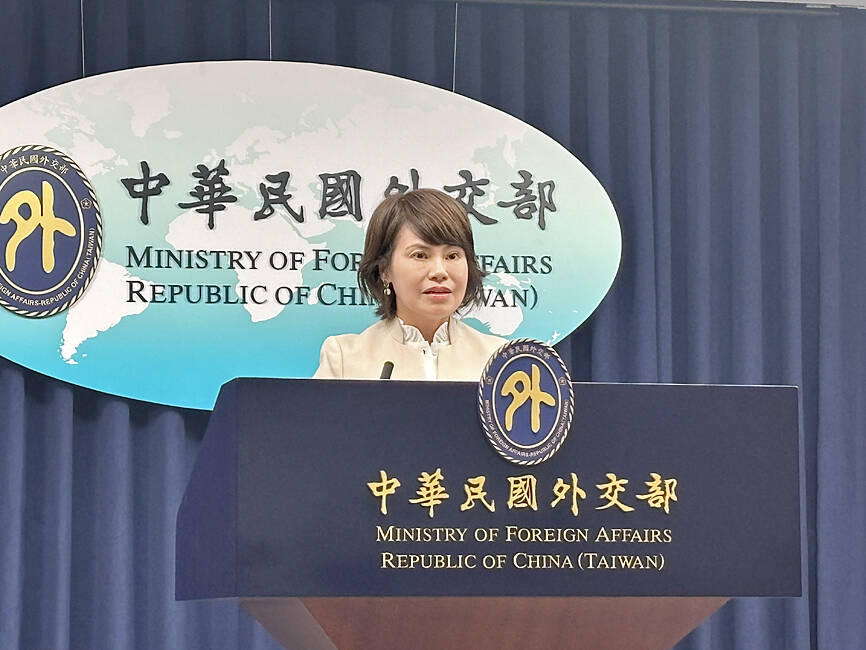
Photo: CNA
Most Taiwanese are aware of the risk of fraud rings in Southeast Asian countries, but do not realize that similar operations exist in Japan, she said.
“Some Taiwanese have been tricked into yami baito,” she said, referring to a Japanese-language term meaning “dark part-time jobs.”
Posts on social media promised free travel in Japan in exchange for easy part-time jobs, she said.
The Web site of Japan’s Metropolitan Police Department defines yami baito as “shady part-time jobs” that are “easy and well-paying.”
Criminal groups post advertisements for such positions using tempting wording to fool jobseekers into applying, it says, adding that some are forced into criminal activities, such as collecting and withdrawing money obtained via fraud.
Taiwanese should carefully examine job advertisements and only seek work in Japan through official channels, such as applying for a working holiday visa, Lin said.
Japanese police have warned that people recruited are forced to provide personal information and are rarely paid.
It is hard to gauge how widespread the problem is due to a lack of official figures.
However, Japan’s National Police Agency has said it arrested 2,373 people in 2023 for engaging in the practice.
It did not break down how many of them were foreign nationals.
Additional reporting by CNA

LOUD AND PROUD Taiwan might have taken a drubbing against Australia and Japan, but you might not know it from the enthusiasm and numbers of the fans Taiwan might not be expected to win the World Baseball Classic (WBC) but their fans are making their presence felt in Tokyo, with tens of thousands decked out in the team’s blue, blowing horns and singing songs. Taiwanese fans have packed out the Tokyo Dome for all three of their games so far and even threatened to drown out home team supporters when their team played Japan on Friday. They blew trumpets, chanted for their favorite players and had their own cheerleading squad who dance on a stage during the game. The team struggled to match that exuberance on the field, with
Taiwanese paleontologists have discovered fossil evidence that pythons up to 4m long inhabited Taiwan during the Pleistocene epoch, reporting their findings in the international scientific journal Historical Biology. National Taiwan University (NTU) Institute of Ecology and Evolutionary Biology associate professor Tsai Cheng-hsiu (蔡政修) led the team that discovered the largest snake fossil ever found in Taiwan. The single trunk vertebra was discovered in Tainan at the Chiting Formation, dated to between 400,000 and 800,000 years ago in the Middle Pleistocene, the paper said. The area also produced Taiwan’s first avian fossil, as well as crocodile, mammoth, saber-toothed cat and rhinoceros fossils, it said. Discoveries

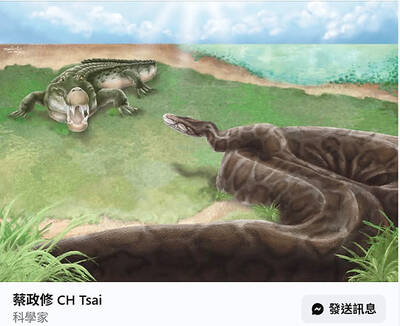
Taiwanese paleontologists have discovered fossil evidence that pythons up to 4m long inhabited Taiwan during the Pleistocene epoch, reporting their findings in the international scientific journal Historical Biology. National Taiwan University (NTU) Institute of Ecology and Evolutionary Biology associate professor Tsai Cheng-hsiu (蔡政修) led the team that discovered the largest snake fossil ever found in Taiwan. A single trunk vertebra was discovered in Tainan at the Chiting Formation, dated to between 800,000 to 400,000 years ago in the Middle Pleistocene, the paper said. The area also produced Taiwan’s first avian fossil, as well as crocodile, mammoth, sabre-toothed cat and rhinoceros fossils, it said. Discoveries

Whether Japan would help defend Taiwan in case of a cross-strait conflict would depend on the US and the extent to which Japan would be allowed to act under the US-Japan Security Treaty, former Japanese minister of defense Satoshi Morimoto said. As China has not given up on the idea of invading Taiwan by force, to what extent Japan could support US military action would hinge on Washington’s intention and its negotiation with Tokyo, Morimoto said in an interview with the Liberty Times (sister paper of the Taipei Times) yesterday. There has to be sufficient mutual recognition of how Japan could provide


 RSS
RSS