


More than 40 percent of legislative seats in Taiwan were held by women last year, the highest proportion of any country in Asia, the government said in its latest report on gender equality.
Taiwan also ranked sixth globally and first in Asia in 2023 in the Organisation for Economic Co-operation and Development’s (OECD) Social Institutions and Gender Index (SIGI).
The Executive Yuan highlighted Taiwan’s gender-equality status in its fifth national report on the nation’s efforts to meet the Convention on the Elimination of All Forms of Discrimination Against Women (CEDAW), the Cabinet’s Gender Equality Committee said in a statement yesterday.
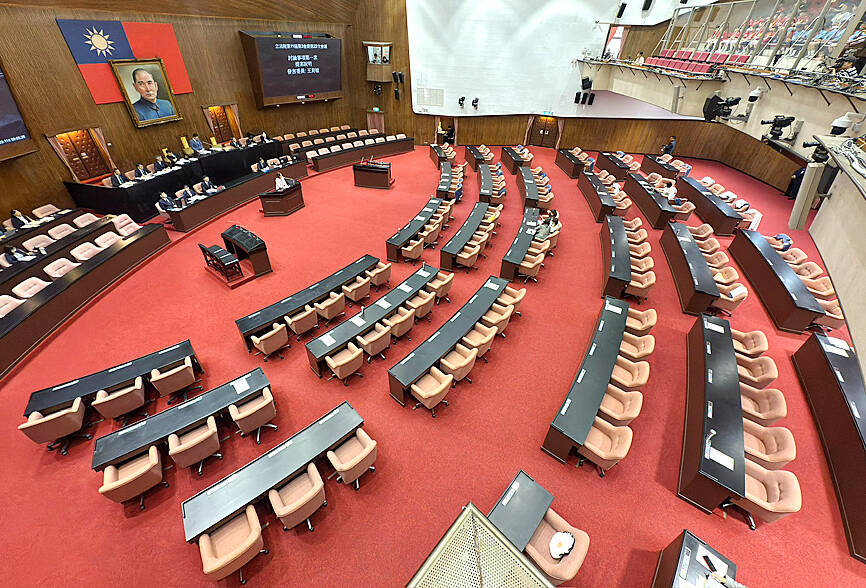
Photo: Taipei Times
The UN passed the CEDAW in 1979 and promulgated it in 1981, requiring signatory countries to enact legislation, and take measures to eliminate discrimination against women and ensure equal rights between genders.
Since 2009, Taiwan has published a national report on the CEDAW every four years to assess its progress on women’s rights and gender equality.
Although it is not a formal signatory to the agreement due to its exclusion from the UN, Taiwan in 2011 passed the Enforcement Act of Convention on the Elimination of All Forms of Discrimination Against Women (消除對婦女一切形式歧視公約施行法), making it part of the nation’s legal framework.
The Executive Yuan’s Department of Gender Equality said Minister Without Portfolio Lin Ming-hsin (林明昕) on Nov. 25 chaired a meeting that approved the CEDAW report.
The report details Taiwan’s progress in promoting women’s rights and advancing gender equality, Lin said during his presentation.
It shows the world how the nation is moving closer to international human rights standards and working hard to ensure gender equality, he added.
The report covers Taiwan’s efforts from 2021 to last year to eliminate discrimination against women, improve their rights and work toward gender equality.
Taiwan was ranked sixth globally and first in Asia in the OECD’s 2023 SIGI, the report said.
Taiwan leads Asia in gender equality, having passed marriage equality in 2019, and expanded protections for transnational marriages and adoption rights in 2023, it said.
In addition, 41.6 percent of legislators last year were female, the highest ratio in Asia, it said.
Taiwan has also passed measures to support women who want to have children, and provide more resources to help raise them, foster family-friendly workplaces, eliminate gender stereotypes, promote gender equality in education, and improve women’s health services, the committee said.
Taiwan in 2021 enacted the Stalking Harassment and Prevention Act (跟蹤騷擾防制法) and amended gender equality, sexual harassment and domestic violence prevention laws in the past four years, strengthening its system for preventing gender-based violence, it said.
Taiwan is not a member of the UN, but its CEDAW review committee followed the UN’s procedures to ensure a fair assessment, it said.
The committee also announced that five international experts would travel to Taiwan in July to participate in the review of the report and offer advice, joined by Taiwanese experts and civil society groups.
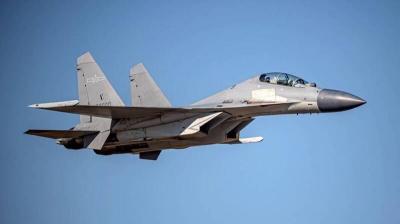
Eight Chinese naval vessels and 24 military aircraft were detected crossing the median line of the Taiwan Strait between 6am yesterday and 6am today, the Ministry of National Defense said this morning. The aircraft entered Taiwan’s northern, central, southwestern and eastern air defense identification zones, the ministry said. The armed forces responded with mission aircraft, naval vessels and shore-based missile systems to closely monitor the situation, it added. Eight naval vessels, one official ship and 36 aircraft sorties were spotted in total, the ministry said.
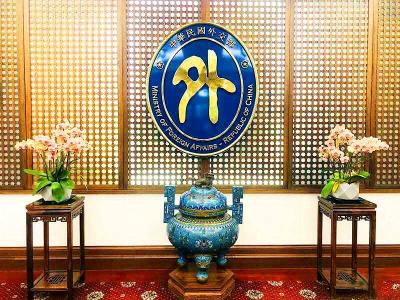
The Ministry of Foreign Affairs (MOFA) today said that if South Korea does not reply appropriately to its request to correct Taiwan’s name on its e-Arrival card system before March 31, it would take corresponding measures to alter how South Korea is labeled on the online Taiwan Arrival Card system. South Korea’s e-Arrival card system lists Taiwan as “China (Taiwan)” in the “point of departure” and “next destination” fields. The ministry said that it changed the nationality for South Koreans on Taiwan’s Alien Resident Certificates from “Korea” to “South Korea” on March 1, in a gesture of goodwill and based on the
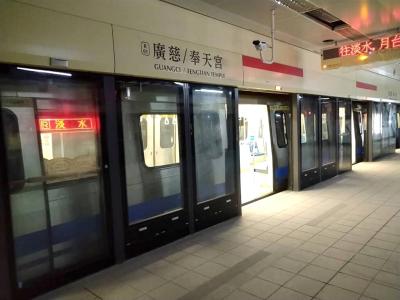
The New Taipei Metro's Sanyin Line and the eastern extension of the Taipei Metro's Tamsui-Xinyi Line (Red Line) are scheduled to begin operations in June, the National Development Council said today. The Red Line, which terminates at Xiangshan Station, would be connected by the 1.4km extension to a new eastern terminal, Guangci/Fengtian Temple Station, while the Sanyin Line would link New Taipei City's Tucheng and Yingge stations via Sanxia District (三峽). The council gave the updates at a council meeting reviewing progress on public construction projects for this year. Taiwan's annual public infrastructure budget would remain at NT$800 billion (US$25.08 billion), with NT$97.3

Taiwanese officials were shown the first of 66 F-16V fighter jets purchased by Taiwan from the United States, the Ministry of National Defense said yesterday, adding the aircraft has completed an initial flight test and is expected to be delivered later this year. A delegation led by Deputy Minister of National Defense Hsu Szu-chien (徐斯儉) visited Lockheed Martin’s F-16 C/D Block 70 (also known as F-16V) assembly line in South Carolina on March 16 to view the aircraft. The jet will undergo a final acceptance flight in the US before being delivered to Taiwan, the


 RSS
RSS